Home Blog Page 2

How to Spot a Proper Historic Pub Before You Order

An old-looking pub and a historic pub are not always the same thing. One may have oak beams, brass ornaments and a collection of objects that appeared during a refurbishment last year. Another may look fairly plain yet preserve a layout, bar counter and set of rooms that have served drinkers for more than a century.

If you want to know how to spot a historic pub, begin by ignoring the obvious decorations. Genuine pub history tends to survive in the bones of the building and in the fittings that were too useful, too solid or too awkward to remove.

Do not be distracted by the date above the door

A painted date is a clue, not proof. The building may be old while the pub interior is entirely modern. Equally, a Victorian or early twentieth-century pub can contain an unusually complete historic interior even though it lacks medieval beams and romantic legends.

Ask two separate questions: how old is the building, and how much of the working pub survives? For pub heritage, the second question is often more revealing.

Start with the shape of the rooms

Many older pubs were divided into separate drinking spaces. A public bar might serve everyday trade, while a lounge, smoke room or snug offered more privacy and sometimes different prices. Doors, corridors, hatches and partitions controlled how customers and staff moved around the building.

Later fashion favoured opening these spaces into one large room. When you find a pub that still has several distinct bars, look at how they connect. An awkward turn, a narrow passage or a serving hatch may make little sense to a modern designer, which is precisely why it can be valuable evidence.

Read the bar counter

A genuine old counter rarely looks perfectly uniform. It may have worn edges where generations of elbows have rested, panels that differ slightly in colour, or a curved section built for a room that no longer exists. The foot rail, brackets and timber can reveal both age and repair.

Wear alone is not decisive; new wood can be distressed. Look for a counter that belongs to the room. Its shape should relate to doors, partitions and the route staff take behind it. Historic fittings usually solve practical problems rather than merely provide scenery.

Look behind the bar as well

The bar-back—the shelves, mirrors, drawers and cupboards behind the server—is often more delicate than the counter and therefore less likely to survive. Original examples may include etched mirrors, carved timber, clocks, spirit measures or small compartments with purposes that are no longer obvious.

Do not expect perfection. Shelves are altered to fit new bottles, fridges interrupt old joinery and mirrors get replaced. A historic pub is a working business, not a sealed display case. The interesting question is whether the old structure can still be read beneath the changes.

Partitions tell social history

Screens and partitions once separated classes of trade, types of drinking and sometimes customers who wanted to remain unseen. A tall wooden screen with etched glass may have enclosed a snug. A low divider could organise a queue or mark the boundary of a particular bar.

Some pubs retain small openings in these screens so staff could serve several rooms from one position. These details make the building’s former routine visible. Even when a partition has been moved, old marks in the floor or ceiling may show where it stood.

Fixed seating is easy to overlook

Built-in benches, settles and wall seats can be among the most authentic features in a pub. They were made for a specific wall and often follow every uneven corner. Look for polished arms, repaired boards and upholstery that conceals an older frame.

High-backed settles had a practical role, shielding customers from draughts and creating a small room within a room. Modern reproductions exist, of course, but an old seat often feels inseparable from its surroundings. Removing it would leave the space without an obvious purpose.

Fireplaces, tiles and floors deserve attention

A fireplace may anchor the original arrangement of a room even if the grate has changed. Decorative tiled surrounds, cast-iron inserts and hearths worn at the edge can all help date how the room was used.

Elsewhere, look at ceramic wall tiles, mosaic entrances, terrazzo floors and patterned linoleum. These materials were designed to survive heavy use, which is why fragments sometimes remain after everything around them has been replaced. A patch or abrupt change in pattern can be as informative as a complete floor.

Glass can carry the pub’s old identity

Etched and cut glass was used for decoration, privacy and advertising. Windows might name a room, a former brewery or the type of drink sold inside. A panel reading Smoke Room or Jug and Bottle is more than attractive lettering; it can reveal how customers once used that part of the building.

Original glass is vulnerable, so surviving pieces matter. Reproduction glass is common and can be very convincing. Check whether the style, frame and position make sense together rather than judging the lettering alone.

Outside clues can prepare you for the interior

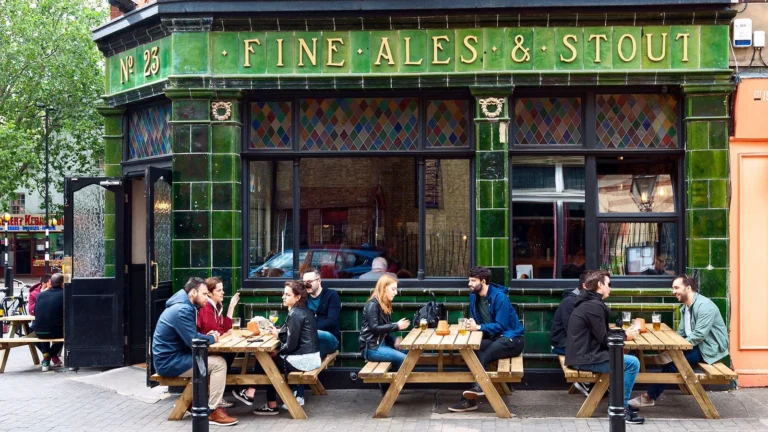
Before entering, look at the number and position of doors. Several entrances may once have led to separate bars. A side hatch could have served customers buying drink to take away. Old brewery names, lamp brackets, tiled facades and ghost signs can point to earlier ownership.

Again, no single clue proves anything. Pub buildings change because streets, licensing rules and customer habits change. The story appears when several details support one another.

Real history usually includes alterations

A room that looks untouched from one chosen year should make you curious. Most successful pubs have been repaired, extended and adapted repeatedly. Electricity arrived, pumps changed, toilets improved and kitchens expanded. Authenticity often means readable layers rather than complete purity.

An old counter beside a 1960s hatch and a later carpet may tell a more honest story than an interior in which every item has been selected to match. The aim is not to catch a pub out. It is to understand what survived and why.

Beware the instant heritage kit

Horse brasses, pewter tankards, sepia photographs and dark varnish can create a pleasant traditional mood. None of them proves that the interior is historic. Reclaimed fittings can also be old without being original to the pub.

The strongest clues are difficult to add as decoration: the arrangement of rooms, a counter shaped to the plan, partitions tied into the building and fixed furniture worn through long use. History is a relationship between objects and place.

Check the paper trail

If a pub looks interesting, a little research can confirm what your eyes suggest. Heritage registers, listed-building records, local archives and old photographs may explain when a room was added or which brewery installed the fittings. Specialist pub guides often distinguish a genuinely rare interior from an attractive old shell.

Staff and regulars can be excellent sources too, although every old pub collects legends. Treat a good story as an invitation to investigate, not the final word.

Use the pub, do not just inspect it

Historic features survive best when the business around them succeeds. Buy a drink, order lunch if food is served and choose a quiet moment to ask questions. Avoid blocking a doorway while photographing a floor or making customers feel like exhibits.

The pleasure of a historic pub is not only visual. Sit in the snug and notice how its high sides soften the sound. Watch how one counter serves two rooms. Feel how the entrance directs you towards the bar. The design becomes understandable when the pub is allowed to work.

Look for evidence, then enjoy the place

You do not need to become an architectural detective every time you go for a pint. A few habits are enough: read the layout, study the working fittings and be cautious of decoration that seems too perfectly themed.

The finest historic pubs are not impressive because they are old. They are impressive because fragments of earlier social life remain useful in the present. Order your drink, find the seat that appears to have been waiting a hundred years, and let the room explain itself.
Unpopular Opinion: Background Music Can Ruin a Good Pub

Here is an unpopular opinion for a culture that likes a soundtrack with everything: some pubs would be better if they occasionally turned the music off.

Not every pub, not every night and certainly not every piece of music. A good playlist can lift a room, cover the clatter of an empty bar and give a venue a personality of its own. But background music in pubs has acquired the strange status of central heating. It is switched on automatically, then left running whether anybody needs it or not.

The problem is rarely the song

People often blame a genre when the real problem is volume. Motown can be perfect at six in the evening and exhausting when it is loud enough to make four friends lean across a small table. A gentle acoustic track can be just as intrusive if the speaker is directly above your head.

The test should be simple: can two people speak in normal voices without repeatedly asking each other to say that again? If not, the music is no longer in the background. It is competing for control of the room.

Conversation is not dead air

Some venues seem frightened of silence. The moment a pub opens, a playlist begins, even when the only customers are two people reading newspapers at opposite ends of the bar. Managers may worry that a quiet room feels empty or awkward.

Yet the natural sound of a pub is not silence. It is conversation, glassware, the scrape of a chair, a fire settling and an occasional burst of laughter from the next table. These noises tell you that you are sharing a place with other people. They do not need a beat underneath them to become atmosphere.

Volume changes how people behave

When music rises, voices rise with it. One table speaks louder to be heard, the next table follows, and before long the entire room is producing more noise than anybody intended. Turning the speakers up again only accelerates the process.

The effect is not equal for everyone. People with hearing loss may struggle first. So may anyone trying to follow several voices at once, or a customer who finds crowded sound tiring. A pub can appear lively while quietly becoming unusable for some of the people in it.

A playlist can flatten the character of a place

There is something odd about walking from a modern bar into a centuries-old inn and hearing the same anonymous playlist in both. Music chosen by an algorithm is efficient, but it can make very different rooms feel as if they belong to the same chain.

The most memorable pubs tend to have a point of view. That may include music, but the music feels connected to the place: soul behind the bar on a Sunday, folk musicians in the corner, rock before a gig, or a landlord’s collection played at a sensible level. Personality comes from selection, not simply from filling every gap.

Live music is a different promise

A live music night announces what it is. Customers know that conversation will be difficult, and they attend because the performance is the main event. The volume has a purpose.

Background music makes a different promise. It is supposed to support the evening without demanding attention. Trouble starts when it behaves like a gig that nobody agreed to attend.

There is a right time to turn it up

A busy Friday night can benefit from energy. Music helps a crowd relax, marks the move from after-work drinks to a proper night out and gives strangers something familiar to respond to. In a late bar, a quiet playlist would be as mismatched as library rules at a wedding.

The mistake is treating that setting as the default. The volume that works at ten on Saturday will not work at four on Tuesday. Good hospitality notices the difference.

Reading the room is part of the job

There is no perfect number on a volume dial. The right level depends on the building, how full it is, the age and mood of the crowd, and what the pub is offering at that moment. Hard surfaces reflect sound. Curtains, carpets and occupied seats absorb it. The room changes as people arrive.

That is why a set-it-and-forget-it approach fails. Someone needs to listen from the customers’ side of the bar. Staff can ask whether the music is adding warmth, disappearing pleasantly or forcing every conversation into a contest.

Customers rarely complain

Most people will not ask for the music to be lowered. They do not want to appear difficult, and they assume the volume is deliberate. Instead, they finish one drink and choose somewhere else next time.

This makes excessive noise easy to miss. The venue hears no complaints, so it assumes everyone is happy. Quiet departures do not appear in a comments book.

Music can be genuinely welcoming

None of this is an argument for hushed rooms and stern looks. The right song at the right moment can change an evening. It can make an empty pub feel comfortable enough to enter, give staff a lift during a long shift and create the shared grin that happens when everybody recognises an opening line.

A carefully chosen playlist also says something about the people running the place. It need not be obscure or fashionable. It just needs to sound considered rather than supplied by default.

Try an hour without it

A pub curious about its own sound could try a simple experiment: switch the music off for an hour during a calm period. Listen to what remains. Does the room feel lifeless, or does it become easier to settle into? Do customers notice? Do conversations last longer?

The answer will vary from place to place. That is precisely the point. Music should be a choice made for the room in front of you, not a rule inherited from somebody else’s idea of atmosphere.

The case for judgement, not silence

A great pub knows when to add energy and when to get out of the way. Sometimes that means a brilliant song played loudly. Sometimes it means music low enough to soften the edges. And sometimes it means trusting the customers to create the soundtrack themselves.

The unpopular opinion is not that music ruins pubs. Careless music does. A speaker should never be more important than the people who came to talk beneath it.

How Contactless Payments Changed the British Pub

There was a time when buying a round began with a quick check of your pockets. Notes were flattened on the bar, coins gathered in a damp palm, and someone inevitably discovered they were ten pence short. It was not an elegant system, but it was part of the evening’s rhythm.

Contactless payments in pubs changed that rhythm. The little beep at the card machine is now so ordinary that it is easy to forget how recently paying for a pint involved far more movement, conversation and mental arithmetic. The technology did more than remove cash from the transaction. It altered queues, tipping, budgeting and even the way a round feels.

The old ritual at the bar

Cash made payment visible. A customer could see exactly what they had left, while bar staff could often prepare change before the order was complete. Regulars knew where the coin tray sat. People pooled loose change for crisps or fed it into a quiz machine without thinking.

It could also be slow. Notes stuck together, coins rolled away and large rounds produced a small mountain of change. At busy times, every extra second mattered. A bar five people deep could feel considerably deeper when each transaction involved counting in both directions.

The appeal of the quick tap

Contactless suited the pub because it removed several small delays at once. There was no PIN for an ordinary purchase, no change to count and no need for the customer to decide which note to break. One tap, one beep, and the next order could begin.

That speed is especially useful in short bursts of pressure: half-time during a football match, the interval at a comedy night or the sudden rush after a large group arrives. Saving a few seconds on one drink seems trivial. Saving them across dozens of orders is not.

Queues became less predictable

Faster payment did not automatically create faster service. Taking the order, pouring drinks and finding the right table can still take far longer than collecting the money. A complex cocktail order remains a complex cocktail order, however quickly the card is tapped.

What contactless did was remove one common bottleneck. It also made the queue feel more fluid. Customers no longer needed to prepare cash while they waited, although the smartest ones still decide what they want before reaching the bar. No piece of technology can rescue a queue from six people asking what everyone is having at the last possible moment.

Rounds became easier to lose track of

Cash placed a natural limit on an evening. You could glance into your wallet and understand the situation immediately. Card payments are less tangible. Four small taps may feel like four minor moments, even when the total says otherwise the next morning.

This matters with rounds. Paying for several drinks no longer produces a visibly thinner wallet, so the cost can be surprisingly easy to forget. Banking notifications help, but they arrive after the decision. The convenience of contactless works best when it is paired with a rough budget rather than treated as permission not to think.

Tipping had to find a new language

Cash tips were simple. A customer left coins on the bar or told the person serving them to keep the change. With a card, that spontaneous gesture can disappear unless the payment system includes a tip option.

Digital prompts solve part of the problem, although they can also feel awkward when the screen is turned towards a customer. The best systems make the choice clear without making it uncomfortable. Some regulars prefer to carry a little cash specifically for tips, music collections or charity pots. That is a useful reminder that old and new methods do not have to compete.

Table ordering changed more than payment

Apps and QR codes pushed the change further by moving the whole order away from the bar. They are genuinely useful for customers who cannot easily stand in a queue, parents keeping an eye on children, or groups that have finally secured a table and do not want to abandon it.

However, the bar is also one of the pub’s social crossroads. It is where you notice the guest ale, ask what is good, exchange a few words with a stranger and discover that the kitchen has one portion of pie left. Ordering from a screen can be efficient while still making the room feel slightly less connected.

Technology created new points of failure

Cash is slow, but it does not need Wi-Fi, electricity or a software update. When a card terminal loses its connection, a modern bar can stop with remarkable speed. Staff may have backup terminals or an offline mode, but customers rarely know that until something goes wrong.

Keeping a small amount of cash is therefore not nostalgia for its own sake. It is a practical backup. The same is true for pubs: a clear plan for an outage can turn a potential disaster into a minor inconvenience.

Convenience is not the same as inclusion

Many customers prefer cards, yet not everyone manages money digitally. Some use cash to control spending. Others do not have a suitable bank card or simply feel more confident with notes and coins. A pub that accepts both methods gives more people a comfortable way to take part.

That choice matters because pubs are social spaces, not merely retail counters. A payment system should make entry easier rather than quietly telling some customers that their way of paying is inconvenient.

The transaction became quieter

One unexpected effect of contactless is how little needs to be said. There is no request to break a note and no exchange about change. The transaction can be completed with a nod.

On a busy Friday, that economy is welcome. During a quiet afternoon, it can remove one of the tiny openings from which conversation grows. Good bar staff still find ways to make the moment human: confirming the order, recommending a beer or simply acknowledging the person in front of them.

What comes next?

Payment will probably become even less visible. Phones and watches already replace cards, and some venues make the bill almost disappear inside an app. That may make service smoother, but the best pubs will keep asking a more important question: does the technology improve the guest’s evening?

A useful system gets out of the way. It shortens a queue, makes ordering accessible and gives staff more time to look after the room. A poor one adds logins, confusing menus or a screen between people who would rather speak.

A small beep with a big effect

Contactless payments did not transform the pub by themselves. The pint is still poured, the round still needs remembering and someone still returns from the bar without the salt-and-vinegar crisps. Yet the tap changed the pace and texture of those familiar moments.

The trick is to keep the convenience without losing the character. Payment should be quick, reliable and flexible. The part worth slowing down for is everything that happens after it.

Why Do British Pubs Ring a Bell? The Story Behind Last Orders

It can be a quiet Tuesday or a packed Friday night: one sharp ring cuts through the chatter and, almost on instinct, heads turn towards the bar. Someone checks their watch. A table debates whether there is time for one more. The regulars barely pause because they already know what the sound means.

The last-orders bell is one of those tiny pub customs that feels as familiar as a beer mat or a packet of crisps torn open down the middle. Yet it is also widely misunderstood. Is the bell required by law? Does a second ring mean you must leave immediately? And why has the ritual survived now that pubs no longer share one national closing time?

The sound everyone in the pub understands

At its simplest, the bell is a practical tool. A pub may contain several rooms, a noisy television, live music and a crowd deep in conversation. A raised voice will not always travel, but a brass handbell or wall-mounted call bell will.

The first ring usually announces last orders: the final chance to buy a drink before alcohol service ends. It is less an eviction notice than a warning. The bar may be about to become busy, so this is the moment to decide rather than begin a long discussion about what everyone wants.

Some pubs follow it with a second ring to show that service has stopped and customers should finish up. Others use one ring and a spoken call. A modern bar may flash the lights or simply send staff around the tables. There is no national code saying that one ring means this and two rings mean that. Each house develops its own routine.

No. The law governs when a licensed premises may sell alcohol; it does not require a landlord to announce the end of service with a bell.

In England and Wales, the Licensing Act 2003 introduced more flexible hours. That ended the old assumption that pubs across the country would all call time at roughly the same moment. It did not mean that every pub became a 24-hour operation. Each premises still trades within its authorised hours, and most pubs choose a regular closing time that suits the business and the neighbourhood. Scotland and Northern Ireland have their own licensing systems.

The bell remains useful because the responsibility has not disappeared. Staff still need a clear point after which they will not take another alcohol order. A familiar signal prevents confusion and gives everyone fair warning.

Where did the tradition come from?

There is no neat record of the first publican to pick up a bell and call time. The custom grew out of a world in which pub hours were more rigid, clocks were not in every pocket and a landlord needed to alert several rooms at once.

For much of the twentieth century, licensing restrictions gave closing time a sharper edge than it has in many pubs today. When a large number of houses stopped serving at similar times, the cry of “Time, please” became part of the national soundtrack. The bell was the easiest way to make sure the message reached the snug, the public bar and the table in the far corner.

That is why an old pub bell feels like more than a piece of equipment. It belongs to the social architecture of the traditional pub, alongside separate rooms, etched glass and the wooden hatch through which pints once passed.

What actually happens after last orders?

The atmosphere changes almost immediately. Conversation carries on, but the room acquires a deadline. Half-finished drinks are assessed. Coats appear on the backs of chairs. At the bar, staff face a brief rush from customers who had spent the previous ten minutes insisting they did not want another.

How long people have to finish varies. It depends on the premises, its licence, house policy and the type of night being run. The old idea that every pub must provide the same fixed “drinking-up time” is not a reliable guide to the modern trade. If staff call time or ask customers to leave, their instruction is the one that matters.

A well-run pub usually makes the transition obvious without making it hostile. Lights may be raised, music lowered and empty glasses collected. Good regulars notice these cues. They also know that the people behind the bar still have cleaning, cashing up and closing checks to complete after the final customer has gone.

Last-orders etiquette: how not to be that customer

The bell can trigger some curious behaviour. A person who has ordered lager all evening suddenly wants to inspect every handpump. Another begins a five-person cocktail order as chairs are being stacked. The simplest approach is kinder to everyone:

  • Know what you want before reaching the bar. Last orders is not the ideal moment for a tasting session.
  • Order a sensible amount. Buying more than you can comfortably finish does not extend the evening.
  • Do not argue with the clock. A phone showing a different minute will not change the pub’s licensed hours or house policy.
  • Listen for the second call. If staff say drinking-up time is over, finish the conversation outside.
  • Remember the staff. Leaving promptly is one of the easiest ways to be remembered as a welcome customer.

There is also no shame in declining the final round. “One for the road” is a tradition, not an obligation. Sometimes the best last order is a glass of water and the number of a taxi.

Why the bell survived flexible opening hours

When licensing hours changed, some predicted that the drama of last orders would fade away. In practice, flexible hours made the signal less uniform, not less useful. One pub may ring at 10.45pm, another at midnight, and a third may finish earlier on a quiet Sunday. The ritual now belongs to the individual pub rather than to a single national timetable.

It survives because pubs run on small, shared understandings. You order at the bar in one house and wait for table service in another. You return a borrowed glass, make room for someone carrying a tray and accept that the regular leaning on the corner probably has an unofficial claim to that spot. The bell is another piece of that unwritten language.

More than a signal to stop serving

There is a melancholy note to last orders, even when everyone has had a brilliant night. The ring reminds the room that a pub is a temporary gathering. For a few hours, strangers have shared a fire, a match, a quiz, a story or simply the shelter of the same four walls. Then the spell has to be broken so it can be made again tomorrow.

That may be why the custom still matters. The bell does not only mark the end of alcohol service. It gives the evening a final scene: pints lifted, plans made, goodbyes stretched across the doorway.

So, when you next hear that clear metallic ring above the noise, you will know there is no mysterious law demanding it. It is simply one of the pub’s most effective traditions: practical, unmistakable and just theatrical enough to turn closing time into a moment everyone shares.

Why Are So Many UK Pubs Closing? The Real Reasons Explained

Last reviewed: 19 August 2026. A pub rarely closes for one simple reason. The final announcement may mention rising costs, retirement or a failed lease, but the pressure usually builds through several problems at once: narrow margins, expensive property, staffing challenges, changing customer habits and a building that continually needs money spent on it.

This guide explains the forces behind UK pub closures, the difference between a temporary shutdown and a permanent loss, and the practical steps communities can take when a valued local is threatened.

Why are UK pubs closing?

The short answer is that many pubs must carry high fixed costs while relying on sales that can change dramatically with the weather, the local economy and the time of year. A busy Saturday does not cancel a quiet Monday, and a full beer garden in July has to help support the same building through winter.

1. Costs can rise faster than takings

A pub pays for far more than beer. Energy, insurance, waste collection, card fees, licensing, repairs, security, entertainment, food ingredients and professional services all sit behind the price on the menu. Operators also need enough cash to replace kitchen equipment, cellar cooling, furniture and roofs before those failures become emergencies.

Those costs are difficult to pass on in full. Customers notice the price of a pint immediately, while many of the expenses behind it are invisible. A venue can therefore look busy and still struggle to produce a sustainable profit.

2. Business rates are tied to the property

Business rates are a major part of the property burden for many pubs. The Valuation Office Agency normally assesses a pub using its expected annual trade, taking account of its location, design and services such as food, accommodation or sports screenings. The rateable value is not the final bill, but councils use it when calculating what is owed.

Relief schemes can reduce that pressure. In England, eligible occupied pubs and live music venues can receive a 15% reduction for the 2026–27 billing year. Rules and support differ across the four UK nations, and individual operators should check current guidance rather than assume an old scheme still applies.

3. Staffing is both essential and expensive

A good pub needs people who can open early, close late, manage food safety, maintain cellar standards, handle difficult situations and still make customers feel welcome. Recruiting and retaining that combination is difficult, particularly in rural or seasonal areas. Cutting the rota too far may save money briefly but damages service, food quality and the atmosphere that brings customers back.

4. Drinking habits have changed

People have more alternatives than earlier generations did. Supermarkets sell alcohol for home consumption, entertainment is available on demand, and many customers drink less frequently or choose alcohol-free options. Remote working has also changed footfall in some town centres while helping certain neighbourhood venues.

This does not mean the pub has no future. It means a venue must give people a reason to leave home: genuinely good hospitality, dependable food, a distinctive beer range, live events, sport, games, community groups or simply a room that feels welcoming.

5. Old buildings demand constant investment

Many of Britain’s most characterful pubs occupy old buildings. That charm comes with heating losses, ageing wiring, drainage problems, accessibility work, listed-building restrictions and repairs that cannot be postponed forever. A profitable trading business can become unviable when a major roof, kitchen or cellar bill arrives without adequate reserves.

6. The property may be worth more in another use

The operator running the pub and the owner of the building are not always the same person or company. A tenant may want to continue while a freeholder wants to sell. In other cases the pub closes first and a planning application for housing, retail or another use follows later.

A sale does not automatically mean the end of a pub, and a closure notice does not prove that redevelopment has been approved. Planning status, lease terms and the intentions of a buyer must be checked separately.

Temporary closure or permanent loss?

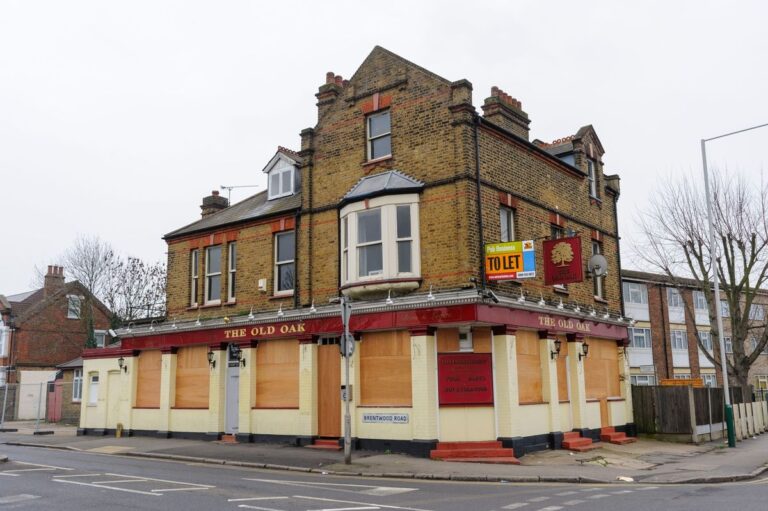
“Closed” can describe several very different situations. A pub may pause for refurbishment, wait for a new tenant, lose its licence temporarily, enter administration or cease trading permanently. Headlines should make that distinction clear because speculation can damage the chance of a viable reopening.

  • Temporary closure: the venue expects to reopen after work, a change of operator or a licensing issue.
  • Business closure: the current operator has stopped trading, but the building may remain a pub.
  • Permanent change of use: the site has secured the permissions needed for another purpose.

Can a threatened pub be saved?

Sometimes. Speed, evidence and local organisation matter. CAMRA provides separate pub-saving guidance for England, Scotland and Wales, including planning information, community ownership and Assets of Community Value in England. The correct route depends on where the pub is located and what stage the closure or sale has reached.

A serious campaign should begin by confirming the facts. Who owns the freehold? Is the business being sold as a going concern? Is there a planning application? Has the licence lapsed? What evidence is there of community use and realistic demand? Sharing an unverified rumour on social media is not a substitute for this groundwork.

Practical actions for local residents

  • Use the pub consistently before it reaches crisis point.
  • Check the local council planning portal and licensing register.
  • Build a small campaign group with clearly assigned jobs.
  • Collect evidence of community use, not only signatures.
  • Speak constructively with the owner, operator and local councillors.
  • Explore community ownership only with credible financial and operational advice.

Real closure stories from around Britain

The pressures look different from one venue to another. Gatwick Manor near Crawley closed after decades of service, while The Butley Ash near Macclesfield was offered for sale after its shutdown. In Derbyshire, plans suggested The Fisherman’s Rest in Belper could become a family home.

Other stories show that closure is not always the final chapter. These ten London pubs returned after apparently reaching the end, and a community-owned South Shropshire pub began a new chapter with fresh publicans.

The broader pattern is visible in our reporting on the human cost of Britain’s pub closures, financial pressure on Dorset pubs and the closure of a Cornwall pub after three years.

What a sustainable pub now needs

There is no single winning format. The strongest pubs understand their particular community and run the building accordingly. A rural inn may rely on food and rooms; a city local may succeed through sport and events; a micropub can keep costs controlled with a focused drinks offer; a community pub may combine hospitality with a shop, café or meeting space.

What they share is clarity. They know why customers choose them, watch costs closely, maintain quality and change before a crisis removes their options.

Sources and further help

Pub & Social updates this guide when policy or practical guidance changes. If a specific pub is at risk, verify its planning and licensing position with the relevant local authority.

A Simple Guide to Pairing Beer With Classic Pub Food

Beer can pair with food as thoughtfully as wine, often with an extra advantage: carbonation and bitterness are excellent at refreshing the palate after salt, fat and frying. Four ideas cover most successful pub pairings.

Cut

Use bubbles, acidity or bitterness to cut richness. Crisp lager, golden ale or a dry pale ale can reset the palate after fish and chips. A hop-forward IPA can tackle a fatty burger, although high bitterness may exaggerate chilli heat.

Match

Connect flavours already on the plate. Bitter or amber ale echoes the biscuit crust and caramelised onions in a pie. Stout’s roast links with charred meat, coffee or chocolate. Wheat beer’s soft fruit can sit comfortably beside lighter chicken dishes.

Contrast

Opposites can create balance. A fruity pale ale lifts salty fried food; a dry stout reins in a sweet pudding; a tart beer can sharpen a rich cheese. The contrast should refresh rather than fight.

Match intensity

Delicate food disappears beside a huge imperial stout, while a light lager can be flattened by blue cheese. Keep strength and flavour weight in the same neighbourhood.

Six easy pub pairings

Try fish and chips with golden ale; steak pie with bitter; curry with a citrus-led pale ale or crisp lager; roast beef with amber ale; mature Cheddar with pale ale; and chocolate pudding with stout. These are starting points, not commandments.

Order smaller measures if exploring several combinations, add water and treat alcohol strength separately from flavour.

The simplest rule: decide whether the beer should cut, match or contrast with the strongest element on the plate, then keep both sides similar in intensity.

Source: CAMRA Learn & Discover

Why the Pub Cellar Can Make or Break Your Pint

The bar is only the visible half of draught beer. Below it, the cellar stores containers, controls temperature, houses gas and cooling equipment and feeds long lines to the taps. Quiet work in that room decides whether a famous beer arrives in good condition.

Temperature

Beer needs a stable environment. Too warm and it ages quickly, foams and loses its intended balance; too cold and flavour is suppressed. Cask should be cool rather than warm, while different keg systems use chilling and pressure to deliver the brewer’s specification.

Clean lines

Every pint travels through tubing. Residue and microorganisms can create sour, buttery or dirty flavours, so lines and fittings require regular cleaning and accurate records. Glassware matters too: grease and detergent damage foam and aroma even when the beer itself is sound.

Conditioning cask

Cask arrives with live yeast and must settle and condition. Cellar staff tap, vent and monitor it before service. Once ready, the best drinking window can be short—CAMRA notes that cask may pour perfectly for only a few days—so matching the number of ales to actual sales is a quality decision.

Turnover and judgement

A pub with six slow-moving casks may serve worse beer than one with two lines that empty regularly. Good teams taste before service, remove a beer when it fades and never use strong branding as an excuse for a poor pint.

The hidden truth: beer quality is a partnership. The brewery controls the recipe and production; the pub controls the final metres, hours and degrees before the glass.

Source: CAMRA Learn & Discover

How to Choose a Beer When the Pub Has Too Many Taps

A busy beer board can turn a simple order into a wall of unfamiliar names. The trick is to ignore the branding for a moment and narrow the choice with four practical questions.

How strong?

Start with ABV. A 3.6% bitter and an 8% double IPA are built for different occasions. Strength does not tell you everything about flavour, but it prevents the biggest mismatch. Remember that a stronger pint contains more alcohol units even when it tastes smooth.

Light, malty, hoppy or roasted?

Choose a broad direction. Lager and golden ale are usually the lightest-looking options. Bitter and amber ale bring more biscuit, caramel and earthy hop character. Pale ale and IPA push fruit and hops forward. Porter and stout move towards coffee, chocolate and roast.

Cask or keg?

Cask is softly carbonated and depends heavily on cellar conditioning. Keg is generally fizzier, colder and more stable. The same broad style can feel quite different in each format. Handpulls usually signal cask, while fixed fonts cover lager, stout and modern keg beer.

What are you eating?

Clean bitterness and carbonation cut through fried food. Malt works with roast meat and pies. Citrus-led hops can suit spice, while stout complements grilled flavours and chocolate. Pairing is a shortcut, not a rule.

If two options remain, ask the bar staff for the freshest or most popular in that style. A small taster may be offered when the pub is quiet, but it is courtesy rather than an entitlement.

The ten-second order: “Something around 4%, pale and citrusy—cask if you have it.” Clear preferences make useful recommendations easy.

Source: CAMRA Learn & Discover

How to Taste Beer Without Sounding Pretentious

Beer tasting is simply paying attention. The goal is not to produce the cleverest description at the table; it is to notice what you enjoy, recognise faults and make the next choice easier.

1. Look

Notice colour, clarity, bubbles and head. Haze can be intentional in a modern pale ale and unexpected in another style, so appearance is a clue rather than an automatic score.

2. Smell

Most flavour begins with aroma. Take two or three short sniffs. Malt might suggest bread, biscuit, caramel, coffee or chocolate. Hops may resemble herbs, flowers, citrus, tropical fruit or pine. Yeast can add pepper, banana, clove or orchard fruit depending on style.

3. Sip

Let the beer cross the whole palate. Look for sweetness, acidity, roast and bitterness, then ask whether any one part overwhelms the rest. Ordinary comparisons are useful: grapefruit, toast and coffee communicate more than technical theatre.

4. Feel

Texture changes the experience. Is the beer light or full, softly conditioned or sharply fizzy, dry or creamy? Nitrogenated stout and cask bitter can have similar strength but very different mouthfeel.

5. Follow the finish

After swallowing, notice what remains and for how long. A crisp lager may finish quickly; an IPA can leave hop bitterness; a strong stout may carry roast and warmth for minutes.

When comparing beers, keep portions small, drink water and remember that alcohol dulls judgement. Personal preference is not a universal verdict.

The least pretentious tasting note: “I like it because…” Complete that sentence honestly and you are already doing the job.

Source: CAMRA Learn & Discover

Why Northern Pints Often Have a Creamy Head: The Sparkler Explained

Order the same cask ale in Yorkshire and the South East and it may arrive looking and feeling different. A small fitting called a sparkler is often responsible.

What does a sparkler do?

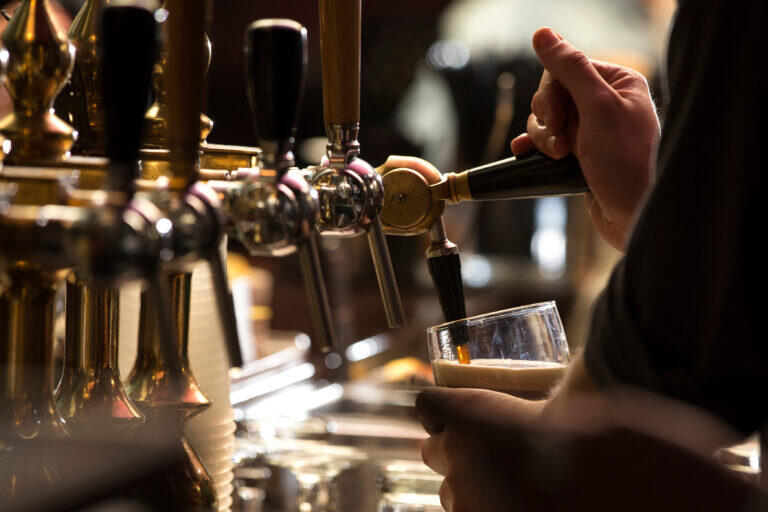
The sparkler attaches to the end of the handpump spout and forces beer through small holes. That agitation knocks gas out of solution and creates a tight, creamy head. It can soften the perception of carbonation and change how quickly aroma reaches the drinker.

The northern long-spout pour

Across much of the North and Midlands, the glass is held upright and a long spout with a sparkler is placed near the bottom. As the beer rises, it is pushed through the liquid, building a dense head. The final pour can create a slight dome above the rim, known as a meniscus.

The southern short-spout pour

In many southern pubs, cask is served without a sparkler. The glass begins around 45 degrees and is straightened as it fills, with the spout kept above the beer. The result may show less head and present aroma and bitterness differently.

Which is correct?

Neither method is universally right. Some breweries design beers for a sparkler; some drinkers prefer the livelier aroma of an unsparkled pint. Local habit matters, and a good pub may adjust when politely asked.

The pub-culture answer: the head on a pint is not merely decoration. Dispense changes texture and perception, which is why a tiny plastic fitting can inspire such strong regional loyalties.

Source: CAMRA Learn & Discover