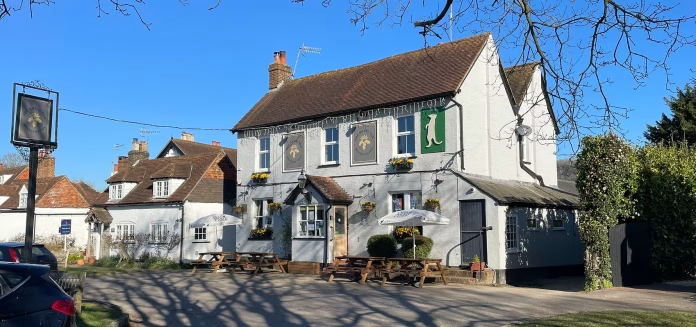
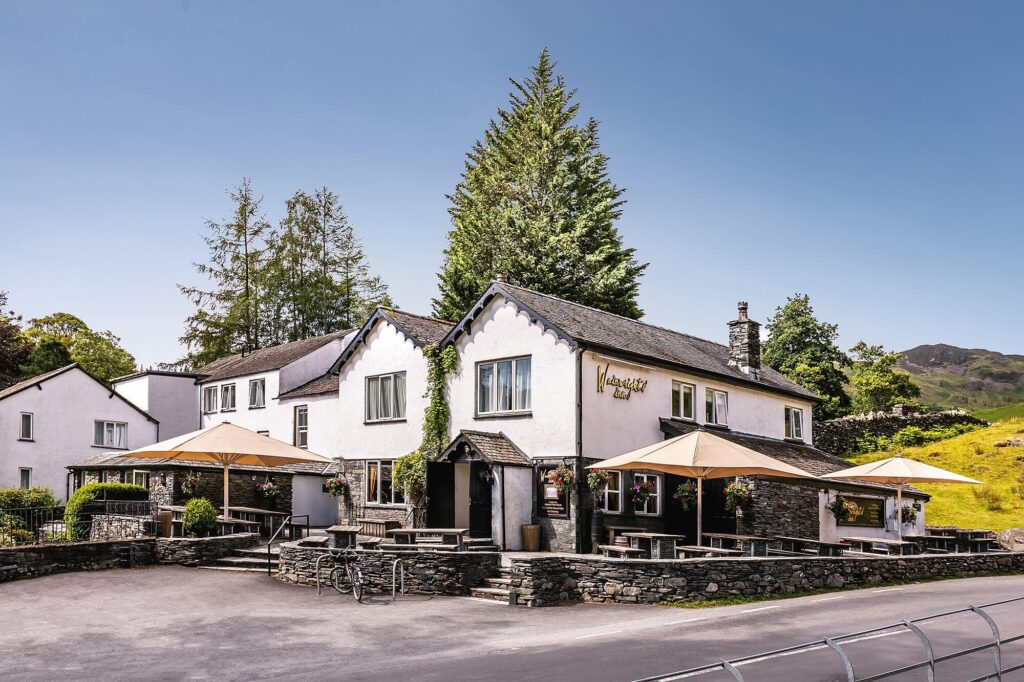
You know when a pub looks good online and you think yeah, we’ll give that a go… then you find out it’s got meerkats?
That’s exactly what’s happened with The Royal Oak in Brockham — and now it’s gone from “we should visit” to “we’re definitely going.”
Set in the Surrey countryside, it already ticks the usual boxes — cosy pub vibes, proper food, and that relaxed village feel. But the fact there are actual meerkats on site? That’s next level.
We haven’t been yet, so we’re not going to pretend we know what it’s like — but we’re heading there soon to do a full, honest feature. Proper review, real verdict, no nonsense.
Because let’s be honest… a pub having meerkats sounds brilliant — but does it actually deliver as a pub?
We’ll find out soon.
In the meantime, if you’ve been — is it as good as it sounds, or just a gimmick?
It’s the kind of pub drama you don’t expect with your cheap lager… but it’s kicked off anyway. A group of political supporters claim they were refused service at a Wetherspoons — and now everyone’s got an opinion.
What actually happened?
The incident is said to have taken place at The Picture Palace, part of the Wetherspoon empire.
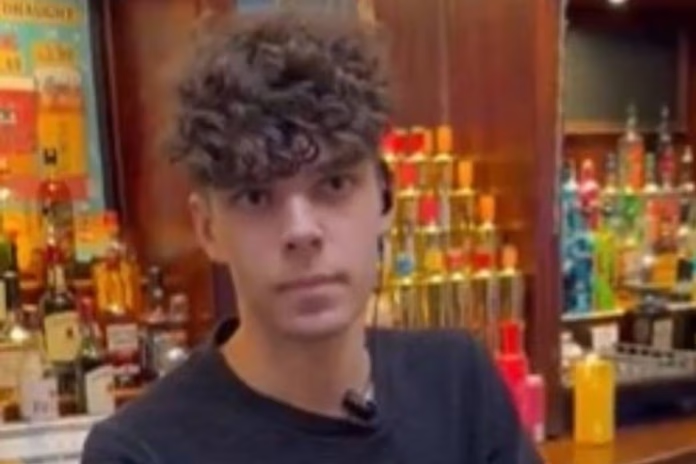
A video doing the rounds online shows a member of staff behind the bar being asked if the group could get a drink. The reply?
“I’m deciding that.”
Safe to say… that didn’t go down quietly.
The group involved were reportedly supporters of Reform UK, the party linked to Nigel Farage. They claim they were turned away from the pub — and filmed the moment it happened.
Wetherspoons responds
Rather than flat-out denying it, Wetherspoons has come out with a more measured response.
According to the pub chain, the situation wasn’t as simple as “no drinks allowed.” They say the group had been filming outside the pub and had parked a vehicle in the loading bay — something that raises red flags when it comes to licensing rules.
And in pub terms, licensing rules aren’t optional… they’re everything.
A spokesperson said:
“Wetherspoon welcomes supporters of all political parties… but we ask that pubs are used on a social basis, rather than a political one.”
In other words — come in for a pint, not a campaign rally.
Pubs vs politics – a tricky mix
Let’s be honest… pubs have always been places where people talk politics. It’s practically part of the furniture alongside sticky carpets and dodgy quiz machines.
But there’s a big difference between a debate over a pint and turning the pub into a political stage.
From the pub’s point of view, anything that risks disorder, disruption, or licensing issues is a problem. From the customers’ point of view… being refused a drink is always going to feel like a big deal.
So who’s right?
That’s where things get messy.
Was it a case of staff overstepping? Or were they just protecting the pub from a situation getting out of hand?
Either way, it’s sparked a wider conversation about what pubs are for — and where the line is drawn.
Bottom line
One thing’s clear — the local boozer is still the heart of British debate… just sometimes a bit louder than expected.
Would you be happy seeing politics kept out of pubs… or is that part of the experience? Tag a mate and settle it over a pint. 🍺
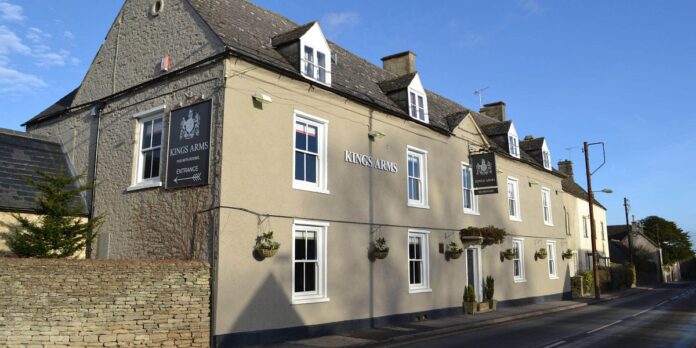
Inn The Sticks has continued its expansion across the English countryside with the acquisition of The King’s Arms in Didmarton.
The growing collection of country pubs, located on the edge of the Cotswolds, has been steadily building a reputation for restoring and operating traditional village venues with a strong focus on food, atmosphere and design.
The latest deal comes just months after the group acquired The Bull at Hinton, bringing the total number of pubs under the Inn The Sticks banner to five.
“The King’s Arms is a wonderful addition to the Inn The Sticks collection,” said founders Mark Florey and Mark Holton. “It’s a much-loved village pub with real history and enormous potential.”
The King’s Arms now joins a portfolio that includes The Bull at Hinton, The Langley Tap, The Neeld Arms and The Wellesley Arms.
Inn The Sticks was founded by Florey and Holton, who have taken a hands-on approach to the development of each site, personally designing and shaping the interiors of their pubs.
“As we have done with The Bull, we are looking forward to investing in the site, supporting the existing team, and ensuring it remains a true village pub,” they added.
Their focus will be on maintaining The King’s Arms as a traditional local while introducing the seasonal food, welcoming atmosphere and design-led approach that has become a defining feature of the Inn The Sticks brand.
The expansion reflects a wider trend across the UK pub sector, where smaller independent groups are investing in village pubs and breathing new life into historic venues.
For Didmarton, the acquisition signals a new chapter for a well-loved local, with investment, stability and a renewed focus on quality at its core.
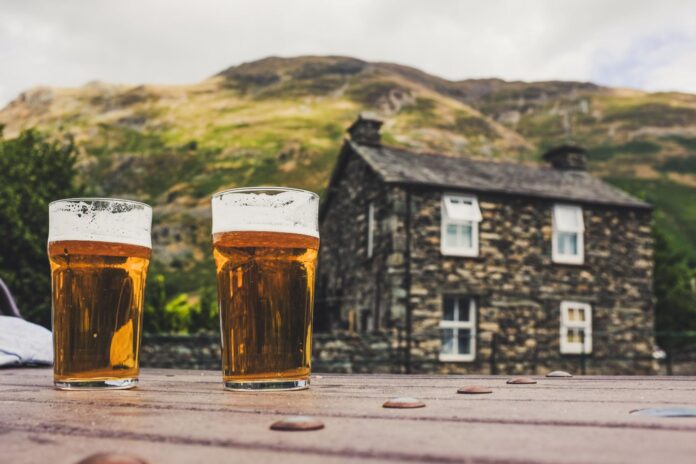
Two pints of real ale outside a traditional stone pub in the Lake District, with the Cumbrian fells rising in the background.
The Lake District National Park is not just one of Britain’s most beautiful landscapes. It is one of the great pub regions of the country.
Across its valleys, lakes, market towns and remote fell roads, the pub is still part of the way the Lake District works. It is where walkers dry their boots after climbing Helvellyn, where families shelter from sudden rain in Ambleside, where locals gather in Keswick, where climbers return from Langdale, and where visitors discover that a pint in Cumbria often tastes better when it has been earned on foot.
The Lake District is England’s largest National Park and is also a UNESCO World Heritage Site, known for its lakes, fells, villages, cultural heritage and walking routes. But behind the famous views of Windermere, Derwentwater, Ullswater and Coniston Water is another quieter attraction: the old inn, the village pub, the walkers’ bar and the local ale house.
Two pints of real ale outside a traditional stone pub in the Lake District, with the Cumbrian fells rising in the background.
This is pub country.
From Keswick in the north to Windermere and Bowness in the south, from Grasmere and Ambleside in the central Lakes to Coniston, Hawkshead, Borrowdale, Wasdale, Eskdale and Langdale, the pub scene is woven into the identity of the National Park.
Many visitors come for the mountains. Many remember the pubs.
A pub landscape shaped by walkers, weather and villages
The Lake District pub scene is different from a city drinking scene. Here, pubs are often shaped by geography.
In towns such as Keswick, Ambleside, Bowness-on-Windermere and Windermere, pubs serve tourists, walkers, hotel guests and locals all year round. In smaller villages like Grasmere, Hawkshead, Coniston, Chapel Stile, Elterwater, Boot and Rosthwaite, pubs often feel like part of the landscape itself.
The official visitor guide lists major Lake District towns and villages including Ambleside, Bowness-on-Windermere, Windermere, Grasmere, Hawkshead, Coniston, Troutbeck, Near and Far Sawrey, Newby Bridge and Rydal. These are not just pretty names on a map. They are places where the pub still acts as a meeting point, food stop, local noticeboard and shelter.
That matters in the Lakes because the weather can change quickly. A sunny walk around Rydal Water can become a wet trudge. A bright morning in Keswick can turn into a misty afternoon on Skiddaw. For generations, the pub has been the natural finishing point.
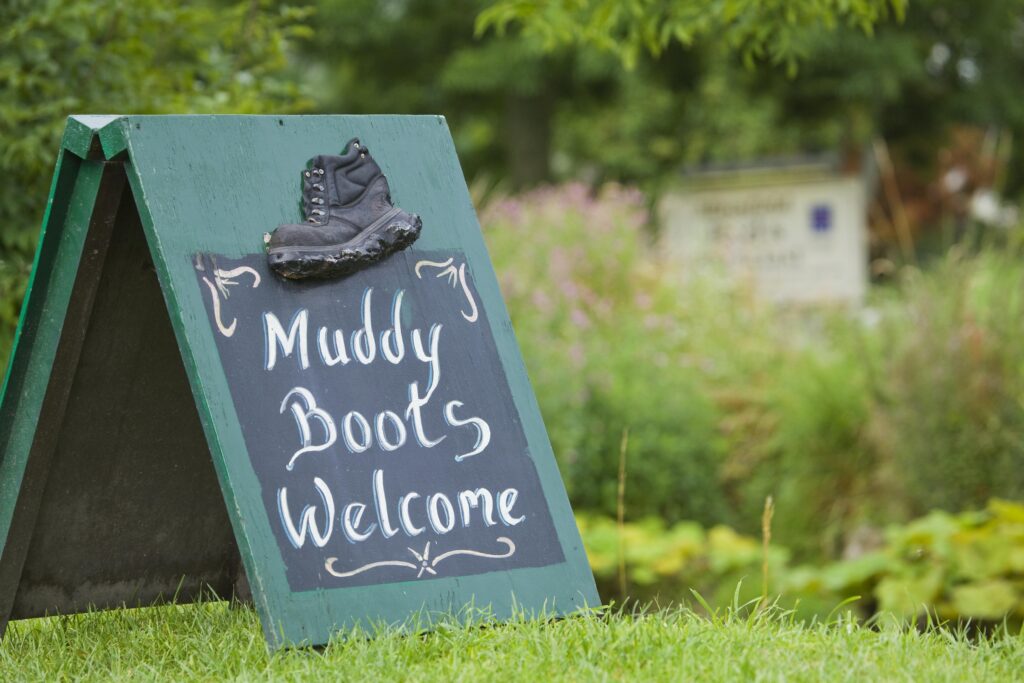
The Lake District National Park promotes classic walking routes with details on distance, time, ascent and difficulty. That walking culture directly supports the pub culture. A good Lake District pub is not just judged by its beer. It is judged by whether it welcomes muddy boots, wet dogs, tired children, cold walkers and hungry groups who have just come down from the fells.
Keswick: one of the great pub towns of the Lakes
Keswick is one of the strongest pub towns in the Lake District. Sitting close to Derwentwater and surrounded by fells including Skiddaw, Catbells and Latrigg, it has the right mix of visitors, locals, walkers and independent food and drink businesses.
“Keswick’s busy all year round now — the pub trade here never really switches off.
The town has a proper evening pub scene. After a day on the lake, a walk to Friar’s Crag, a climb up Catbells or a wet afternoon around the shops, Keswick’s pubs fill with people looking for food, warmth and beer.
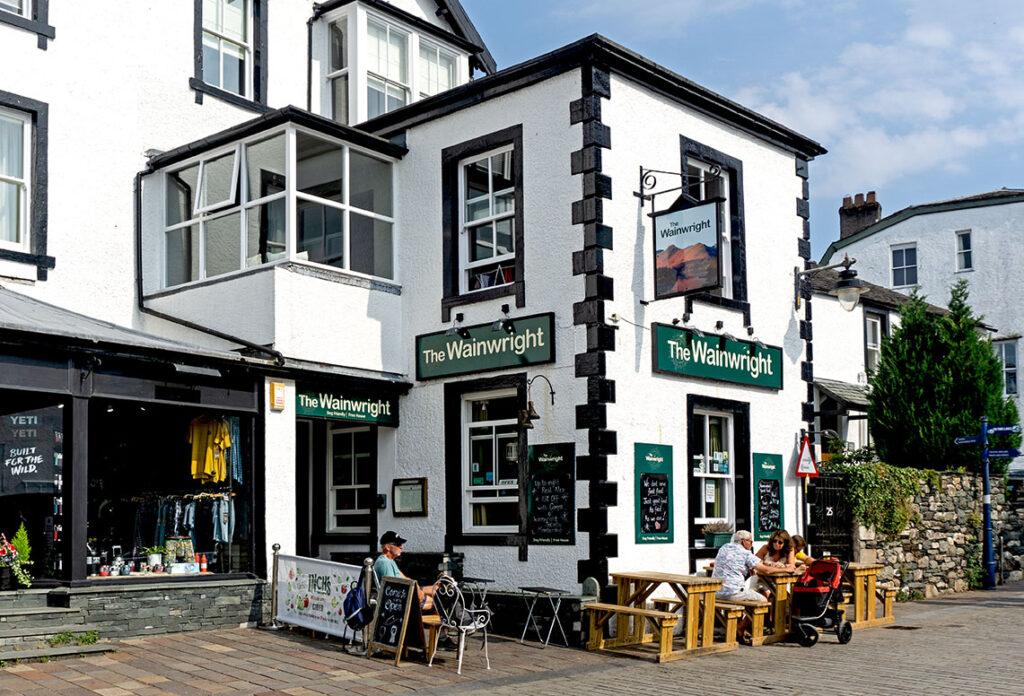
Well-known names in and around Keswick include the Dog and Gun, The Wainwright, The Pack Horse Inn, Crafty Baa, The Fox Tap and the Derwent Walker Bar. The town also has a strong brewing identity through Keswick Brewing Company, founded in 2006 and located in the heart of Keswick. The brewery is believed to sit on the site of an earlier brewery dating back to around 1875.
That gives Keswick something many tourist towns lack: a pub scene that still feels locally rooted. You can have a pint in town, walk down towards Derwentwater, look across to Catbells, and understand why so many visitors return year after year.
Ambleside and Rydal: central Lakes pub country
“People don’t just come for a drink here — they come to sit, warm up and stay.”
Ambleside is one of the busiest and most important bases in the Lake District. It sits close to the northern end of Windermere and gives easy access to Rydal, Grasmere, Stock Ghyll Force, Loughrigg Fell and the central Lakes.
This makes it a natural pub hub. Visitors staying in Ambleside can walk straight from the town and return without needing to drive. That is one of the great strengths of the Lake District pub scene: many of the best pub days are built around walking, not taxis.
Around Ambleside and Rydal, pubs and inns often lean into food, rooms and local ale. The Glen Rothay at Rydal describes itself as offering rooms, hearty food and great ales, with Ambleside and Grasmere close by and Rydal Water only a short walk away.
Then there is The Drunken Duck Inn, one of the most famous names in the Lakes, positioned away from the crowds between Ambleside and Hawkshead. The inn is known for food, rooms, atmosphere and its rural setting. Its name is also tied to a well-known Victorian story about ducks becoming intoxicated after beer leaked into their feeding ditch.
Whether every detail of the tale has grown in the telling hardly matters. It is exactly the kind of story that belongs in the Lake District: part folklore, part pub history, part local legend.
Grasmere: poetry, visitors and proper village pub life
“There’s something special about drinking a pint brewed just down the road.”
Grasmere is one of the most visited villages in the Lake District, strongly associated with William Wordsworth and surrounded by classic walking country. It is not a large place, but it has the kind of visitor pull that gives its pubs year-round life.
Grasmere works because it combines scenery, culture and refreshment. Visitors come for Dove Cottage, the lake, the village, gingerbread, walking routes and the wider Wordsworth connection. After that, they look for food, tea, beer or a fire.
The pub scene here is softer and more village-based than Keswick. It is less about a night out and more about the rhythm of the day: lunch after a walk, a pint before dinner, a warm seat after rain, or a base for a weekend stay.
Nearby Rydal and Ambleside add to the wider central Lakes pub circuit, making this one of the most naturally pub-friendly areas in the National Park.
Coniston: beer, history and the Black Bull
Coniston is one of the Lake District’s strongest pub-and-brewery villages. It sits beside Coniston Water, beneath the Old Man of Coniston, and has long attracted walkers, climbers, boaters and heritage visitors.
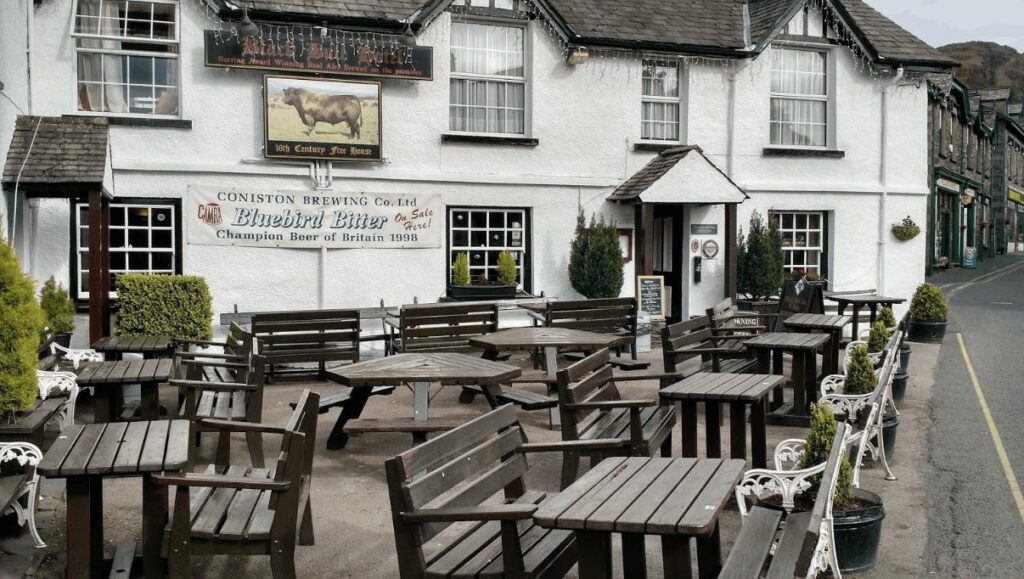
Local ales served in Coniston, where brewing tradition and village pub culture go hand in hand.
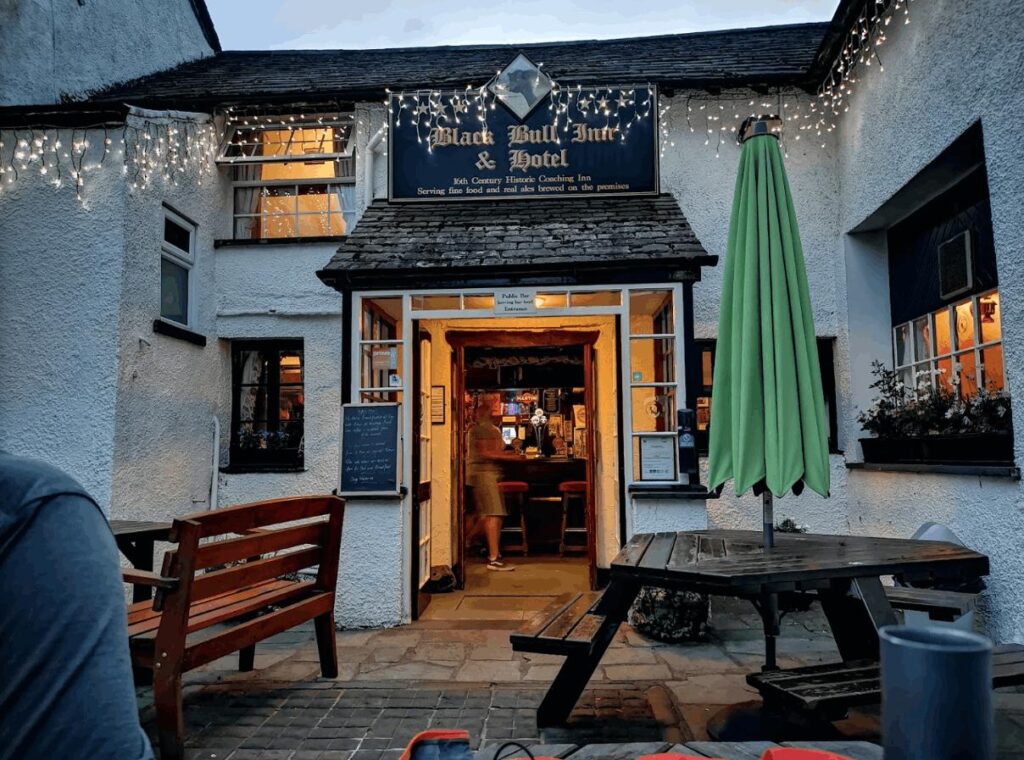
The key name here is The Black Bull Inn, home to Coniston Brewing Company. Visit Cumbria notes that the multi-award-winning Coniston Brewery brews behind its tap inn, The Black Bull, in Coniston village.
This matters because it gives Coniston a direct beer identity. It is not just a village with pubs. It is a village where the pub, brewery and landscape all connect.
“There’s something special about drinking a pint brewed just down the road.”
Coniston Brewing Company is especially associated with Bluebird Bitter, one of the best-known Lake District beers. For visitors, there is something powerful about drinking a local pint in the village where it is brewed, especially after walking the Old Man of Coniston or spending the day around the lake.
Coniston is also linked to Donald Campbell and the Bluebird story, to mining history, and to some of the most dramatic western-southern scenery in the National Park. The pub scene benefits from all of that.
Hawkshead: small village, big pub character
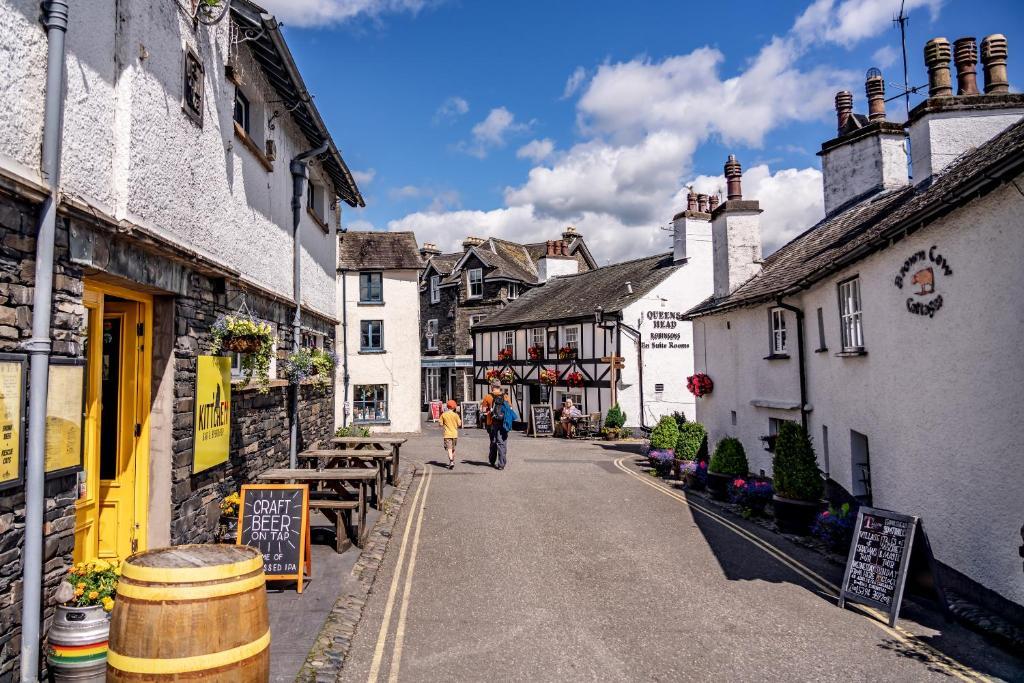
A traditional village pub in Hawkshead, one of the Lake District’s most picturesque and historic locations.
Hawkshead is one of the prettiest villages in the Lakes, with narrow lanes, whitewashed buildings and a strong visitor economy. It is close to Ambleside, Coniston, Esthwaite Water, Near Sawrey and Beatrix Potter country.
For pub lovers, Hawkshead offers a classic village experience. The Kings Arms is one of the central village pubs, located in The Square, and is described by local accommodation guides as a historic pub with local beers, ales, food and a beer garden.
“Every village feels like it has its own pub story.”
Hawkshead works especially well as a slow pub destination. It is not about big-volume nightlife. It is about wandering through the village, stopping for food, trying local beer and using the pub as part of a wider day out.
Nearby Near Sawrey and Far Sawrey add another layer, with visitors often combining Beatrix Potter’s Hill Top, countryside walks and a pub stop.
Langdale: climbers’ pubs and fell culture
If there is one valley where the relationship between mountains and pubs feels especially strong, it is Langdale.
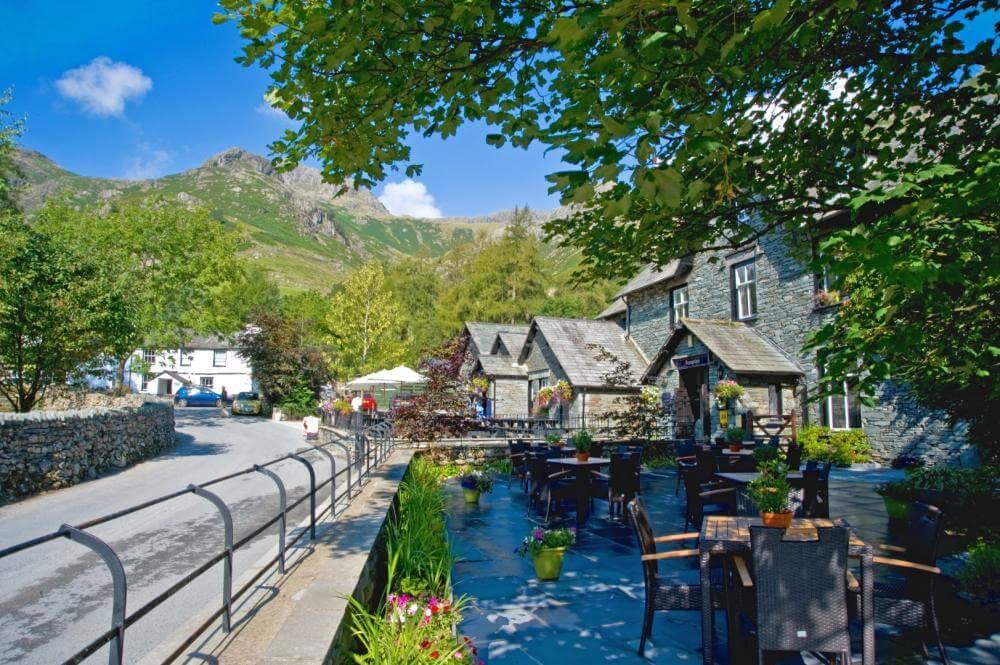
A classic Langdale pub at the foot of the fells, where hikers gather after a day on the mountains.
Great Langdale and Little Langdale are famous walking and climbing areas. The surrounding fells include the Langdale Pikes, Bowfell, Crinkle Crags and routes towards Scafell Pike. This is serious walking country, and the pubs reflect that.
The Old Dungeon Ghyll Hotel is one of the most famous walkers’ and climbers’ pubs in the Lake District. Its own history says it was originally a farm and an inn, and that in the 1885 rate book it was named Middlefell Inn, run by John Bennett, a well-known tourist guide.
The Old Dungeon Ghyll is not just a pub. It is part of the mountaineering culture of the Lakes. For many walkers, a day in Langdale is not complete without ending at the ODG.
“After a day on the fells, all you want is a pint, a fire, and somewhere to sit.”
Nearby Chapel Stile has Wainwrights’ Inn, described as a traditional Lakeland pub popular with locals, guests and walkers, with changing local ales and hearty food.
The National Trust also highlights Langdale as a valley of walking, cycling and climbing routes, with Lake District pubs tucked below the fells. This is exactly the heart of the Lake District pub scene: not separate from the outdoors, but part of it.
Wasdale and Eskdale: remote pubs with mountain drama
The western valleys of the Lake District feel very different from Windermere or Ambleside. Wasdale, Eskdale and Boot are more remote, more rugged and more dramatic.
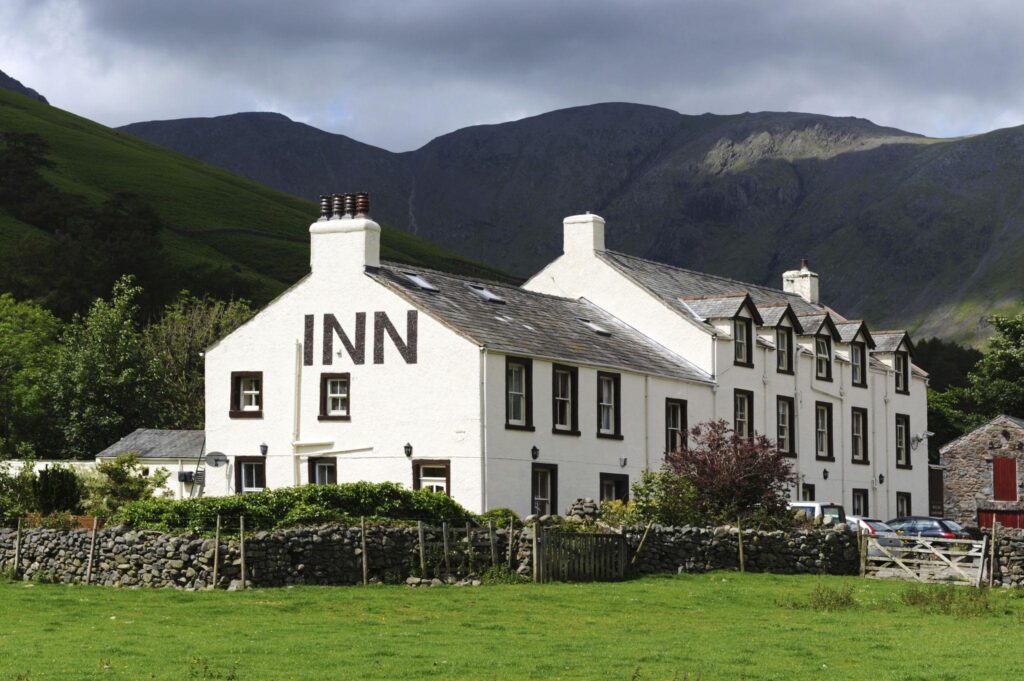
Remote pubs in Wasdale and Eskdale serve walkers, climbers and visitors exploring the wilder western Lakes.
Wasdale is the valley of Scafell Pike, England’s highest mountain, and Wastwater, one of the most dramatic lakes in the country. The pub scene here is not polished town-centre hospitality. It is mountain hospitality.
Pubs and inns around Wasdale and Eskdale serve walkers, climbers, campers and people exploring the western Lakes. Boot is one of the great small pub villages of the area, with names such as Brook House Inn appearing in CAMRA’s West Cumbria Good Beer Guide 2026 entries.
The western valleys of the Lake District feel very different.
That CAMRA list also includes The Sun Inn at Bassenthwaite, The Coledale Inn at Braithwaite, and several Cockermouth pubs including The Bitter End, The Castle Bar and The Cock and Bull.
This shows that the Lake District pub scene is not just about the central tourist corridor. The western and northern edges have a serious real ale culture of their own.
Borrowdale: old inns and valley charm
Borrowdale, south of Keswick, is another classic pub valley. It includes villages and hamlets such as Grange, Rosthwaite and Seatoller, with access to Derwentwater, Castle Crag, Honister Pass and routes into the high fells.
One notable pub is The Yew Tree in Borrowdale, which describes itself as a historic Lake District country pub dating back to 1628, with stone-flagged floors, fires, old mining tools and slate artefacts.
That kind of detail is important. The best Lake District pubs are not only places to drink. They carry the memory of the valley: mining, farming, guiding, tourism, walking, weather and local conversation.
Borrowdale pubs often feel like they sit between old Cumbria and modern tourism. You may see muddy walkers, hotel guests, dogs, families and locals all in the same room.
Windermere and Bowness: the busy southern gateway
Windermere and Bowness-on-Windermere are among the busiest visitor areas in the Lake District. This is where many first-time visitors arrive, especially those coming by train, coach or car for a short break.
The pub scene here is bigger, busier and more commercial than in remote valleys. You will find traditional pubs, hotel bars, restaurants, lakeside venues and tourist-focused food pubs.
A lively pub near Windermere, serving visitors exploring the southern gateway to the Lake District.
Bowness in particular benefits from lake cruises, shops, hotels and a constant flow of visitors. The pub scene has to serve everyone: couples on weekends away, families, coach parties, walkers, international tourists and locals.
This is not always the most hidden side of the Lake District, but it is one of the most important. Windermere and Bowness are gateway towns, and for many visitors, their first Lake District pint is poured here.
Ullswater, Glenridding and Patterdale
Ullswater has its own pub identity. It is slightly quieter than Windermere but still very popular, especially with walkers heading for Helvellyn, Place Fell, Sheffield Pike and the surrounding fells.
Glenridding and Patterdale are the main pub bases here. These villages serve walkers, campers, outdoor groups and visitors using Ullswater Steamers. The pubs are often practical as much as picturesque: food, rooms, beer, shelter and a place to recover after a demanding day.
This is the kind of area where the phrase “post-walk pint” really means something. The beer is not just an extra. It is part of the reward.
Cockermouth, Jennings and the brewing story
Cockermouth sits just outside the busiest tourist centre of the Lakes but has a major role in Cumbria’s beer story.
Jennings Brewery was founded in Lorton in 1828 before later becoming associated with Cockermouth. The brewery closed in 2022 under previous ownership, but the site was later bought by local owners with plans to revive brewing.
That matters because Jennings is one of the great Cumbrian beer names. For many drinkers, Cumberland Ale and Jennings beers were part of the taste of the Lakes. The possible revival of Jennings is not just business news; it is cultural news for the Lake District pub scene.
Cockermouth also appears strongly in CAMRA’s West Cumbria Good Beer Guide 2026 entries, with pubs including The Bitter End, The Castle Bar, The Cock and Bull and the Jennings Brewery Tap.
Local beer: why the Lake District tastes different
Cask ales on the bar in a Lake District pub, showcasing the region’s strong real ale heritage.
The Lake District pub scene is supported by a strong local brewing culture.
Names associated with the wider Lakes and Cumbria include Coniston Brewing Company, Keswick Brewing Company, Hawkshead Brewery, Hesket Newmarket Brewery and Jennings.
Visit Lake District says Cumbria and the Lake District have an impressive collection of breweries and microbreweries, producing award-winning ales. That local beer culture gives the pub scene a stronger sense of place.
A pint in the Lake District often feels local because it is local. You are not just drinking a national lager that could be served anywhere. You may be drinking something brewed in Coniston, Keswick, Staveley or Cockermouth.
“You’re not just getting a drink — you’re getting something local.”
That is one of the reasons real ale still matters so much here. CAMRA’s Good Beer Guide remains a serious reference point for quality pubs serving real ale, and the 2026 edition includes entries across West Cumbria selected by local CAMRA members.
Campaign for Real Ale (CAMRA)
“The Lake District remains one of the strongest regions in the UK for traditional pubs and real ale, with many venues continuing to serve as vital community hubs as well as destinations for visitors.”
Food: from walkers’ meals to gastropubs
Food has become central to the Lake District pub scene.
Some pubs still focus on classic walkers’ food: pies, chips, soups, sandwiches, roasts, Cumberland sausage, stews and hot puddings. Others have moved further into gastropub territory, with seasonal menus, local meat, Cumbrian lamb, game, fish, cheese and more refined cooking.
Visit Lake District says there is hardly a corner of the region without a pub kitchen serving local specialities in a warm atmosphere.
That is true. Food is now one of the main reasons visitors choose one pub over another. In high-footfall areas like Ambleside, Bowness, Keswick and Grasmere, the pub has to compete not just as a drinking place but as a full dining experience.
Yet the best Lake District pubs do not lose their pub identity. They still offer the basics that matter: fire, beer, shelter, welcome, dogs, walkers and a sense of place.
Dogs, muddy boots and the unwritten rules
One of the defining features of the Lake District pub scene is the dog-friendly, boot-friendly culture.
Dog-friendly and walker-friendly pubs are a major part of the Lake District’s hospitality culture.
Not every pub has the same policy, and visitors should always check before arriving, but the wider expectation in the Lakes is that walkers and dogs are part of the business. A pub that turns away every muddy boot and damp dog would struggle in many valleys.
That does not mean anything goes. The best visitors understand the unwritten rules: use boot rooms where provided, keep dogs under control, book ahead for food, respect local customers, and remember that these pubs are not theme parks. They are working businesses serving both tourists and communities.
Why Lake District pubs matter to local communities
In many Lake District villages, the pub is one of the few remaining public meeting places.
Shops have closed in some areas. Schools, post offices and services have changed. Tourism has brought money but also pressure, including second homes, staffing challenges, seasonal trade and housing costs.
Against that background, the pub becomes even more important. It provides jobs, supports suppliers, gives locals a meeting place and gives visitors a reason to spend money in villages rather than simply pass through.
This is why losing a pub in the Lake District is not just the loss of a business. It can mean the loss of a social anchor.
The perfect Lake District pub day
A classic Lake District pub day might begin in Keswick with a walk to Friar’s Crag and Catbells before returning to town for a pint.
It might be a Langdale day: walking to Stickle Tarn, coming down tired and hungry, then heading for the Old Dungeon Ghyll or Wainwrights’ Inn.
It might be Coniston: walking the Old Man, visiting the village, then drinking a local beer at The Black Bull.
It might be Grasmere and Rydal: a lower-level walk around the water, then a pub meal before heading back to Ambleside.
It might be Borrowdale: Castle Crag, Rosthwaite, Seatoller, then a firelit inn in the valley.
Or it might be Wasdale: Scafell Pike, aching legs, mountain views and one of the most satisfying pints in England.
That is what makes the Lake District pub scene special. The pub is not separate from the place. It is the final chapter of the walk, the shelter from the rain, the reward after the climb and the room where the day becomes a story.
Final thought
The Lake District is famous for mountains, lakes, poets and views. But its pubs deserve to be seen as part of the heritage too.
They are village landmarks, walkers’ shelters, beer showcases, historic inns, dining rooms, local meeting points and memory-makers.
From Keswick to Coniston, Ambleside to Grasmere, Langdale to Wasdale, Hawkshead to Borrowdale, the Lake District pub scene remains one of the richest in Britain.
And for many visitors, the view from the fell is only half the story.
The British pub has always been at the heart of community life — a place for pints, conversation, and tradition. But over the last few decades, something has quietly revolutionised the industry: the rise of the gastropub.
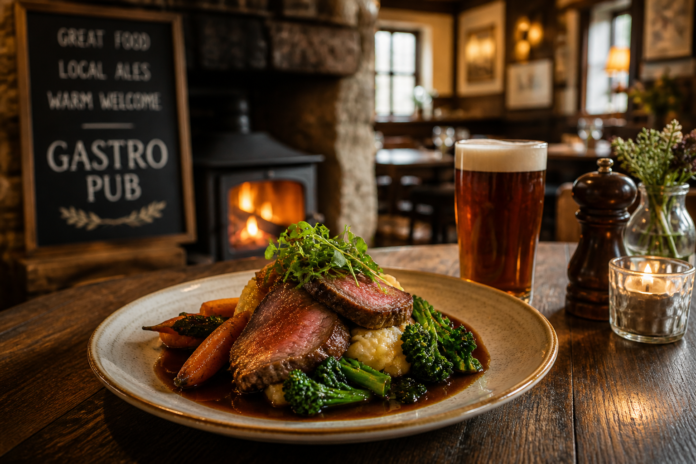
A gastropub blends the relaxed, welcoming feel of a traditional pub with the quality, creativity, and standards of a restaurant kitchen. It’s not just about serving food — it’s about serving proper food. Think slow-cooked meats, locally sourced ingredients, seasonal menus, and dishes that rival some of the best restaurants in the country.
The concept first took hold in the early 1990s, most famously with The Eagle in London. It set the tone for what would become a nationwide movement — pubs where chefs mattered just as much as landlords, and menus changed daily depending on what was fresh and available.
Since then, gastropubs have reshaped expectations. No longer is “pub grub” limited to frozen pies and chips. Today, customers expect:
Fresh, locally sourced ingredients
Chef-led menus with seasonal changes
High-quality presentation
A balance between comfort food and modern cuisine
And crucially — they expect it all without losing the soul of the pub.
That balance is what defines a true gastropub. You’ll still find a roaring fire, local ales on tap, dogs curled up under tables, and regulars at the bar. But alongside that, you’ll see dishes like braised lamb shoulder, wild mushroom risotto, or elevated takes on classics like fish and chips and Sunday roasts.
Across the UK, gastropubs have become a major driver of the hospitality industry. In many rural areas, they’ve helped keep pubs alive — transforming struggling venues into destination dining spots. In cities, they’ve created a middle ground between casual drinking venues and formal restaurants.
Operators have also adapted their business models. Food now often accounts for over 50% of revenue in many successful gastropubs. This shift has allowed pubs to:
Attract a wider audience (families, couples, foodies)
Increase average spend per customer
Compete with casual dining chains and restaurants
Build strong reputations through reviews and word-of-mouth
But it’s not without its challenges.
Running a gastropub means higher costs — skilled chefs, better ingredients, more complex operations. Margins can be tighter, and consistency is key. One bad meal can damage a reputation built over years.
There’s also the question of identity. Some critics argue that as pubs become more food-focused, they risk losing their traditional character. The best gastropubs, however, prove that you don’t have to choose — you can evolve without losing what made pubs special in the first place.
Find the Best Gastropubs Near You
If you’re looking to explore some of the best gastropubs across the UK, you can browse a growing collection on The Best Pub Guide.
This section is built to help people discover pubs that take food seriously — whether you’re planning a meal out, a weekend trip, or just want to try somewhere new.
As more pubs evolve into gastropubs, having a dedicated place to find them is becoming essential — and that’s exactly where The Best Pub Guide comes in, connecting great venues with people actively searching for them.
Young & Co’s Brewery has reported a strong trading performance for the 52 weeks ending 30 March 2026, reinforcing its position as one of the UK’s most resilient pub operators.
The company revealed that total managed house revenue increased by 4.6% over the period, with like-for-like sales also rising by 4.7% — a clear sign that its premium-focused strategy continues to attract customers despite wider economic pressures.
The results put the group firmly on track, with full-year performance expected to meet management expectations.
Premium Strategy Driving Growth
Young’s has continued to focus on operating a high-quality, well-invested estate of pubs — a strategy that appears to be paying off.
By combining strong locations, consistent investment, and a focus on customer experience, the group has managed to maintain growth even as many pubs across the UK face rising costs and uncertainty.
An extensive hedging programme has also helped protect the business from fluctuating costs, giving it a more stable platform for continued expansion.
Expansion Into Prime London Locations
In a move that further strengthens its position, Young’s recently announced the acquisition of Cubitt House — a collection of eight premium pubs in some of London’s most affluent areas.
Three of these venues also include bedrooms, aligning with the growing demand for pubs that offer both hospitality and accommodation.
The acquisition reflects the company’s long-term strategy of selective expansion, targeting high-performing, premium sites that fit its brand.
CEO Confidence in the Future
Chief Executive Simon Dodd highlighted the strength of the business model, stating that the company’s approach continues to deliver “strong, resilient results” even in challenging conditions.
He pointed to the consistent appeal of Young’s pubs, driven by quality environments and the efforts of on-site teams, as a key reason customers continue to return.
With the addition of Cubitt House and continued investment across its estate, the company is positioning itself for further growth as it enters its next phase on the London Stock Exchange.
What It Means for the Industry
At a time when many pubs are struggling with rising costs, staffing challenges, and changing consumer habits, Young’s performance stands out.
It suggests that while the market is tough, there is still strong demand for well-run, high-quality pubs — particularly those offering a premium experience.
The Lamb in Hindon, a traditional Wiltshire countryside pub near Salisbury
If you needed proof that the South West is still quietly dominating when it comes to proper pubs, a visit to The Lamb in Hindon makes it crystal clear.
Tucked away just outside Salisbury, this village pub delivers exactly what many places across the UK are struggling to maintain — consistency, quality, and a genuine sense of hospitality.
It Starts With the Team
One thing becomes obvious almost immediately at The Lamb — the team makes the place.
Even during a busy Sunday service, everything runs smoothly. Staff are attentive without being overbearing, service is sharp, and there’s a clear sense that everyone knows exactly what they’re doing.
It highlights something many pub groups often overlook: you can have the brand, the menu, and the investment — but without the right people on the ground, it falls apart.
Here, it doesn’t.
A Proper Sunday Done Right
The menu follows what you’d expect from a quality countryside pub, but with strong regional touches.
Local ingredients take centre stage, with dishes like Wiltshire game terrine and West Country sirloin flying out of the kitchen. But the real star is the Sunday roast.
The standout? The “Ultimate Roast” — a full plate of sirloin, pork belly, and turkey, served with beef dripping roast potatoes, seasonal vegetables, Yorkshire pudding, and proper gravy.
It’s everything a Sunday roast should be — generous, well-executed, and built for comfort.
Before the mains, the “While Ewe Wait” section keeps things ticking along nicely, with simple but effective options like crispy whitebait, sourdough, and beef dripping popcorn.
The Small Detail That Stands Out
What really separates The Lamb, though, is attention to detail — especially when it comes to the little things.
A perfect example is the dessert offering.
Instead of forcing diners into full portions, the pub offers a “Mini Pud & Coffee” option — smaller versions of classic desserts served with tea or coffee for a modest price.
It’s a simple idea, but one that makes complete sense. Less waste, more flexibility, and a great way to round off a meal without overdoing it.
It’s surprising more pubs don’t follow suit.
Why It Works
Across the UK, many pub groups struggle with consistency from site to site.
But The Lamb shows what’s possible when everything comes together — strong leadership, a committed team, and attention to detail across every part of the experience.
From well-kept cask ales to chefs accommodating dietary needs and staff engaging with families, it all adds up to something that feels increasingly rare.
The Verdict
This is what a proper pub should feel like.
No gimmicks. No shortcuts. Just good food, good beer, and people who care about what they’re doing.
And right now, the South West isn’t just competing — it’s setting the standard.
A much-loved pub in Leith has once again taken the spotlight after being crowned Edinburgh Pub of the Year 2026 by Campaign for Real Ale.
The Dreadnought secured the prestigious title following years of consistent recognition, having previously dominated the awards with a four-year winning streak from 2018.
The North Fort Street venue also came close in recent years, finishing as runner-up in 2023 before reclaiming the top spot this year.
Run by landlord Toby Saltonstall, the pub has built a strong reputation for its dedication to quality real ale and its welcoming, community-focused atmosphere — two key factors that continue to impress CAMRA judges.
The award highlights not just the quality of the beer, but the role pubs like The Dreadnought play in keeping local communities alive. Known for its inclusive environment, the venue has become a staple for both locals and visitors looking for an authentic pub experience in the capital.
CAMRA’s annual awards celebrate pubs that go above and beyond in promoting real ale, maintaining high standards, and creating spaces where people can come together.
For The Dreadnought, this latest win marks a return to the top — and reinforces its place as one of the standout pubs in Edinburgh.
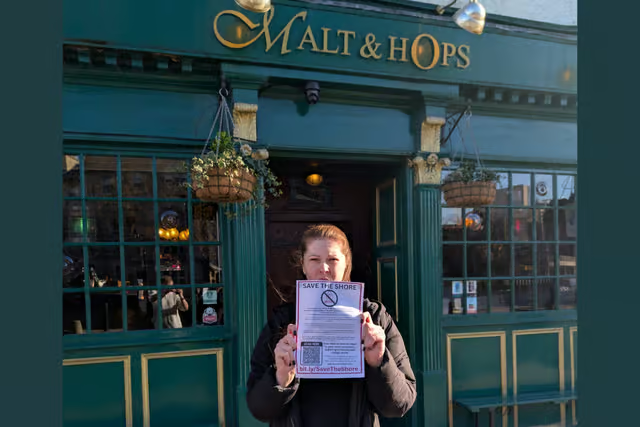
January Watson, Shore Business Collective secretary, outside the Malt & Hops bar at Waterside House
A controversial planning application to convert office space above the well-known Malt & Hops pub into short-term holiday flats has been withdrawn following a strong community campaign in Edinburgh.
The proposal, which aimed to create 15 self-catering apartments at Waterside House on The Shore in Leith, sparked widespread concern among local businesses and residents. At the centre of the opposition was the fear that the development would damage the area’s unique character and threaten the future of the pub directly below.
The Shore Business Collective, representing independent businesses in the area, led the charge against the plans. They urged residents to formally object, resulting in hundreds of submissions opposing the development.
Their concerns were clear: introducing short-term accommodation above a busy, historic pub could lead to noise complaints, reduced trade, and ultimately harm the balance that keeps The Shore thriving.
The group stated: “We are happy to learn that the building owners at Waterside House have withdrawn the planning application to turn all the offices above the Malt & Hops into short-term lets.
We sincerely thank those who spoke up for the local independent businesses and the impact upon the area in general.”
The campaign highlighted a wider issue facing pubs across the UK — the growing pressure from residential developments and short-term lets, often leading to conflicts over noise and operating hours.
The Malt & Hops is a staple of the local community, known for its strong following and involvement in events like the Leith Jazz & Blues Festival. Locals feared that complaints from short-term guests could restrict the pub’s ability to operate as it always has.
January Watson, secretary of the Shore Business Collective, previously warned that the plans could “kill the ecosystem of the street” by pushing out regular office workers who support nearby businesses throughout the week.
A spokesperson for the group added: “Our priority is to keep The Shore as busy and vibrant as possible all year. Everyday workers are absolutely key to sustaining our shops, pubs, and services Monday to Friday.”
Gregor Properties, the developer behind the proposal, confirmed the withdrawal of the application but indicated that discussions are ongoing. A revised proposal may be submitted in the future, with the company inviting input from the pub and local stakeholders.
For now, the decision marks a clear win for the community — and a reminder of just how vital pubs remain to the identity and economy of local areas.
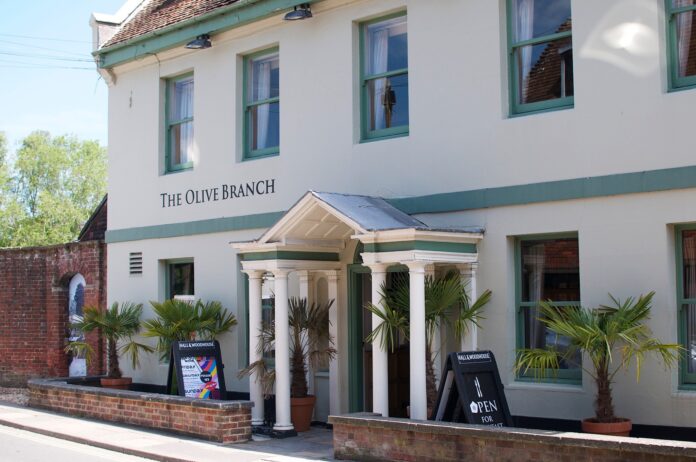
The Olive Branch pub in Wimborne, a popular food-led venue in the heart of Dorset
Tucked into the heart of Wimborne, the The Olive Branch has quietly built a reputation as one of the town’s most welcoming and versatile venues. It’s not just a place for a drink — it’s a modern British pub that blends food, atmosphere, and community into one well-run space.
A Pub That Feels Like the Centre of Town Life
Wimborne is known for its strong pub culture, and The Olive Branch fits right into that scene while bringing something slightly more contemporary to the table.
From the outside, it looks like a traditional Dorset venue. Step inside, and you’ll find a space that’s been carefully styled — clean, comfortable, and designed to work for everyone from casual drinkers to families sitting down for a full meal.
It’s the kind of pub that adapts depending on when you walk in:
Midweek lunches with locals
Evening meals with families and couples
Weekend drinks that carry on into the night
Food That Leads the Experience
Where The Olive Branch really stands out is its focus on food.
This isn’t just a “pint-first” pub — it leans heavily into being a dining destination. The menu centres around modern British pub classics, but with a clear emphasis on quality ingredients and presentation.
Expect:
Proper pub favourites done well
Seasonal dishes that change throughout the year
Options that appeal to both casual diners and those looking for something a bit more refined
It’s the sort of place where people come specifically to eat — and stay for a drink after.
A Social Hub, Not Just a Stop-Off
Like many of the best pubs in Dorset, The Olive Branch has become part of the local rhythm.
It’s somewhere people meet regularly — not just a one-off visit. Whether it’s catching up with friends, celebrating occasions, or just dropping in for a quick pint, it holds that “third place” role that strong pubs always have.
The layout helps too, offering:
Comfortable indoor seating
A relaxed bar area
Outdoor space when the weather allows
That mix makes it usable all year round — something a lot of venues struggle to get right.
Competing in a Strong Pub Town
Wimborne isn’t short of good pubs — far from it. From historic inns to smaller locals, there’s real competition.
But The Olive Branch has carved out its position by sitting slightly above the traditional model:
More food-led than a standard pub
More relaxed than a formal restaurant
More modern than some of the older venues nearby
That balance is what keeps it busy.
Why It Works
The Olive Branch succeeds because it understands exactly what people want from a pub today:
Quality food without losing the pub feel
A welcoming, flexible space
Consistency — the thing that keeps locals coming back
It doesn’t try to be everything. It just does the fundamentals properly.
The Verdict
In a town full of strong venues, The Olive Branch stands out as one of Wimborne’s most reliable all-rounders.
It’s a pub you can visit for any reason — and that’s exactly why it works.
To provide the best experiences, we use technologies like cookies to store and/or access device information. Consenting to these technologies will allow us to process data such as browsing behaviour or unique IDs on this site. Not consenting or withdrawing consent, may adversely affect certain features and functions.
Functional
Always active
The technical storage or access is strictly necessary for the legitimate purpose of enabling the use of a specific service explicitly requested by the subscriber or user, or for the sole purpose of carrying out the transmission of a communication over an electronic communications network.
Preferences
The technical storage or access is necessary for the legitimate purpose of storing preferences that are not requested by the subscriber or user.
Statistics
The technical storage or access that is used exclusively for statistical purposes.The technical storage or access that is used exclusively for anonymous statistical purposes. Without a subpoena, voluntary compliance on the part of your Internet Service Provider, or additional records from a third party, information stored or retrieved for this purpose alone cannot usually be used to identify you.
Marketing
The technical storage or access is required to create user profiles to send advertising, or to track the user on a website or across several websites for similar marketing purposes.