
Historical report: the event or rule change described below dates to 1 February 2026. This article was researched and published by Pub Social on 10 October 2026; it was not published at the time of the event.
UK alcohol duty rates changed on 1 February 2026, affecting the tax charged on beer and other drinks. For publicans and customers trying to understand prices, the crucial point is that duty is generally calculated on the amount of pure alcohol, not simply the volume poured into a glass.
The headline beer rates
HM Revenue & Customs listed the standard beer duty rate for products between 3.5% and 8.4% ABV at £22.58 per litre of pure alcohol. Qualifying draught beer in the corresponding strength band attracted a reduced rate of £19.45 per litre of pure alcohol.
Beer above 1.2% and up to 3.4% ABV was listed at £9.96 per litre of pure alcohol under the standard regime, with separate draught relief provisions.
What that means for a 4% pint
A British pint contains approximately 0.568 litres. At 4% ABV, that is approximately 0.02272 litres of pure alcohol. At the qualifying draught duty rate, this works out to roughly 44 pence of duty attributable to the pint, before other costs and taxes are taken into account. It is an illustration, not a prediction of a pub’s selling price.
Retail pricing also reflects brewing, packaging, transport, staffing, rent, business rates and VAT. Not every alcoholic product qualifies for draught relief, and small-producer provisions can also affect the actual liability.
Why the distinction matters
Public discussion often treats an increase in duty as an identical increase on every pint. The actual outcome depends on strength, eligibility and commercial decisions throughout the supply chain. HMRC’s published tables are the definitive starting point for those calculations.
Original source
Read the underlying announcement or official guidance: HM Revenue & Customs.
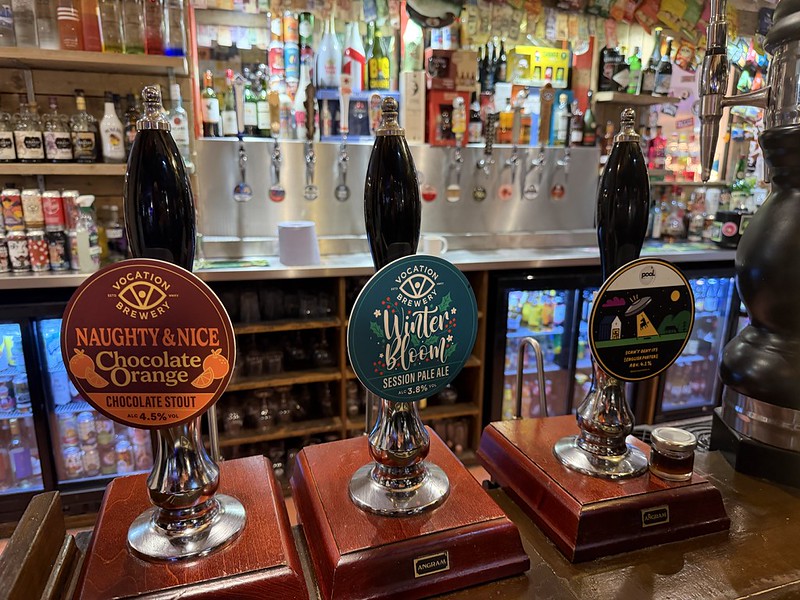
Photograph: illustrative real-ale handpumps at an English pub; not the venue described in this report.


