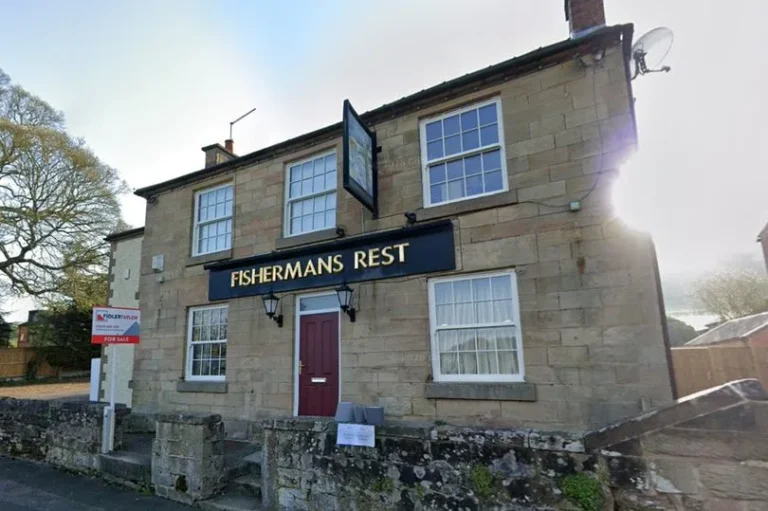
Another British pub could soon disappear from the hospitality map after fresh housing plans emerged for a former Derbyshire local that closed its doors last year.
The Fisherman’s Rest, located on Broadholme Lane in Belper, shut in February 2024 after its previous owners retired, citing rising operating costs and shrinking returns as key reasons behind the closure.
Now, new planning documents submitted to Amber Valley Borough Council suggest the site may be transformed into a domestic home — marking yet another example of a traditional pub building facing a future outside the hospitality industry.
When the pub was originally placed on the market, it carried an asking price of £465,000 and was advertised as suitable for multiple potential uses. The property included several lounge and dining areas surrounding a central bar, kitchen facilities, upstairs living accommodation, a sizeable beer garden and a 16-space car park.
Estate details at the time highlighted the “future development opportunity” offered by the site — something that now appears to be moving closer to reality.
According to the plans, the upstairs accommodation already operates as a flat, meaning the proposed work would focus mainly on converting the downstairs pub areas into residential living space.
In a further sign of redevelopment around the site, separate proposals to build two cottages within the former pub car park have already been approved.
The closure of pubs across Britain continues to be a major concern for communities, with rising energy costs, staffing pressures, reduced beer sales and changing social habits placing increasing pressure on independent venues and rural locals.
For many villages and towns, pubs are more than just businesses — they are social hubs, meeting places and part of local identity. Once a pub building is converted into housing, it is often lost to the community permanently.
While some former pubs are being rescued through community ownership schemes or major refurbishments, others are increasingly finding themselves redeveloped as homes, shops or alternative businesses as operators struggle to make the numbers work.
For Belper locals, the future of The Fisherman’s Rest now appears likely to move away from pulling pints and toward private living — another sign of the changing landscape facing Britain’s pub trade.
Pub landlords say they are being pushed to breaking point after customers complained about children running wild in beer gardens while parents “look the other way”.
A growing debate has erupted across Britain’s pub scene after several landlords warned they may ban children from pubs following repeated complaints about damage, disruption, and poor behaviour in pub gardens.
The Market Inn in Faversham, Kent, says it is considering becoming an over-12s venue after youngsters were accused of tearing up plants, throwing stones, and barging into customers while parents failed to supervise them.
In a blunt social media post, landlord Tim Stowell admitted the situation was becoming increasingly frustrating for staff and customers alike.
“If parents are not willing to look after their children, we will make it a 12-and-over pub at all times.”
The pub garden of the Market Inn in Faversham, where parents have allowed their children to run amok
Another nearby venue, The Anchor pub in Faversham, also publicly appealed for parents to take more responsibility after children were accused of damaging plants and disturbing customers in the beer garden.
Landlord Mark Revell described how leaves had been ripped from a Japanese acer tree planted in memory of his partner’s father, calling the incidents upsetting and unnecessary.
“We spend a lot of time and money on the garden to make it nice for customers and all we are asking is for a little bit of respect.”
The debate has sparked strong reactions online, with many pubgoers supporting stricter rules around children in pubs and criticising what they see as declining parenting standards.
Others, however, argue that pubs should remain family-friendly and warn that blanket bans could damage the welcoming atmosphere many locals value.
The issue is becoming increasingly common across Britain as more pubs invest heavily in outdoor seating areas, beer gardens, and community spaces during the busy summer months.
Tim and Lacey Stowell, who run the Market Inn in Faversham, have asked parents to respect the garden at the pub
Some venues have already introduced age restrictions. In 2024, The Wheel Inn near Ashford banned under-14s entirely as landlords aimed to create what they described as an “adult-only environment”.
The story has reignited a wider national conversation around pub etiquette, parenting, and whether traditional pubs should prioritise family-friendly spaces or quieter adult environments.
Should pubs ban unsupervised children from beer gardens, or should pubs remain fully family-friendly? Let us know your thoughts.
An experienced Scottish publican says traditional village pubs still have a future despite the growing crisis facing Britain’s hospitality industry.
A historic Edinburgh pub has entered a new chapter after being taken over by an experienced local publican determined to keep traditional village pub culture alive despite mounting pressures across the hospitality industry.
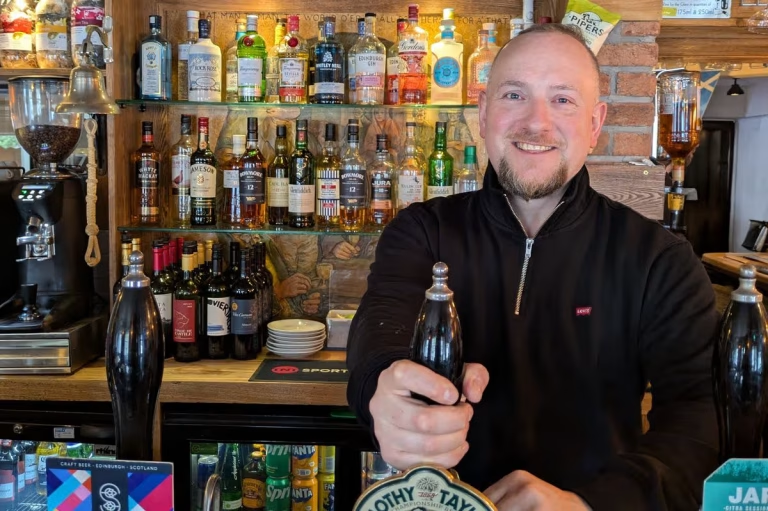
The Kinleith Mill in Juniper Green, on the outskirts of Edinburgh, is now under the ownership of Tom Wilding, who already runs several popular pubs across the Scottish capital including Greenmantle, The Caley Sample Room, and the Murrayfield Bar.
Despite widespread closures across Britain’s pub trade, Tom says he still believes there is strong demand for proper community pubs focused on atmosphere, local customers, and traditional hospitality.
The 37-year-old officially reopened the pub just weeks after taking over the lease and already has major plans for the future of the traditional 1800s coach house pub.
“We really want to thrive here as a central part of the community.”
Speaking about the takeover, Tom explained that the pub offered something very different to the rest of his portfolio because of its traditional village atmosphere and close community feel.
Located near the Water of Leith on busy Lanark Road, the pub attracts a wide range of customers including walkers, families, students, elderly locals, and long-time regulars.
A weekly pub quiz is already running, while plans are underway to expand the food offering and drinks selection throughout the year.
Even with hospitality facing rising costs, uncertainty, and growing financial pressures, Tom says pubs can still survive if they focus on community, value, and atmosphere.
“Everything is more expensive. But we haven’t increased any prices.”
In an unusual move, the pub has even increased spirit measures from 25ml to 35ml while keeping pricing the same to reward loyal customers.
Tom admitted there are no illusions about how difficult the industry has become, describing a constant cycle of pubs changing hands as operators struggle with rising costs and uncertainty.
However, he believes traditional village pubs offering warmth, familiarity, and a genuine local atmosphere still have a major role to play in British pub culture.
“A site like this needs love and attention, and to be driven with energy for the future.”
As many pubs continue battling rising bills and falling margins, stories like this highlight how some operators are still backing community-focused pubs despite the risks.
Do traditional village pubs still have a future in Britain? Let us know your thoughts.
The Cornish Arms says it wants to bring back “proper pub prices” and make the local pub affordable again.
A South West pub is bringing back £2.50 pints just in time for summer as it looks to make going to the local pub affordable again.
The Cornish Arms in Constantine, Cornwall, has announced the return of what it calls “Proper Pub Prices” in a bid to encourage locals back through the doors at a time when many pubs across Britain are charging £5 or more for a pint.
Located between Falmouth and Helston, the village pub says it wants to focus less on becoming a destination venue and more on returning to the traditional role of a proper local pub at the heart of the community.
Speaking about the move, those behind the pub said they wanted to “get back to basics” and make the pub somewhere people can visit regularly rather than only on special occasions.
The move comes as rising food, staffing, and energy costs continue putting pressure on pubs across the UK, with many drinkers increasingly searching for affordable nights out and cheaper pint prices.
The return of £2.50 pints has already attracted attention online, with many pubgoers praising the decision and saying more pubs should follow the same approach to help keep local pub culture alive.
As summer approaches and beer gardens begin filling up again, affordable drinks deals are expected to become a major attraction for pubs hoping to increase footfall and boost trade during the warmer months.
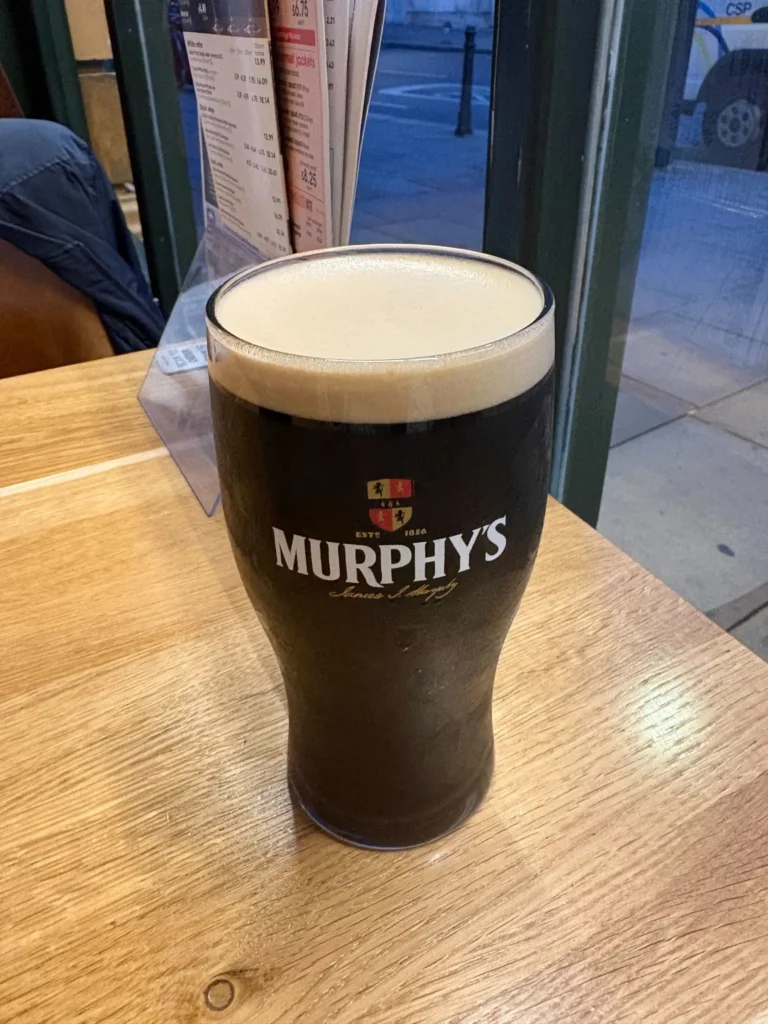
A long-running Irish stout debate has officially landed back in British pubs after Wetherspoons confirmed the return of Murphy’s Irish Stout across its venues nationwide.
The Cork-brewed stout, often seen as Guinness’ biggest Irish rival, is being rolled out across Wetherspoons pubs for the first time in more than a decade — and some drinkers are already claiming they prefer it to the black stuff.
Sun reporter Blathnaid Corless says she would choose a pint of Murphy’s over Guinness every day
Originally founded in Cork in the 1800s, Murphy’s has built a loyal following thanks to its smoother, creamier taste and lighter finish compared to Guinness. While Guinness remains the dominant stout in pubs across Britain and Ireland, Murphy’s has always had a passionate fan base who argue it delivers a sweeter and easier-drinking pint.
The return of the stout to Wetherspoons is also turning heads because of the price.
Murphy’s is expected to sell for around £2.99 to £3.49 a pint in many Wetherspoons pubs, making it noticeably cheaper than Guinness in some locations. With drink prices continuing to rise across the UK pub trade, cheaper stout alternatives are becoming increasingly attractive to pubgoers looking to save money on nights out.
Some pub drinkers describe Murphy’s as:
smoother
creamier
sweeter
less bitter
lighter to drink
The stout has also gained popularity among younger drinkers and students looking for cheaper alternatives without sacrificing the traditional Irish stout experience.
Managers at some Wetherspoons venues have already reported strong early demand following the rollout, with hundreds of pints sold within days of arriving behind the bar.
The return of Murphy’s is likely to reignite one of Ireland’s favourite pub arguments: Which is actually better — Guinness or Murphy’s?
For many stout drinkers, the answer depends entirely on where the pint is poured.
Independent breweries say direct-to-customer tap rooms are now the only thing keeping many beer businesses alive as closures continue across Britain.
An independent brewery owner has warned that many British breweries would no longer survive without brewery tap rooms as the UK beer industry continues facing mounting pressure.
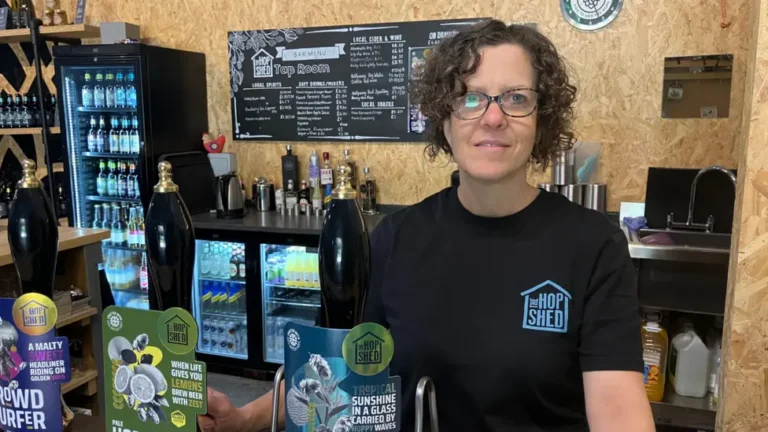
Sarah Saleh, owner of The Hop Shed Brewery in Suckley, Worcestershire, says direct-to-customer sales have become essential for survival as breweries struggle with rising costs, pub access problems and falling beer consumption.
Her comments come as the number of English breweries falls below 2,000 for the first time since 2018.
Britain’s Brewery Crisis Deepens
The beer industry estimates around two pubs closed every day during the first quarter of 2026, while dozens of breweries are now facing administration, insolvency or liquidation.
Of the 1,965 breweries still operating in England, 95 are currently going through financial difficulties.
In the West Midlands alone, 21 brewery businesses closed last year while only nine new companies opened.
‘Without the Tap Room We Wouldn’t Still Be Here’
Suggested Image Placement
Sarah Saleh behind the brewery bar serving customers.
Saleh believes breweries without direct public venues are increasingly struggling to survive.
“Without the tap room we wouldn’t still be here,” she said.
“I think the breweries that are closing are the ones without a direct outlet for their beers.”
She explained that several nearby breweries that launched around the same time as Hop Shed have already disappeared.
Saleh said she is always amazed by the amount of customers who use her tap room
“I know when we set up here 10 years ago, I can think of two breweries locally that were set up but didn’t have tap rooms, and they’re now no longer here.”
Turning a Barn Into a Community Pub
Suggested Image Placement
Busy tap room filled with customers drinking local beer.
The Hop Shed Brewery’s tap room operates out of a rural barn in the Worcestershire countryside — but Saleh says the response from customers continues to surprise her.
“It always amazes me that on a Friday night when the tap room is open, and we stand here in a barn in the middle of nowhere, before you know it there’s 200 people here.”
She says visitors are not only supporting local beer, but also other independent businesses.
“They’re enjoying food from local providers and enjoying the beer that’s been brewed here on site.”
“So the tap room really draws people in, which is fantastic.”
Big Breweries Still Dominate the Market
Suggested Image Placement
Rows of beer pumps inside a traditional British pub.
Industry experts say one of the biggest problems facing independent breweries is simply getting beer into pubs.
CAMRA’s Tim Webb says large brewing companies continue dominating pub draught lines across Britain.
“The big problem that breweries have got, and it is getting worse, is access to market,” he explained.
“Large brewery companies own the draught lines in pubs.”
This means many smaller breweries are forced to rely on:
tap rooms
direct sales
brewery shops
local festivals
online orders
rather than traditional pub distribution.
Breweries Forced to Diversify
Andy Slee, chief executive of the Society of Independent Brewers and Associates (SIBA), says many breweries are now having to completely rethink how they operate.
“In order to survive, you just can’t stay doing what you were doing before,” he said.
He added that although the wider beer market continues declining, demand for independent beer still remains relatively strong.
Many breweries are now opening:
tap rooms
food venues
visitor centres
live music spaces
brewery experience events
in an attempt to create additional income streams.
Why Tap Rooms Matter
For many breweries, tap rooms now act as:
pubs
tasting rooms
community hubs
event venues
direct sales outlets
all rolled into one.
They also allow breweries to avoid wholesalers and pub chain restrictions by selling beer directly to customers.
Conclusion
As Britain’s brewery industry continues shrinking, many independent brewers say survival increasingly depends on building loyal local communities around tap rooms and direct beer sales.
For breweries like The Hop Shed, the tap room is no longer just an add-on business.
Hundreds of breweries are disappearing across the UK as rising costs, pub closures and changing drinking habits push Britain’s beer industry into crisis.
Britain’s once-thriving brewery boom is slowing dramatically, with hundreds of breweries disappearing across the UK as the industry battles rising costs, pub closures and changing drinking habits.
New figures reveal the number of UK brewing companies has fallen sharply since reaching a peak in 2022, while independent brewers warn survival is becoming increasingly difficult.
Across the country, breweries that once thrived during the craft beer explosion are now fighting simply to stay open.
Burton-upon-Trent: Britain’s Brewing Capital in Decline
Suggested Image Placement
Historic brewery buildings or brewing equipment in Burton-upon-Trent.
Few places symbolise Britain’s brewing heritage more than Burton-upon-Trent.
Thirty years ago, brewer Al Wall says the streets of Burton were filled with the smell of brewing beer throughout the day.
At its peak, the Staffordshire town produced around a quarter of all British beer and was home to more than 30 breweries.
Today, according to CAMRA data, only eight breweries remain.
Wall now works at Burton Bridge and Heritage Brewing Company — one of the final independent breweries still trying to preserve the town’s brewing identity.
“These days the brewing scene in Burton is a shadow of its former self,” the report states.
Hundreds of Breweries Have Vanished
Suggested Image Placement
Closed brewery signage or empty brewery units.
Companies House data paints an increasingly worrying picture for Britain’s beer industry.
According to the figures:
320 brewing businesses shut down last year
Only 170 new breweries opened
Resulting in a net loss of 150 breweries nationwide
The total number of UK brewing companies has now fallen to 2,320 after peaking at 2,594 in 2022.
England’s brewery count has also dropped below 2,000 for the first time since 2018.
Even more concerning, 95 breweries are currently facing administration, insolvency or liquidation proceedings.
Two Pubs Closing Every Day
Suggested Image Placement
Boarded-up British pub exterior.
The brewery crisis is closely tied to the wider struggles facing British pubs.
Industry estimates suggest around two pubs closed every day during the first quarter of 2026 alone.
CAMRA’s Tim Webb says one of the biggest problems facing smaller breweries is simply getting beer into pubs.
“The big problem that breweries have got, and it is getting worse, is access to market,” Webb explained.
“Large brewery companies own the draught lines in pubs.”
Smaller breweries are also struggling to compete in supermarkets due to aggressive price competition from larger beer brands.
Beer Drinking Habits Have Changed
Suggested Image Placement
Traditional cask ales beside modern craft beers.
Hook Norton Brewery in Oxfordshire — one of Britain’s oldest independent breweries — says the market has transformed dramatically over the last three decades.
James Clarke, the fifth-generation brewer behind the company, says beer consumption is nowhere near historic levels.
“Back in the early nineties, we brewed three beers, a mild, a bitter and Old Hooky,” he said.
“I think beer consumption in the UK was about double the volume that it is now.”
Hook Norton is now producing around half the amount of beer it brewed 15 years ago.
Craft Beer and Heritage Ales Still Thriving
Suggested Image Placement
Independent brewery taproom with customers drinking local beer.
Despite the wider decline, brewers say there is still strong demand for interesting and traditional beer styles.
Tim Webb believes heritage beers, local ales and craft brewing are continuing to hold up far better than mainstream lager sales.
“The part of the beer market that’s holding up or growing is the interesting part,” he said.
“What is slowly but surely contracting is the bright, shiny, frothy top, see-through lager market.”
Breweries Forced to Diversify
Suggested Image Placement
Busy brewery taproom or brewery tour visitors.
Many independent breweries are now surviving by diversifying beyond traditional wholesale beer sales.
That includes:
brewery taprooms
visitor centres
food events
direct beer sales
brewery tours
Andy Slee, chief executive of the Society of Independent Brewers and Associates (SIBA), says breweries simply cannot survive by operating the way they once did.
“In order to survive, you just can’t stay doing what you were doing before,” he explained.
Sheffield and Bristol Keeping Independent Beer Alive
Suggested Image Placement
Modern craft brewery in Sheffield or Bristol.
While many regions are seeing brewery losses, some cities are still thriving.
Both Sheffield and Bristol currently have clusters of independent breweries operating within close proximity of each other.
George Brook, co-founder of Sheffield’s Triple Point Brewery, says local support for independent beer has been vital.
“The culture of drinking local beer is one of the things that makes Sheffield great,” he said.
George Brook (left) started the Sheffield brewery in 2019 with his father Mike (right) and head brewer Alex Barlow
However, he admitted profit margins remain tight.
“We just accept that it’s going to be harder next year to make the same amount of money as we did the year before.”
‘When a Brewery Dies, Something Dies With It’
Suggested Image Placement
Locals drinking inside a traditional independent pub.
For many brewers, the issue goes far beyond beer sales.
SIBA chief executive Andy Slee warned that brewery and pub closures damage entire communities.
“When a brewery or a pub dies, something in that community dies,” he said.
“A place to meet, a place of employment, a place that pays local tax.”
Conclusion
Britain still has thousands of breweries, but the rapid growth of the craft beer boom now appears to be slowing fast.
Independent brewers say survival increasingly depends on:
local drinkers
community support
brewery taprooms
pub culture
keeping independent beer visible in pubs
Without that support, many fear Britain could lose even more of its brewing heritage in the years ahead.
Beer fans across Britain are claiming their favourite pints no longer taste the same — with growing complaints that breweries are quietly reducing alcohol strength while charging more.
British drinkers are increasingly accusing breweries of watering down beer and quietly reducing alcohol levels as pubs and supermarkets continue battling rising costs.
The growing backlash comes after social media users and beer fans began complaining that many popular lagers, ales and canned beers simply do not taste the same anymore.
Some customers claim their favourite drinks now feel:
weaker
flatter
sweeter
less full-bodied
less alcoholic
Others have branded the trend “drinkflation” — comparing it to shrinkflation in food products where customers pay more for less.
What Is ‘Drinkflation’?
The term is being used online to describe breweries reducing alcohol percentages or subtly changing recipes while prices continue rising.
Over the past few years, several major beer brands have:
lowered ABV percentages
introduced lighter versions
reformulated recipes
changed ingredients
increased prices
For many pub-goers, the changes are becoming increasingly noticeable.
Rising Costs Hitting Breweries
The beer industry has been under heavy pressure from:
rising energy bills
increased ingredient costs
higher alcohol duties
transport costs
wage increases
Many breweries argue they are trying to balance affordability with survival in an increasingly difficult market.
Some companies have reduced alcohol levels because lower ABV beers are taxed differently, helping reduce costs.
Drinkers Say They Notice the Difference
Across social media, drinkers have been debating which beers have changed the most.
Many claim:
classic lagers feel less crisp
traditional ales taste thinner
stronger beers are disappearing
pints no longer feel as satisfying
Others argue changing tastes and the rise of modern lighter lagers are also influencing brewing trends.
Pubs Facing Difficult Choices
The issue also highlights the wider challenges facing UK pubs.
Many landlords are trying to keep pint prices competitive while dealing with soaring overheads and reduced customer spending.
Some pub operators say consumers are now more price-sensitive than ever, forcing breweries and venues to make difficult decisions.
Is British Beer Changing Forever?
For traditional pub drinkers, the debate touches something much deeper than alcohol percentages.
British beer culture has long been tied to:
flavour
tradition
brewing heritage
local identity
session drinking
As recipes evolve and costs rise, some fear the classic British pint may slowly be disappearing.
Conclusion
Whether it is genuinely “watered down” or simply the reality of modern brewing economics, one thing is clear — British drinkers are noticing changes in their pints, and many are not happy about it.
Adult content creators are reportedly planning a headline-grabbing event at a local pub — and social media users are already comparing it to Bonnie Blue’s record-breaking stunts.
A London pub is reportedly set to host a headline-grabbing OnlyFans event that social media users are already calling one of the most controversial pub stories of the year.
According to reports circulating online, an OnlyFans creator is planning to film an adult content event inside a London pub in an attempt to surpass records previously associated with adult star Bonnie Blue.
The claims have already sparked intense debate across social media, with some calling it a publicity stunt while others question whether pubs should be linked to adult entertainment events at all.
Social Media Frenzy
The story has exploded online after clips and rumours about the planned event began spreading across X, TikTok and Instagram.
Many users expressed shock that a traditional British pub could become the setting for such a controversial stunt, while others argued it reflects the growing crossover between nightlife venues, influencer culture and online adult content platforms.
Questions Over Licensing and Venue Reputation
The reports have also raised questions about:
pub licensing
private venue hire rules
brand reputation
publicity-driven events
the future image of nightlife venues
At the time of writing, there has been no official confirmation from local authorities regarding whether special permissions would be required for filming.
Bonnie Blue Comparison
Bonnie Blue has become one of the UK’s most talked-about adult content creators after a series of headline-making online stunts and viral publicity campaigns.
The latest claims suggest the planned London pub event is specifically designed to generate even bigger online attention and media coverage.
Pub Industry Reactions
The story has divided opinion among pub-goers online.
Some believe pubs should remain traditional community venues focused on hospitality, live entertainment and sport, while others argue private events are ultimately up to venue owners.
Regardless of opinion, the story is already becoming one of the most widely discussed nightlife headlines currently circulating online.
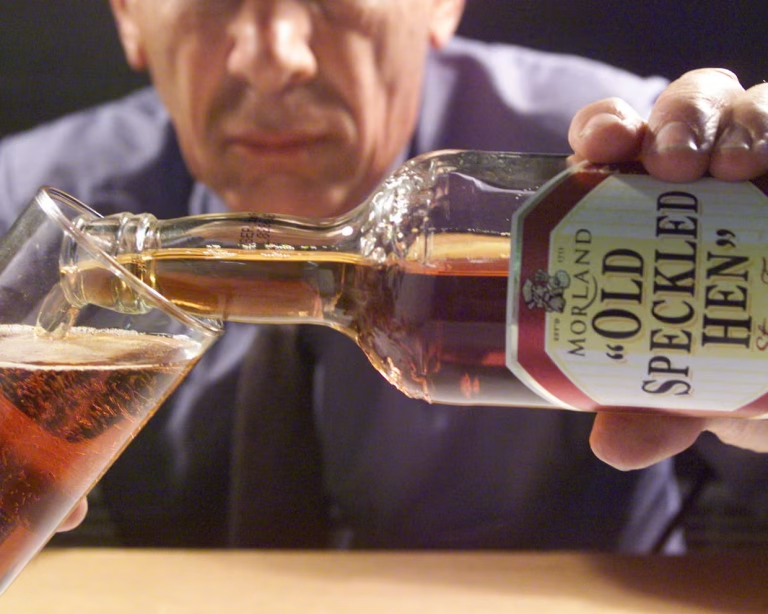
Greene King has sold one of Britain’s most recognisable ales to the Spanish owner of Estrella Damm — sparking fresh debate over the future of traditional British beer brands.
One of Britain’s best-known ales is heading into foreign ownership after Greene King agreed to sell the Old Speckled Hen brand to the Spanish brewer behind Estrella lager.
The deal will see Barcelona-based brewer Damm take ownership of the Old Speckled Hen range, including its classic ale, golden ale and alcohol-free versions.
While Greene King says the beer will continue to be brewed in Britain, the move has already reignited debate about how many historic British beer brands are still truly British.
A Famous British Ale Changes Hands
Old Speckled Hen has long been one of the UK’s most recognisable ales.
The beer was first brewed in 1979 by Morland Brewery in Oxfordshire to celebrate the 50th anniversary of the MG Car Company moving from Oxford to Abingdon.
Its unusual name came from an old MG Featherlight Saloon car workers nicknamed the “Owld Speckl’d Un” because of its mottled paintwork.
Greene King bought the brand in 1999 when it acquired Morland Brewery, and the ale has remained a staple in pubs, supermarkets and beer aisles ever since.
Brewing Will Stay in the UK
Greene King confirmed the beer will continue to be brewed at its historic Westgate Brewery site in Bury St Edmunds during the transition period before production later moves to Damm’s brewery in Bedford.
Nick Mackenzie, chief executive of Greene King, said the company was pleased to have found a partner that would continue producing the beer in Britain.
The financial details of the sale have not been disclosed.
More British Beer Brands Going Overseas
The sale is just the latest example of famous British beer brands being bought by overseas companies.
Over the past decade:
Camden Town Brewery was bought by Belgian drinks giant AB InBev
Fuller’s brewing business was sold to Japanese brewer Asahi
Meantime Brewing Company was taken over by SAB Miller
Sharp’s Brewery, maker of Doom Bar, was bought by Molson Coors
Many drinkers have become increasingly concerned that traditional British brewing identity is slowly disappearing as global beer companies continue expanding.
The ‘British Beer’ Debate
The takeover also highlights growing confusion around what actually counts as a “British beer”.
Several well-known foreign beer brands sold across the UK are already brewed in Britain, including:
San Miguel in Northampton
Cruzcampo in Manchester
Madrí Excepcional in Yorkshire
In fact, the boss of Estrella Damm recently criticised Madrí Excepcional, claiming the beer had “no heritage whatsoever” despite its Spanish branding.
What Happens Next?
Damm says Old Speckled Hen will continue being sold across Greene King pubs, supermarkets and the wider drinks trade.
Luke White, managing director of Damm UK, described Old Speckled Hen as “an iconic British ale brand with a rich heritage and loyal following”.
For many drinkers though, the sale represents another moment in the gradual shift of ownership away from traditional British brewing.
Conclusion
Old Speckled Hen may still be brewed in Britain, but its sale to a Spanish drinks company is likely to spark strong opinions among traditional ale fans.
As more famous beer brands move into international ownership, many pub drinkers are starting to ask the same question:
What actually makes a British beer British anymore?
To provide the best experiences, we use technologies like cookies to store and/or access device information. Consenting to these technologies will allow us to process data such as browsing behaviour or unique IDs on this site. Not consenting or withdrawing consent, may adversely affect certain features and functions.
Functional
Always active
The technical storage or access is strictly necessary for the legitimate purpose of enabling the use of a specific service explicitly requested by the subscriber or user, or for the sole purpose of carrying out the transmission of a communication over an electronic communications network.
Preferences
The technical storage or access is necessary for the legitimate purpose of storing preferences that are not requested by the subscriber or user.
Statistics
The technical storage or access that is used exclusively for statistical purposes.The technical storage or access that is used exclusively for anonymous statistical purposes. Without a subpoena, voluntary compliance on the part of your Internet Service Provider, or additional records from a third party, information stored or retrieved for this purpose alone cannot usually be used to identify you.
Marketing
The technical storage or access is required to create user profiles to send advertising, or to track the user on a website or across several websites for similar marketing purposes.