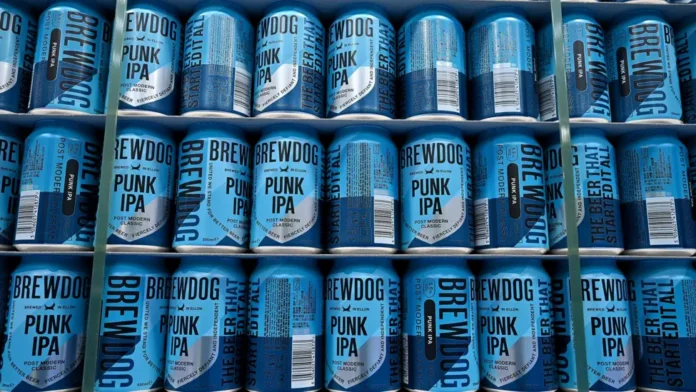
Brewdog has gown into a major brand from its small-scale beginnings in Aberdeenshire
Creditors of BrewDog plc are expected to recover only a fraction of the money they are owed after administrators detailed around £190 million in unsecured claims.
The latest update from administrators AlixPartners paints a stark picture of the financial fallout from the collapse of the former BrewDog companies, even as the BrewDog brand continues trading under new owner Tilray Brands.
Approximately £190 million is owed to unsecured creditors of BrewDog plc.
Those creditors are expected to receive less than one penny for every pound claimed.
The former retail business owes about £489,000 in wage arrears and accrued holiday pay.
HMRC is owed roughly £2.4 million in VAT and other employment-related taxes.
Creditors face minimal returns
According to details from the administrators’ progress report, there are “insufficient funds” to make a distribution to certain preferential creditors of the former retail operation.
The £489,000 employee claim covers unpaid wages and holiday entitlement. Former workers who qualified were directed towards the government-backed redundancy payments system, while the resulting claim forms part of the administration.
HMRC is also among the creditors, with approximately £2.4 million outstanding. Administrators attributed the shortfall to lower-than-expected asset realisations and increased costs during the administration process.
For unsecured creditors of BrewDog plc, the expected return is less than 1p in the pound. That means a business owed £10,000 could receive less than £100 once the process is completed.
Tilray deal kept the BrewDog brand trading
It is important to distinguish the companies in administration from the BrewDog business now operating under Tilray Brands.
Earlier in 2026, the US drinks group acquired BrewDog’s brand, intellectual property, UK brewing operations and 11 bars in a rescue deal worth approximately £33 million. The transaction preserved hundreds of roles, but dozens of bars closed and nearly 500 jobs were lost during the restructuring.
The collapse also left approximately 200,000 participants in BrewDog’s Equity for Punks crowdfunding scheme without a return on their shares.
Tilray now owns and operates the acquired BrewDog assets. The creditor losses described in the administrators’ report relate to the former corporate entities and their retail operation.
What happens next?
Administrators will continue to realise remaining assets, confirm creditor claims and distribute any available funds according to insolvency rules. Secured and preferential claims are considered before unsecured creditors, although the latest report indicates that recoveries will be extremely limited.
The outcome underlines the scale of the financial problems that existed before the rescue transaction and the impact on former employees, suppliers, taxpayers and small investors.
Sources: administrators’ report details reported by The Independent; acquisition details published by Tilray Brands.
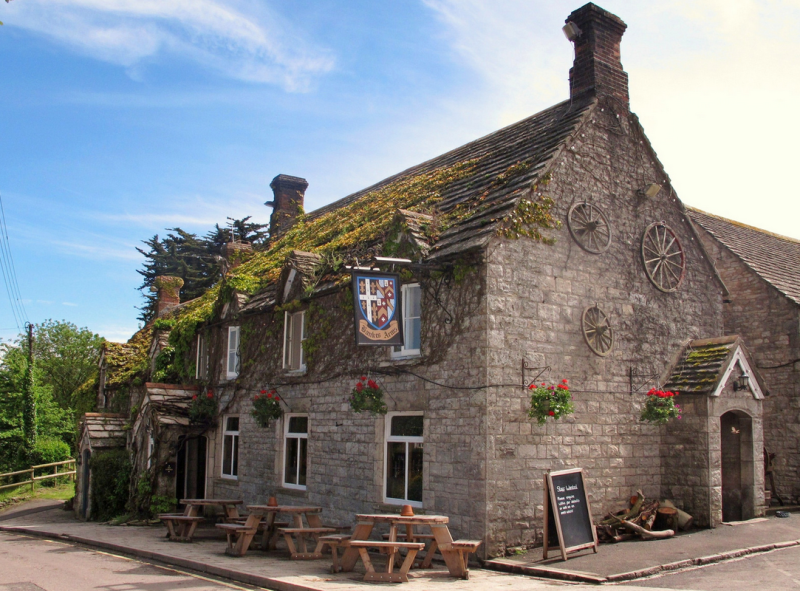
This Bankes Arms Studland review begins with the location: few pubs in Dorset can compete with this 16th-century stone inn above Studland Bay, a short stroll from South Beach and Old Harry Rocks, with local beer brewed only metres from the bar.
But a spectacular view does not automatically make a spectacular pub. In this detailed Bankes Arms Studland review, we look beyond the postcard setting to assess the atmosphere, beer, food, service, accommodation and value — and explain who will get the most from a visit.
This is an independently researched venue review, not a claim of a first-hand visit. Details and opening times were checked in September 2026; always confirm directly before travelling.
The quick verdict
The Bankes Arms is at its best as a walking pub, a beer pub and a place to slow down over a drink with one of the finest coastal views in Purbeck. The food offering is broad and convenient, but recent guest feedback is divided on consistency and value. Come for the setting and the locally brewed ale; treat the meal as part of the package rather than the only reason to visit.
Address
Manor Road, Studland, Dorset, BH19 3AU
Best for
Coastal walks, local ale, sea views, dogs and relaxed lunches
Style
Historic country inn beside the sea
Food
Pub favourites, seafood, seasonal specials and vegetarian choices
Booking
No table reservations; first come, first served
Dog friendly
Yes — well-behaved dogs are welcomed by the pub
Accommodation
Ten B&B rooms; eight ensuite
Pub Social rating
7.8/10 — outstanding location and beer, less certain value
Bankes Arms Studland review: first impressions
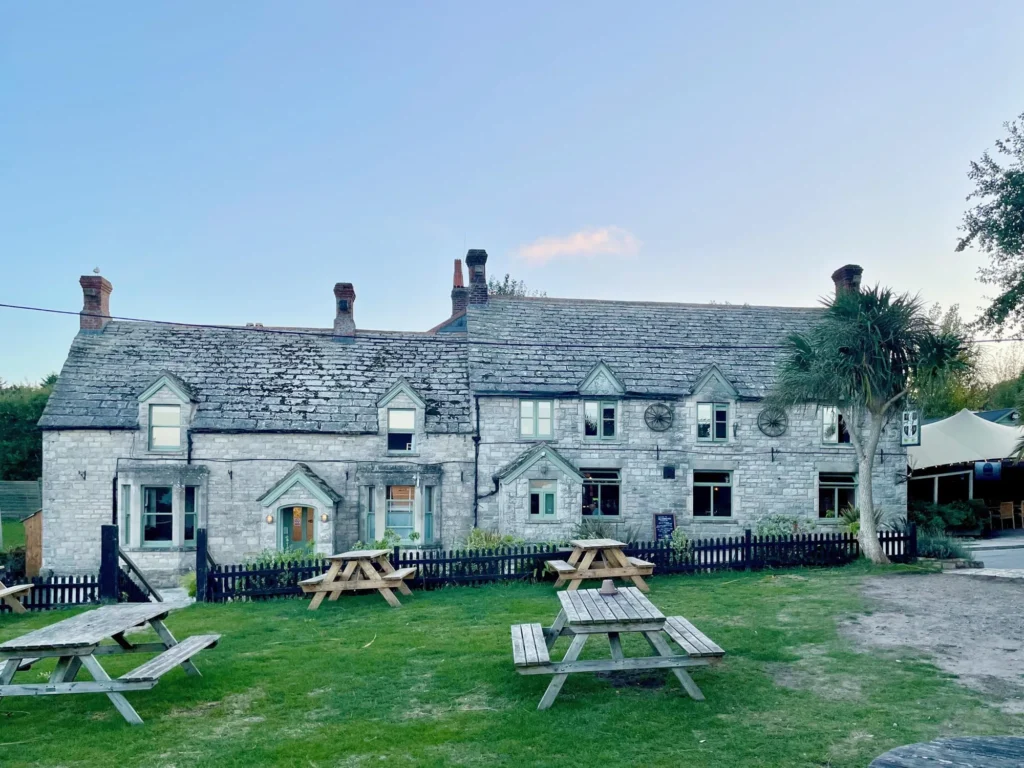
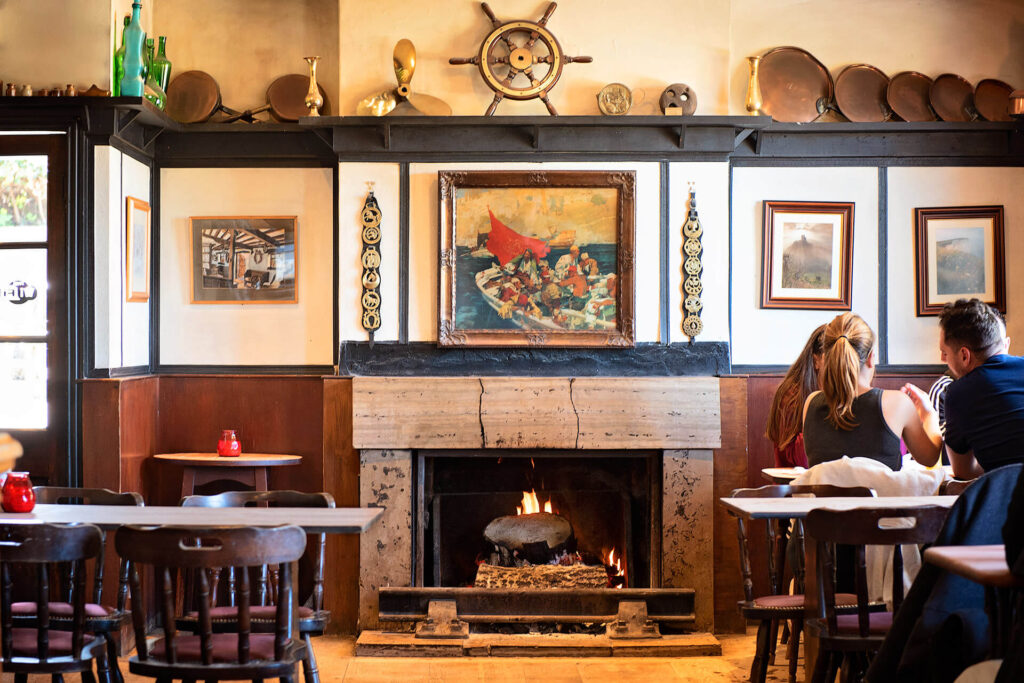
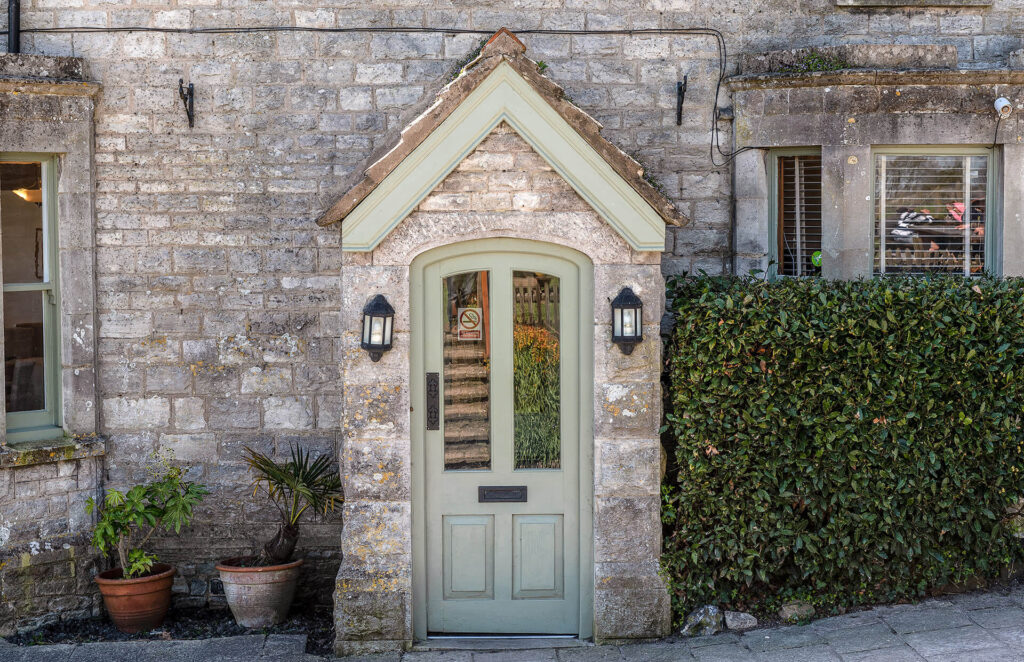
The Bankes Arms looks exactly as a coastal country pub should. Built from locally quarried stone and dating back to the 16th century, it has the weight and character that make Britain’s historic pubs feel inseparable from their surroundings. This is not a themed seaside bar dropped beside a beach; it is a long-established inn that happens to occupy an extraordinary patch of the Purbeck coast.
Inside, the appeal is traditional rather than polished. Open fires come into their own in colder weather, while the stone, timber and compact rooms create a sense of refuge after a windy walk. The mood changes dramatically with the season. On a winter afternoon it can feel like a secluded country inn. On a bright summer weekend, it becomes a busy destination pub handling walkers, beachgoers, families and day-trippers at the same time.
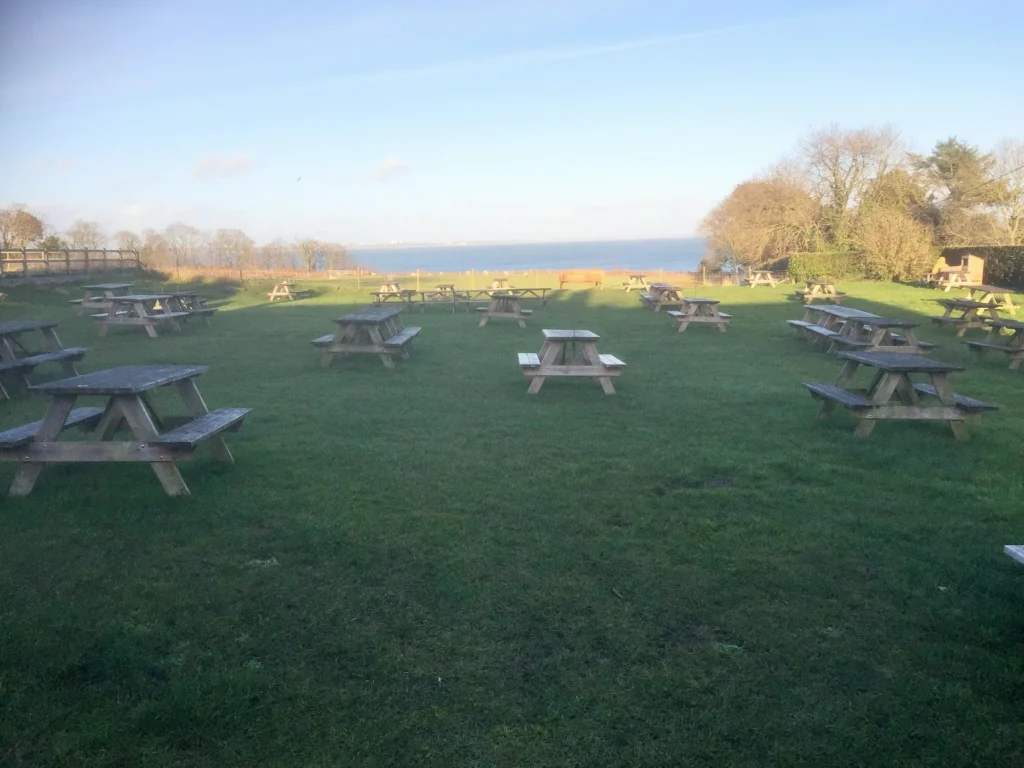
The location is the headline. The gardens look across Studland Bay towards Poole, Bournemouth and, on a clear day, the Isle of Wight. The combination of grass, sea and open sky earns the pub an easy place among the most memorable Dorset drinking spots.
Bankes Arms review: the sea-view garden
The large sea-facing garden is the Bankes Arms’ strongest asset. There are pubs with smarter dining rooms and pubs with more adventurous kitchens, but very few can offer this view with a pint in hand. On warm days the garden turns a simple drink or lunch into an occasion, with Studland Bay stretching out below and the Purbeck landscape rising behind.
That popularity has a practical consequence: expect competition for the best tables when the sun is out. The pub does not take reservations, so an early or later arrival is sensible during school holidays and fine-weather weekends. If you want a quiet, lingering meal at the busiest point of a summer Saturday, the Bankes Arms may feel more hectic than idyllic.
Bankes Arms review: beer and local brewery
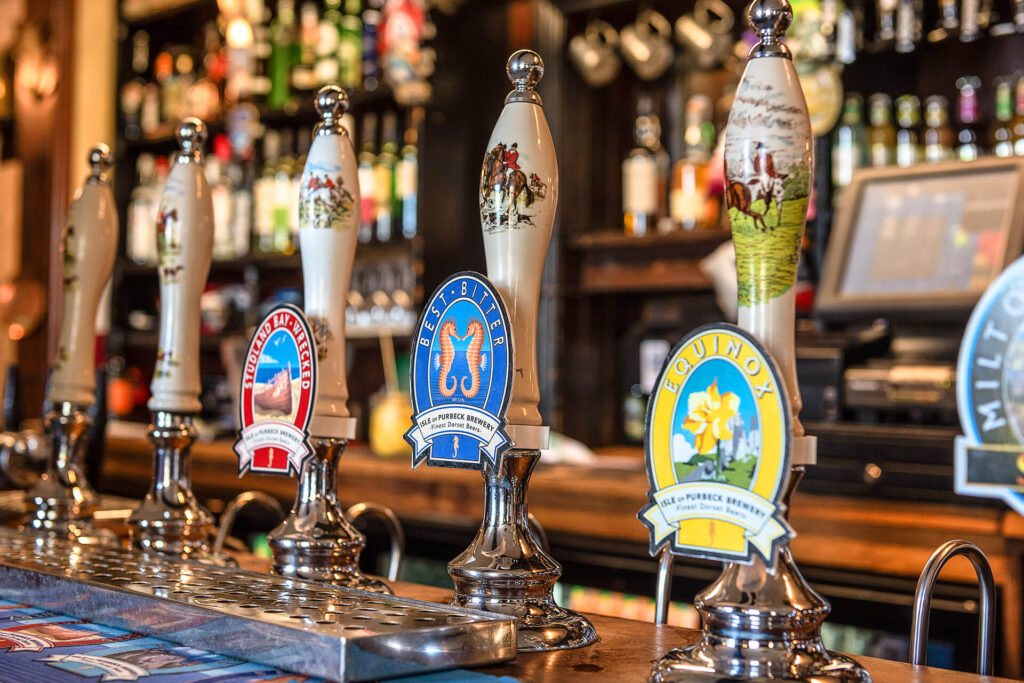
This is where the Bankes Arms has more than scenery on its side. The Isle of Purbeck Brewery is immediately next door and has brewed in Studland since 2003. The brewery produces five core beers alongside seasonal releases and its own cider, giving the pub a genuinely local identity that many country pubs can only imitate.
The brewery describes Solar Power as clean and refreshing, Fossil Fuel as carrying a peppery hop aroma, and Purbeck IPA as smooth and malt-led. Depending on availability, drinkers may also find seasonal ales and Purbeck Pommes cider. For anyone interested in real ale or small-scale craft beer, drinking a pint beside the place where it was made is the clearest reason to choose the Bankes Arms over another Studland stop.
The wider bar includes ciders, wines, spirits and alcohol-free choices, but local beer is the star. Ask what is fresh, what is seasonal and what the staff recommend. This is a better pub for exploring the pumps than ordering the safest national brand by habit.
Bankes Arms Studland review: food and value
The food menu is displayed on chalkboards and changes with season and supply. The pub says it uses local produce wherever possible, including Dorset fish and seafood, meat and Purbeck game. Its published sample menu covers a wide spread: ploughman’s lunches, baguettes, salads, beer-battered fish and chips, sea bass, salmon, scampi, beef bourguignon, chilli and curries.
Vegetarians and vegans are not limited to a token side salad. Sample choices include vegetable and bean chilli, vegetable curry and pasta, while several dishes are marked gluten-free. There is also a simple children’s menu and high chairs are available.
Recent public feedback is sharply mixed, and a useful review should say so. Some guests report enjoyable, well-timed pub food and friendly service even when the garden is busy. Others question portion size, consistency and prices, particularly for straightforward dishes. The most defensible conclusion is that the kitchen can deliver a satisfying post-walk meal, but it is not the guaranteed highlight of the visit.
Our advice is simple: read the chalkboard, check the price before ordering and choose something suited to the venue. Fresh fish, a ploughman’s or a hearty seasonal special makes more sense here than arriving with expectations of destination fine dining. The view carries a premium, and value will feel better if the food is part of a wider beach-and-walk day rather than the sole event.
Service and atmosphere when it gets busy
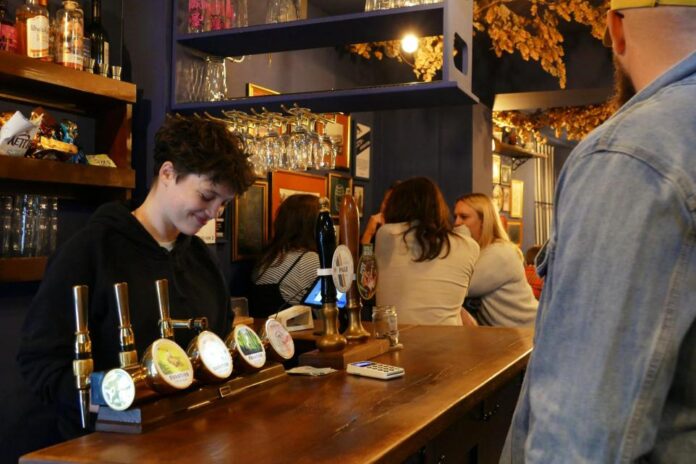
Service is generally pub-style rather than restaurant-style: find a table, note its number and order at the bar. That is straightforward when trade is steady, but it can feel less relaxed when the garden fills and several groups arrive together.
The Bankes Arms’ challenge is also proof of its appeal. It sits beside a famous beach and one of Dorset’s best-known walks, so demand can rise quickly with the weather. Staff may be serving locals, hotel guests, walkers and large family groups at once. Arriving outside the lunchtime peak gives the pub a better chance to show its character — and gives you a better chance of securing the view you came for.
Larger groups are encouraged to telephone ahead so staffing can be planned, even though tables cannot be reserved. If speed matters, ask about the likely wait before ordering.
The perfect pairing: Old Harry Rocks
The National Trust’s Old Harry Rocks circular walk begins at South Beach car park and passes the Bankes Arms. The official route is 3.5 miles, or 5.6 kilometres, and is classed as moderate, with an estimated walking time of one to two hours. It climbs onto Ballard Down and reaches the famous chalk stacks at Handfast Point before looping back through Studland.
This makes the pub exceptionally easy to build into a day out: coffee and a plan before the walk, or a local pint and late lunch afterwards. Dogs are welcome on the route under close control, but walkers must keep well back from the sheer cliff edges. Conditions can also change quickly on the exposed headland.
If your idea of the best UK pubs includes a landscape, a walk and a sense of place — not just a bar and a beer list — the Bankes Arms makes a very persuasive case.
Families and dogs
The pub is well set up for an informal family visit. The garden provides room to spread out, children have their own menu, and the beach is close enough to combine lunch with a paddle or sandcastle session. The first-come system removes the pressure of hitting a precise reservation time, although it also means families should avoid assuming a table will be free at the busiest hour.
Well-behaved dogs are welcomed by the pub, making it a natural stop after the coast path. Owners should separately check current National Trust dog restrictions for the beach, as seasonal rules can apply in different parts of Studland Bay.
Staying at the Bankes Arms
There are ten rooms above the pub. Eight are ensuite and two share a bathroom, with views facing either Studland Bay or the surrounding Purbeck countryside. Breakfast is included and served in a guest dining area separate from the main bar.
The obvious advantage is waking within walking distance of the beach and Old Harry Rocks. Guests should check the exact room description before booking, especially if an ensuite bathroom or sea view matters. The pub also states that its rooms are not suitable for children under five. As with any room above an active inn, light sleepers may wish to ask about noise and room position before paying.
Getting there and parking
By car: use South Beach car park at BH19 3AU, close to the pub. National Trust parking charges apply; members must scan their card or register the visit as instructed.
From Poole: the Sandbanks chain ferry provides the most direct route across the harbour, but check its current operating status before setting out.
From Corfe Castle: follow the B3351 towards Studland.
By bus: the National Trust currently lists the number 50 from Bournemouth or Swanage and the number 40 from Poole, followed by a walk through the village.
By bike: Studland connects with National Cycle Network Route 2.
Parking and ferry queues can become significant on sunny summer days, so build extra time into the journey. Travelling by bus or arriving earlier can make the day considerably less stressful.
Current opening and food times
Season
Bar
Food
Summer: 1 June–31 October
Daily, 11am–11pm Last orders 10.30pm
Daily, noon–9pm
Winter: 1 November–31 May
Daily, 11am–10pm
Weekends: noon–9pm Monday–Friday: noon–3pm and 6pm–9pm
The pub closes on Christmas Day, while the hotel closes on Christmas Eve and Christmas Day. Hours can change, so confirm with the venue before making a special journey.
What works — and what to know before you go
Why visit
One of Purbeck’s most impressive pub settings
Large garden overlooking Studland Bay
Isle of Purbeck beers brewed next door
Ideal before or after Old Harry Rocks
Historic character, rooms, dogs and family options
Bear in mind
No table reservations
Very busy in good weather
Mixed recent feedback on food value and consistency
Paid National Trust parking for non-members
Ferry and local roads can queue in peak season
Bankes Arms Studland review: final verdict
Yes — with the right expectations. The Bankes Arms is not compelling because it promises flawless fine dining or hushed table service. It is compelling because it joins together the things a memorable Dorset pub should: old stone, open fires, locally brewed ale, a garden facing the sea and a footpath leading towards one of the most recognisable views on the south coast.
Its strengths are distinctive and difficult to copy. Its weaknesses — crowding, variable pace and questions about food value — are worth planning around rather than ignoring. Visit outside the busiest hour, explore the local pumps, choose from the chalkboard with care and leave enough time to walk the headland.
Do that, and the Bankes Arms becomes much more than a convenient drink near the beach. It becomes the natural finishing point to one of the best pub-and-walk combinations in Dorset.
There is a particular sound that belongs to a British pub: the firm tug at a foil packet, followed by the rattle of pork scratchings tipped into a bowl. They are not elegant, they make no attempt to look healthy and they can divide a table in seconds. Yet for the people who love them, few snacks sit more naturally beside a pint.
Pork scratchings and pints became partners for reasons that are partly historical and partly practical. Salt, fat, crunch and beer simply get along. The fact that the snack can sit behind a bar for weeks without requiring a kitchen has helped too.
A snack with working roots
The precise origin of the pork scratching is difficult to pin to one place or person. Versions of cooked pork skin exist in many food cultures. In Britain, the snack is strongly associated with the Midlands and with communities where pig keeping, butchery and heavy industry were part of everyday life.
Using the skin was a matter of thrift. When an animal had been raised and slaughtered, wasting an edible part made little sense. Seasoned pieces could be cooked until crisp, producing something rich, portable and satisfying. What began as practical food found a natural home in pubs serving workers at the end of a shift.
That history explains why scratchings still feel more at ease on a wooden bar than on a white plate. Their appeal is direct. Open the packet, find a good piece and accept that a little salt will end up on your fingers.
Why they taste so good with beer
Beer refreshes; pork scratchings linger. A bitter pint cuts through the fat, while the salt makes the next mouthful of beer feel especially welcome. The alternating sensations prevent either from becoming dull.
Texture matters just as much as flavour. A smooth mouthful of ale followed by a loud crunch creates contrast. It is the same reason crisps, roasted nuts and chips work at the bar, but scratchings turn the effect up several notches.
Different beers shift the pairing. A dry lager cleans the palate. Traditional bitter brings a gentle hop bitterness that balances the richness. Stout can echo the roasted edges of a darker scratching. There is no need to build a formal tasting flight; the pleasure lies in discovering that an ordinary packet can make a familiar pint seem newly interesting.
The perfect snack for a small bar
Before every pub offered a full menu, bar snacks had to be simple. They needed little space, no cutlery and almost no preparation. Pork scratchings met the brief perfectly.
A landlord could stock them without running a kitchen. Customers could share a packet without leaving their seat. There was no cooking smell, no washing up and no delay while somebody decided between starters. For a wet-led pub, that practicality still matters.
The packet also controls the portion and protects the product. Unlike an open jar of snacks, it arrives sealed and ready. That may sound unromantic, but many durable pub traditions survive because they make sense for the people working behind the bar.
Not every scratching is the same
People who claim not to like pork scratchings may simply dislike one particular style. Some are hard, bubbled pieces with a layer of fat beneath the skin. Others are lighter and airier. Pork crunch tends to be more uniform, while traditional scratchings can be unpredictable enough to make every handful a small gamble.
Seasoning varies as well. Plain salt remains the classic, but pepper, chilli, barbecue and other flavours have broadened the shelf. Independent producers often emphasise the source of the pork or a slower cooking method, moving the scratching closer to the world of craft food without removing its rough edges.
The best packet usually contains variety: a few neat pieces, one enormous curl and at least one fragment that requires a moment of thought before biting.
The snack people love to argue about
Scratchings invite strong opinions. The visible bristles on a traditional piece are enough to send some drinkers towards the crisps. Others consider that evidence of authenticity. Even regular fans debate the correct balance of skin, crunch and soft fat.
That argument is part of the appeal. Pub food does not always need to produce unanimous approval. A divisive snack starts conversations, encourages swapping and allows somebody at the table to perform the familiar ceremony of insisting that everyone else is missing out.
How they fit the modern pub
Today’s pub might sell sourdough, small plates and alcohol-free IPA alongside familiar bitters. Pork scratchings have adapted rather than disappeared. Some arrive in simple branded packets; others are served warm in a bowl with apple sauce or a dusting of spice.
The upgraded version can be excellent, but the basic idea remains unchanged. It is still a small, salty companion to a drink. It does not ask the pub to become a restaurant, and it does not ask the customer to stop talking while they eat.
A pairing that understands the pub
The lasting partnership between pork scratchings and pints is not really about nostalgia. It works because the flavours complement each other, the texture keeps the palate awake and the format suits the room.
A pub snack should be easy to order, easy to share and interesting enough to reach for again. Pork scratchings manage all three. They are messy, occasionally challenging and completely unpretentious—which is precisely why the packet keeps appearing beside the pint.
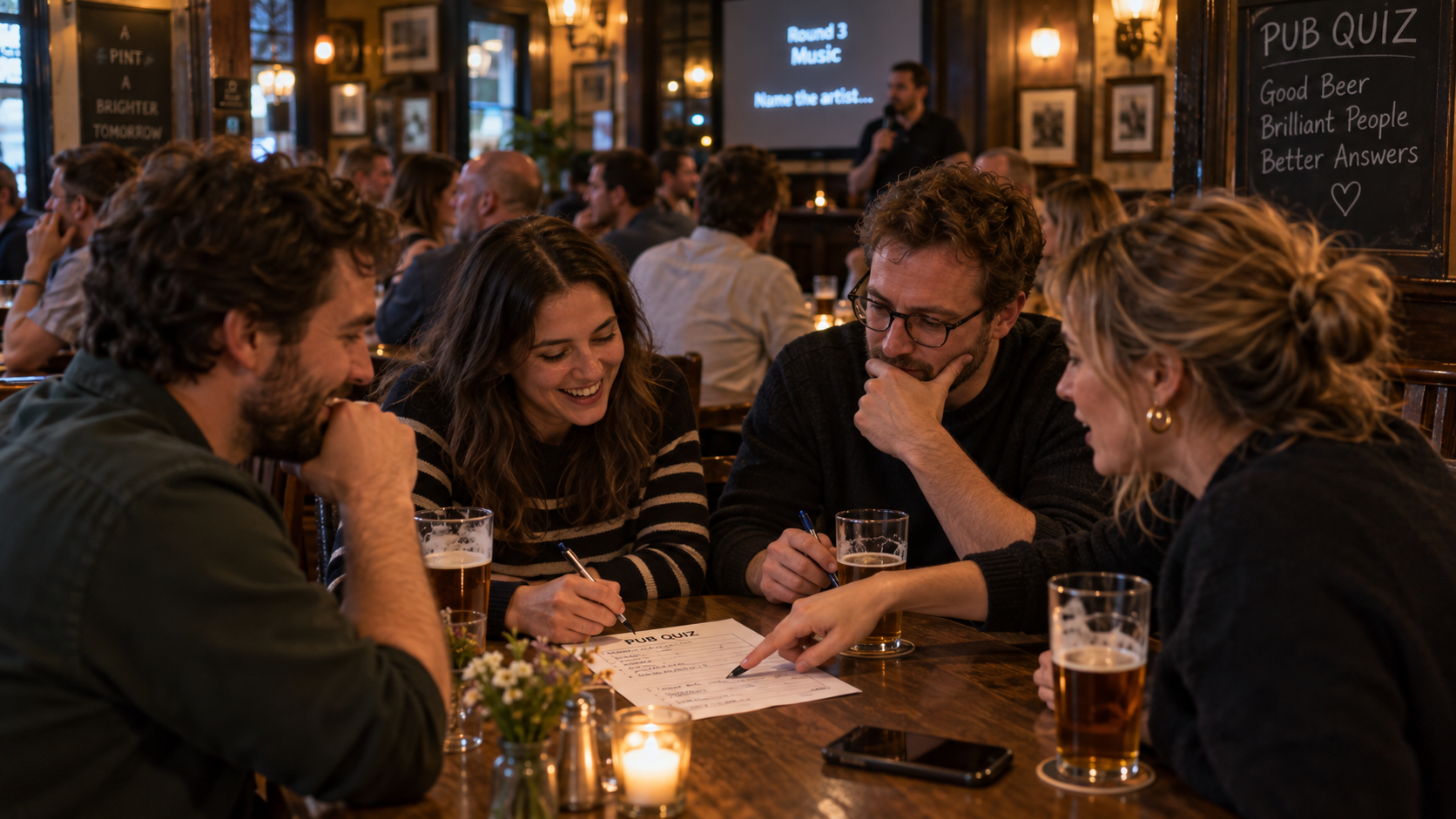
At some point on quiz night, every team reaches the same crisis. One person is certain the answer is Prague. Another insists it is Budapest. A third has written Vienna in capital letters and underlined it twice. The phone on the table could settle the matter in seconds, but using it would destroy the whole point.
That small act of not looking something up explains why the pub quiz still works in the age of smartphones. The facts are available everywhere. The fun comes from what happens when a group has to reach for them together.
A pub quiz turns knowledge into conversation
Searching for an answer is efficient but private. Quiz night is gloriously inefficient and social. Somebody remembers half a film title. Somebody else can picture the actor but not name them. A vague clue passes around the table until it connects with a fact stored in another person’s head.
The answer often matters less than the route taken to reach it. Even a wrong guess can produce a story, an argument or the discovery that the quietest member of the team knows an alarming amount about flags.
That exchange is difficult to reproduce online. A screen gives you information; a pub quiz reveals the strange shape of your friends’ memories.
Everybody gets a chance to be useful
Good teams are rarely built from four versions of the same person. The music obsessive needs the football fan. The history reader needs the person who watches daytime television while working from home. Someone who says they are “terrible at quizzes” will often rescue the team with a brand logo or a line from a children’s book.
This makes quiz night unusually welcoming. Expertise arrives in small, unexpected bursts. A person does not need to dominate the evening to contribute. One answer at the right moment can earn more affection than ten routine points.
The best quizmasters understand this and vary the rounds. General knowledge alone can become a test of who has read the most. Pictures, audio, puzzles and local questions allow different minds into the game.
The rules create a break from the phone
Smartphones have changed the practical running of quizzes. Teams may book online, submit answers through an app or follow a live scoreboard. Yet the basic agreement remains: do not use the device to search.
For two hours, the phone becomes less useful than the people at the table. That is a rare reversal. The temptation to check a message is replaced by the more urgent question of whether a whale is a fish, even though everyone should know better.
Because the rule is shared, putting the phone away does not feel like self-improvement. It feels like playing properly.
Weekly ritual matters
A pub quiz gives shape to an ordinary evening. Tuesday is no longer merely Tuesday; it is the night the team meets by the window, orders chips at half-time and complains about the geography round.
That regularity is valuable to the pub as well as the players. A quiet midweek night can gain a dependable crowd. Teams get to know the staff, notice familiar rivals and gradually become part of the place. The event creates regulars without requiring anyone to call themselves one.
Ritual also lowers the effort of friendship. Busy adults do not have to organise a new activity every week. The table, time and reason to meet are already decided.
Friendly rivalry gives the room energy
A quiz is one of the few competitions where the opposition can be close enough to borrow a pen. Teams watch the scores, pretend not to care and remember the name of the group that beat them by one point six months ago.
The stakes are usually small, which keeps the rivalry enjoyable. A bar tab, a bottle or a modest cash prize is enough to sharpen attention without turning the room grim. Even the team in last place has a goal: avoid the wooden spoon or win the best-name contest.
For the quizmaster, tone is everything. A little teasing brings the room together. Humiliation empties it. The job is closer to hosting a party than reading an exam paper.
Why imperfect questions are part of the charm
Every long-running quiz eventually produces a disputed answer. A question was worded badly. Two sources disagree. A team arrives at the bar with evidence and the confidence of a barrister.
Handled well, the dispute becomes part of the entertainment. The quizmaster listens, makes a ruling and moves on. A perfectly automated quiz might be more accurate, but it would lose the human theatre of the room groaning as half the teams cross out the same answer.
The occasional flaw reminds everyone that this is a local event made by people, not a national examination.
The answer was never really the point
Why pub quizzes are popular is not a mystery of nostalgia. They offer a clear reason to gather, a structure that keeps conversation moving and a type of competition that almost anyone can enter.
The internet can tell you the capital of a country, the year of a record or the name of an actor. It cannot recreate the moment when your teammate whispers the answer with three seconds remaining and the whole table suddenly knows they are right.
That feeling—part relief, part triumph and part disbelief that somebody actually knew it—is why quiz night continues to fill tables. The questions change every week. The pleasure of answering together does not.
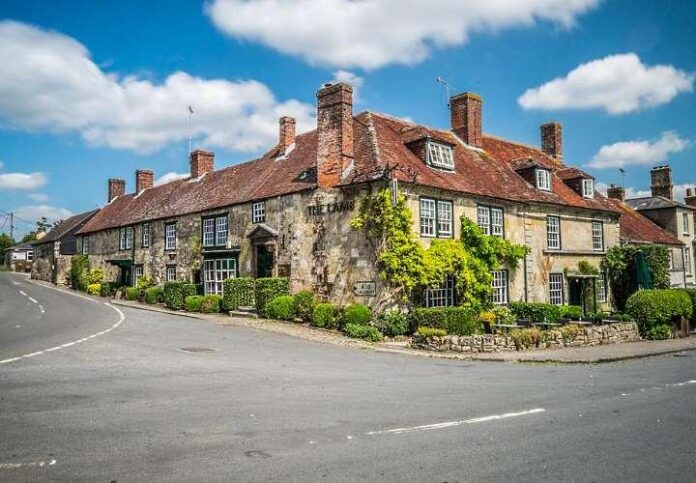
The Lamb in Hindon, a traditional Wiltshire countryside pub near Salisbury
You can usually tell within five minutes whether a pub has the makings of a good local. It is not the number of taps, the age of the beams or the price of the furniture. It is the way the room handles your arrival. Somebody notices you without making a performance of it. The bar feels cared for. You can see where to stand and where you might sit.
What makes a great local pub is a collection of details that rarely appear in an advert. Regulars notice them because they experience the place over months and years, including the wet Tuesdays when there is no event, no special menu and nowhere for bad service to hide.
The welcome is warm but not forced
A good local acknowledges people. That does not mean every customer needs a booming greeting or a life update. Some want conversation; others want a quiet pint and ten minutes to themselves. Skilled staff read the difference.
The important thing is that newcomers are not made to feel they have entered somebody else’s private club. Regulars may have favourite seats and familiar jokes, but the pub stays open in spirit as well as law. The person visiting alone for the first time should be able to order without decoding a social hierarchy.
When the welcome is right, familiarity develops naturally. Names and usual orders are remembered gradually, not performed as a trick.
The basics are taken seriously
A clean glass, the correct measure and a drink served as it should be are not exciting selling points. They are the foundation. A pub that gets them right earns trust one round at a time.
Beer quality tells customers what is happening out of sight. Clear lines, sensible stock rotation and a well-run cellar show up in the glass. The same principle applies to coffee, soft drinks and food. Care is visible at the point of service even when the work happened hours earlier.
Regulars are forgiving when something occasionally goes wrong. What they dislike is the feeling that nobody has noticed or cares.
There is more than one good seat
The best pubs allow different evenings to happen at once. One group can watch a match while two friends talk somewhere else. A person reading does not have to compete with a speaker directly above their head. Families, older customers and people with limited mobility can find a space that works.
This is partly about layout and partly about judgement. Not every square metre needs to be filled with tables. Clear routes to the bar and toilets matter. So does leaving a corner where the lighting is gentle and conversation is possible.
A pub becomes useful to more people when it offers choices rather than one idea of fun at full volume.
Prices feel fair and easy to understand
Fair does not always mean cheap. Customers know that rent, wages, energy, ingredients and tax cost money. They are more likely to accept a higher price when the product is good, the service is decent and the amount is clear before they order.
Surprise is the problem. A menu that hides basic prices, an unexplained supplement or a wildly different charge from one visit to the next weakens trust. A good local may offer a premium beer beside a standard bitter, but it gives customers a genuine choice.
Value includes the room, too. A fairly priced drink in a welcoming pub can feel better value than a bargain served in a place eager to move everyone on.
The staff set the tone
Landlords and bar teams influence how customers treat one another. Calm, fair service tends to produce a calmer room. When bad behaviour is handled early and consistently, everyone else can relax.
Good staff do not need to be entertainers. They need to be observant. They notice the customer who has been waiting, the glass near the edge of a table and the argument becoming too sharp. They also know when to join a conversation and when to let it continue without them.
A stable team helps because relationships take time. Seeing familiar people behind the bar gives the pub continuity even as the crowd changes.
Events support the pub instead of replacing it
Quizzes, music, darts, charity nights and screenings can bring life to the week. The strongest local uses them to deepen its community, not to cover the fact that the pub has no identity on an ordinary night.
An event should suit the room and the people likely to attend. A brilliant acoustic set in one pub would be intrusive in another. A quiz that fills every table is useful only if the staff and space can handle it.
The test is simple: when the posters come down, does the pub still feel worth visiting?
Regulars contribute without taking ownership
Every good local depends on customers who return. They provide continuity, welcome familiar faces and often notice when somebody has not appeared for a while. At their best, regulars are part of the pub’s informal support system.
They can also make a place difficult if habit turns into entitlement. The healthiest pubs avoid that trap. A usual seat is respected but not legally owned. Banter does not become an excuse for cruelty. New people are included rather than assessed.
A local survives by balancing memory with openness. It should reward loyalty without becoming frozen around the same small group.
The pub understands its place
A city-centre bar, village inn and estate pub do not need the same offer. The great ones understand who lives and works nearby. They open at useful times, stock drinks people genuinely want and respond to the rhythms of the area.
That connection cannot be copied from a brand manual. It grows through school fundraisers, wakes, first dates, work leaving drinks and quiet afternoons. The pub collects the life around it.
What makes a great local pub is not perfection. It is reliability with personality. The pint is cared for, the welcome is real and the room has space for more than one type of customer. People return because the place remembers them without demanding that they stay the same.
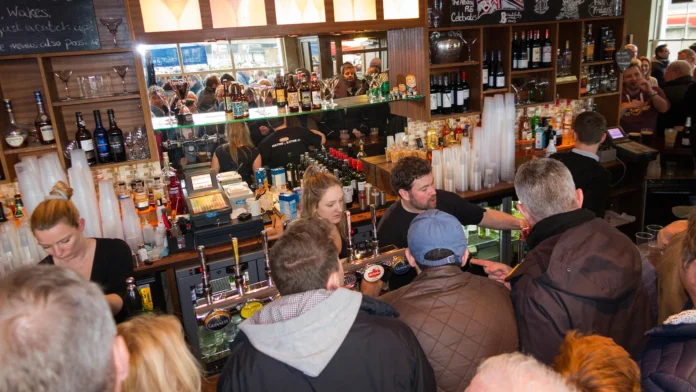
here may be no visible line, but bartenders are often working from an unspoken mental queue (Credit: Alamy)
A bad pub crawl usually begins with an ambitious map. Twelve pubs are highlighted, somebody has created a scoring system and the organiser speaks about “making up time” before the first round has even arrived. By stop four, half the group is hungry, two people are missing and nobody remembers why the route crossed town.
Learning how to plan a pub crawl means accepting that the night is about people, not completed venues. A good crawl has enough structure to keep everyone together and enough flexibility to let the best part of the evening continue.
Start with the group, not the map
The route should fit the people coming. A group of old friends who meet every month wants something different from colleagues who barely know one another. Age, mobility, budget and drinking preferences all affect which pubs will work.
Ask simple questions before announcing the plan. Does anyone need step-free access? Is somebody avoiding alcohol? Are people joining after work with bags? Does the group include a person who cannot hear conversation in a crowded music bar?
These details are not obstacles to the fun. They are what allow more people to relax once the night begins.
Choose an area with short, obvious journeys
The ideal pub crawl route can be explained in one sentence. It follows a street, circles a neighbourhood or links venues around a station. Nobody should need a thirty-minute bus ride between stops.
Short walks keep the group together and provide useful fresh air. They also reduce the temptation to rush a drink because a complicated connection is leaving in five minutes.
Check opening hours and private events, especially for the planned first and final venues. A beautiful pub is no use if its kitchen has closed, it is hosting a ticketed party or the group will arrive after last entry.
Five good pubs beat twelve rushed ones
More stops do not automatically create a better crawl. Every move takes time: gathering coats, settling a bill, finding the toilet, locating the person who went outside and walking to the next door.
A plan of four to six venues is usually enough for a full evening. It leaves space to enjoy each pub rather than treating it as a checkpoint. If the atmosphere is excellent, stay for another round and drop a later stop.
The organiser should know which venues are essential and which are optional. That single distinction prevents the route from becoming a duty.
Give each stop a reason
Variety makes a crawl memorable. Begin somewhere calm enough for people to arrive at different times. Include a pub known for cask ale, a historic interior, a garden, live music or a late kitchen. Finish near useful transport rather than at the most distant point on the map.
The reasons do not need to be grand. One stop might have the best chips; another might contain a jukebox everyone loves. The purpose is to create a change of scene, not to collect five versions of the same crowded bar.
Tell the group what to expect. People make better choices when they know food is at stop three and the final pub will be louder.
Pace the drinks, not just the route
A pub crawl does not require an alcoholic drink in every pub. Half-pints, low-strength beer, alcohol-free options and soft drinks allow people to stay involved without racing their limit.
Rounds can cause trouble in a large group because they encourage everyone to drink at the pace of the fastest person. Smaller rounds, pairs or individual ordering are easier. Nobody should feel they have to accept a drink simply because their turn is coming.
Water should be normal rather than treated as an emergency response. Ordering it early makes the rest of the evening better, including the journey home and the following morning.
Put real food into the plan
A packet of crisps is a fine pub snack, but it is not an evening meal. Decide where the group can eat and roughly when. If a kitchen is central to the plan, check its serving times rather than assuming they match the bar.
Food also creates a natural pause. People sit down, talk to someone different and take stock of the evening. It can rescue a group that began too quickly.
Allow for different diets and budgets. A route that only works if everybody buys an expensive dinner will leave some people quietly uncomfortable.
Make joining and leaving easy
Share the route in advance, including approximate times and the name of a backup pub. Someone arriving late should be able to find the group without sending six messages. Someone leaving early should not be made to feel they have failed a challenge.
The final stop deserves special attention. Check the last trains, taxi availability and night-bus routes before the first drink, not after last orders. Encourage people to travel in pairs where practical and make sure nobody is abandoned because the group split suddenly.
If a person becomes unwell or vulnerable, the crawl is over for whoever is helping them. Looking after the group matters more than finishing the route.
Let the night breathe
The best part of a pub crawl is often unplanned: a brilliant conversation, an unexpected band or a quiet back room that suits the group perfectly. A rigid schedule can destroy that moment in order to reach a pub nobody particularly needs to see.
So build a route, but do not worship it. Keep the distances short, the choices varied and the final journey simple. Set a pace that lets people remember the evening with affection.
A successful pub crawl is not measured by empty glasses or ticks on a map. It is measured the next day, when the group agrees that the night ended at roughly the right time—and begins suggesting when to do it again.
The seat everybody notices first is usually beside the fire. It has a high-backed chair, a view of the flames and just enough old wood nearby to look excellent in a photograph. On a winter afternoon, it appears to be the obvious prize.
It is often not the best seat in the pub.
The best place depends on what you came for, who you are with and how long you plan to stay. A pub is a moving social room. The perfect seat lets you take part in that movement without spending the evening in everybody else’s path.
The fireplace table comes with traffic
A real fire attracts people who are not sitting beside it. Coats need drying. Dogs want the warmth. Customers pause to hold their hands over the grate while continuing a conversation with someone across the room.
The table may also be too hot. The first ten minutes feel luxurious; the next hour involves shifting your chair backwards until you are effectively seated in a walkway.
None of this makes the fireplace a bad choice. It simply means the most photogenic seat is rarely the quiet refuge it appears to be.
A view of the bar is more useful than a view of the room
From the right angle, the bar tells you what is happening. You can see when a queue has disappeared, whether a friend has arrived and when the quiz sheets are being handed out. You do not need to crane your neck every time the door opens.
The useful seat is near enough to observe without becoming part of the queue. Too close, and people lean over your shoulder while deciding what to order. Too far away, and each round becomes an expedition.
The sweet spot is usually diagonal to the bar, with a clear route that does not cut through another group.
Corners make conversation easier
A corner seat reduces the number of directions from which noise can arrive. Two solid walls create a small sense of enclosure, even in a busy pub. This is why old snugs and booths remain so popular.
People also talk differently when they are not on display in the centre of a room. A difficult conversation, first date or overdue catch-up benefits from a table that feels contained without being hidden.
The danger is poor acoustics. Some corners trap music or sit beneath a speaker. The seat that looks private can require shouting once the room fills.
The window is excellent until it is not
A window table offers daylight, passing life and something to look at during a pause. For a solo visitor, it can be ideal. Reading or watching the street feels natural, and there is no need to manufacture constant interest in the room.
At night, the glass becomes a mirror. In winter, an old sash may bring a steady draught. On a sunny afternoon, the same table can turn into a greenhouse.
The window seat is therefore a seasonal decision rather than a universal winner.
Sitting at the bar changes the evening
A bar stool is the most social seat for a person alone. Conversation can happen without being requested, and silence does not feel awkward because there is always the activity of service nearby.
It is also a working area. Glasses move, orders pass overhead and staff need space. A considerate bar-sitter keeps belongings small, moves when asked and understands that a busy period changes the arrangement.
Done well, sitting at the bar offers the closest view of the pub’s daily rhythm. Done badly, it turns the customer into an obstacle with elbows.
The right seat changes with the purpose
Watching sport requires a clear screen and a chair that does not block someone behind. Eating needs enough table for plates and cutlery. A board game demands light. A private talk needs distance from the dartboard and fruit machine.
Groups often make the mistake of choosing the largest available table without asking whether it suits the night. A smaller round table can create better conversation because nobody is stranded at the far end.
People who expect to leave early should avoid trapping themselves against a wall behind six coats and a sleeping dog.
The best seat is discovered over time
Regulars rarely choose a place because it is objectively superior. They choose it because it has become theirs through repetition. The chair remembers the shape of previous evenings. From that position, they know which floorboard announces the door and where the late sunlight lands.
That familiarity cannot be captured in a review. A visitor sees an ordinary table; the regular sees birthdays, quiet Tuesdays and the afternoon somebody brought important news.
This is the real answer. The best seat in the pub is the one that fits the version of the evening you need. It may be by the fire, at the window or on a plain chair beside a slightly wobbly table. What matters is not how the seat looks when empty. It is how naturally the night gathers around it once you sit down.
Most pubs have a customer everyone can describe. They arrive at roughly the same time, choose the same part of the room and are recognised with a nod rather than a cheer. They are not the person telling stories across three tables. They may spend an hour with a newspaper, a crossword or one slowly finished pint.
It is easy to mistake quiet pub regulars for background figures. In reality, they often provide the steady attention that holds a small community together.
Regularity creates knowledge
Seeing the same room across weeks and seasons produces a kind of local knowledge that cannot be hurried. A regular knows which afternoon is busiest, when the quiz crowd arrives and who normally sits near the window on a Friday.
This information is rarely written down. It appears in simple observations: somebody has not been in for a while; the new couple on the estate look unsure where to order; the delivery driver left a parcel behind the bar.
The quiet regular does not necessarily announce this knowledge. They carry it, and offer the relevant piece when it is useful.
They notice when a routine breaks
One of the most valuable things a local pub can do is make absence visible. In most public places, a person can disappear without anyone knowing they were ever there. A regular routine changes that.
If someone who visits every Tuesday misses several weeks, another customer may ask the landlord whether they are all right. The answer might be a holiday, an illness or a family problem. The question itself matters because it shows that the person’s presence had been registered.
This is not formal care and it has limits. Pub customers are not social workers. Yet the small act of noticing can be the beginning of a phone call, a lift or a visit.
A gentle welcome matters
Newcomers do not always want an enthusiastic introduction to the whole room. Sometimes the best welcome is practical: moving a coat from a chair, explaining that orders are taken at the bar or mentioning that the kitchen stops serving at eight.
Quiet regulars are often good at this because they do not need to make the arrival about themselves. A short exchange gives the newcomer permission to settle in without demanding instant friendship.
Over time, those small exchanges accumulate. The person who once needed directions to the toilet becomes another familiar face asking if the usual table is free.
They help the staff without pretending to work there
There is an important difference between being helpful and behaving as an unofficial manager. Good regulars understand it.
They may return glasses on the way to the bar, hold a door for a delivery or alert staff to a spill. They do not demand priority, instruct other customers or treat the person behind the bar as a servant simply because they know their name.
This respect makes the relationship sustainable. Staff can appreciate the help without feeling watched or managed by customers.
Listening is a pub skill
Pubs are famous for talkers, but communities also need listeners. A person dealing with a difficult week may not want advice. They may want ten minutes in which another human being pays attention without turning the problem into a competition.
The quiet regular is often good at allowing a pause. They do not rush to fill every silence. They know that conversation at the bar can begin with the weather, move briefly towards something important and return to the football without a formal conclusion.
That lightness can make speaking easier. The person can share as much or as little as they choose.
They carry stories carefully
A local pub contains information about jobs, families, health and relationships. Familiarity can turn that knowledge into gossip, but it does not have to.
Trusted regulars learn which stories can be repeated and which were offered only because the room felt safe at that moment. Discretion is part of belonging. Knowing everybody’s business does not create community; treating that business with care does.
The people most deeply woven into a pub are often the least interested in proving how much they know.
The pub gives something back
The relationship is not one-sided. For many regulars, the pub provides structure, recognition and company without requiring a planned social event. A person can leave home, exchange a few words and feel connected while keeping their independence.
This is especially valuable after retirement, bereavement, a house move or any change that removes familiar routines. The local offers a place where company is available but not compulsory.
A regular may support the pub by returning, but the pub supports the regular by expecting them.
Community is built quietly
When people describe pub characters, they often remember the performer: the storyteller, singer, joker or expert on every subject. Those personalities bring colour to a room. The quieter customers bring continuity.
They remember names, spot changes and make small acts of consideration seem normal. Their contribution is difficult to photograph and easy to overlook.
Yet remove enough of those people and the pub feels different. The tables and taps remain, but the room loses part of its memory. Quiet pub regulars hold a community together not by owning the place or commanding attention, but by returning and paying attention. That is a modest role with enormous value.
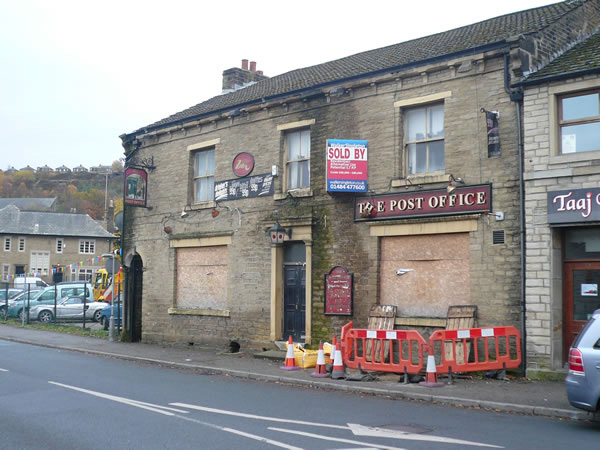
The photograph is familiar: a dark pub, chairs stacked behind the window and a handwritten notice taped to the door. The headline says another local has closed. Readers are left with the impression that the story is finished.
A pub closure story is rarely that simple. The business may have stopped trading while the building remains licensed. The operator may have left while the owner searches for a replacement. A planning application may be expected but not yet submitted. Sometimes the pub reopens months later under a new name; sometimes the loss becomes permanent through a series of quiet decisions.
Closed does not always mean lost
The first question is what has actually closed. A publican may have ended a tenancy. A company may have entered administration. A temporary shutdown may be needed for repairs, refurbishment or a change of operator.
These situations can all produce the same locked door, but they have very different implications. If the premises keeps its pub use and equipment, reopening may be realistic. If the interior is stripped, the licence lapses and another use is approved, the route back becomes harder.
Good reporting separates the closure of the business from the future of the building.
Ownership and operation are different
The person running a pub does not always own the property. The freehold may belong to a pub company, brewery, investment business, individual landlord or community organisation. Each has different powers and priorities.
An operator can describe the pressures that made trading difficult, but may have no control over a future sale. The owner may be seeking a new tenant even while local customers believe the pub has been abandoned.
A useful closure story identifies both parties where possible. Without that distinction, readers may direct questions at the wrong person or misunderstand who can change the outcome.
The stated reason may be only one part of the problem
Closure notices often mention rising costs, staff shortages, rent, energy bills, tax, changing habits or reduced footfall. These explanations can all be true at once.
A pub business has many moving parts. A busy bar can still struggle if margins are narrow and the building requires expensive work. A quiet pub may be viable because its costs are low and the property is owned outright. Two apparently similar venues can therefore reach different conclusions.
Be cautious with a story that reduces everything to a single villain. The real cause is often a combination of immediate pressure and longer-term weakness.
Planning status matters
A closed pub cannot automatically become anything its owner chooses. Changing the use of a building may require planning permission, and listed status can add further controls. Local policy, previous decisions and the evidence submitted by both applicant and objectors can influence the result.
The details matter more than a rumour that “flats are coming”. Has an application actually been lodged? What exactly is proposed? Is the pub building being retained? What deadline applies to public comments?
Reporting those facts gives the community something useful. Repeating an unverified plan can create panic while missing the stage at which people can formally respond.
Community protection is powerful but not magical
Residents may campaign for heritage protection, seek recognition as an Asset of Community Value, object to planning proposals, form a community benefit society or attempt to buy the pub.
These tools can create time and influence. They do not guarantee that a pub will reopen, and they do not remove the need for a sustainable business plan. A building saved from immediate conversion can still remain empty if nobody can afford to operate it.
The strongest campaigns combine emotion with evidence. They document demand, recruit people with financial and operational skills and explain what the pub will offer beyond the desire to preserve a memory.
“Use it or lose it” is only partly fair
Closure stories often attract comments blaming local people for not visiting enough. There is some truth in the basic economics: a pub needs customers. Yet the phrase ignores price, opening hours, accessibility, product, service and whether the venue responded to its community.
People cannot support a pub that is shut when they are free, feels unwelcoming or offers nothing they want at a price they can manage. Equally, affection expressed after closure cannot replace regular trade beforehand.
A fair account looks at both sides. Community support matters, and so does the way the business tried to earn it.
Watch what happens after the announcement
The most important developments often occur after the first burst of attention. The property is listed for sale, an application appears, fixtures are removed, a new tenant is mentioned or a campaign group holds its first meeting.
This is when follow-up reporting becomes valuable. A publication that returns to the story can distinguish a temporary closure from a permanent loss and hold earlier promises against later action.
Dates, documents and named sources are more useful than repeated photographs of the locked door.
The right questions create a better story
When reading or reporting a pub closure story, ask: who owns the building, who operated the business, why did trading stop, what use does the property currently have, and has any formal application been made?
Then ask what would be required for reopening. Is an operator being sought? Does the building need major investment? Is a community group organised? What is known, and what is still speculation?
A pub can be both a cherished social space and a difficult business. Treating only one of those truths seriously produces a weak account. The best closure reporting respects the emotion of the loss while following the practical decisions that will determine whether the lights ever come back on.
At home, the build-up can feel endless. In a pub, the match begins before kick-off. Scarves appear over coats, the best sightlines are quietly claimed and every new arrival checks the screen before deciding where to stand.
Watching football in the pub feels different because the television is only one part of the event. The room becomes a temporary crowd. Strangers react together, argue over the same replay and share ninety minutes of hope with people whose names they may never learn.
The atmosphere starts before the whistle
A good sports pub understands anticipation. The commentary is audible, the screen is visible and staff have prepared for the rush rather than discovering it at kick-off.
Customers contribute their own rituals. One person insists on the same table. Another refuses to predict the score. A group arrives early enough to discuss the team selection as if the manager is likely to hear.
These habits turn waiting into part of the pleasure. By the time the teams walk out, the room already has a mood.
Emotion spreads across the room
Football contains long periods in which almost nothing happens, followed by a few seconds that change everything. A pub magnifies that rhythm.
A promising attack pulls bodies forward. A narrow miss releases the same groan from every corner. When a goal arrives, people who have not spoken all evening may find themselves hugging.
This shared response is not merely louder than watching at home. It changes how the moment feels. Individual nerves become collective tension, and the release belongs to the room.
Strangers become a crowd
Most public spaces encourage people to ignore one another. A match gives them permission to connect. A comment about a substitution can begin a conversation between tables. A replay creates instant agreement or argument.
The connection is usually brief and specific. Nobody needs to exchange numbers afterwards. For the duration of the game, it is enough to care about the same outcome.
That temporary community is one of the pub’s special strengths. It allows belonging without an invitation or membership form.
The sound matters
Television at home can offer clear commentary and surround sound. A pub offers layers: the broadcast, the reactions, the scrape of chairs and the sharp intake of breath before a chance reaches the goal.
The room also produces its own commentary. One customer spots every tactical problem. Another judges the referee’s eyesight. Somewhere near the back, somebody is watching a stream on their phone that appears to be several seconds ahead and must be told firmly to keep quiet.
Too much noise can ruin the experience, but the right level makes the match feel live even when the stadium is hundreds of miles away.
A good pub manages divided loyalties
Not every room supports the same team. For international tournaments, that can be part of the fun. For club matches with real rivalry, the atmosphere requires judgement.
Friendly disagreement gives the game energy. Abuse and intimidation destroy it. Staff set expectations through calm intervention, sensible seating and a refusal to treat aggression as passion.
The best sports pubs welcome away supporters, neutrals and people who know very little about football, provided everyone respects the room. A person should be able to celebrate without wondering whether the evening will turn hostile.
Practical details decide whether the experience works
A giant screen is useless if half the crowd can only see a pillar. Several well-placed screens can be better than one spectacular display. Commentary should be loud enough to follow without making conversation impossible during half-time.
Service matters too. A pub that takes ten minutes to pour every round will face a crush immediately before kick-off. Clear ordering, enough staff and fast food options keep people watching rather than queueing.
Customers have responsibilities. Standing directly in front of a seated group, blocking a walkway or saving six chairs for people arriving after the match begins will not make friends.
Home still has advantages
The sofa is comfortable. The toilet has no queue. Food is cheaper, and nobody six feet away is explaining a formation with the help of salt and pepper pots.
Some matches are better at home, especially when concentration matters more than company. Families, shift workers and people who find noisy crowds difficult may enjoy the game far more in a controlled space.
That does not weaken the case for the pub. It explains why the choice feels meaningful. Home offers comfort; the pub offers participation.
The result becomes a shared memory
Years later, supporters often remember where they watched a famous match as clearly as the score. They remember the pub, the delayed train that brought them there and the stranger who knocked over a drink when the winner went in.
The room gives the result a physical setting. Victory spills into the street; defeat hangs in the silence before people collect their coats.
This is why watching football in the pub still matters. The match is identical to the broadcast at home, but the experience is not. Sport becomes more vivid when other people care beside you. For ninety minutes, the pub does not simply show a crowd—it becomes one.
To provide the best experiences, we use technologies like cookies to store and/or access device information. Consenting to these technologies will allow us to process data such as browsing behaviour or unique IDs on this site. Not consenting or withdrawing consent, may adversely affect certain features and functions.
Functional
Always active
The technical storage or access is strictly necessary for the legitimate purpose of enabling the use of a specific service explicitly requested by the subscriber or user, or for the sole purpose of carrying out the transmission of a communication over an electronic communications network.
Preferences
The technical storage or access is necessary for the legitimate purpose of storing preferences that are not requested by the subscriber or user.
Statistics
The technical storage or access that is used exclusively for statistical purposes.The technical storage or access that is used exclusively for anonymous statistical purposes. Without a subpoena, voluntary compliance on the part of your Internet Service Provider, or additional records from a third party, information stored or retrieved for this purpose alone cannot usually be used to identify you.
Marketing
The technical storage or access is required to create user profiles to send advertising, or to track the user on a website or across several websites for similar marketing purposes.