The Lake District National Park is not just one of Britain’s most beautiful landscapes. It is one of the great pub regions of the country.
Across its valleys, lakes, market towns and remote fell roads, the pub is still part of the way the Lake District works. It is where walkers dry their boots after climbing Helvellyn, where families shelter from sudden rain in Ambleside, where locals gather in Keswick, where climbers return from Langdale, and where visitors discover that a pint in Cumbria often tastes better when it has been earned on foot.
The Lake District is England’s largest National Park and is also a UNESCO World Heritage Site, known for its lakes, fells, villages, cultural heritage and walking routes. But behind the famous views of Windermere, Derwentwater, Ullswater and Coniston Water is another quieter attraction: the old inn, the village pub, the walkers’ bar and the local ale house.
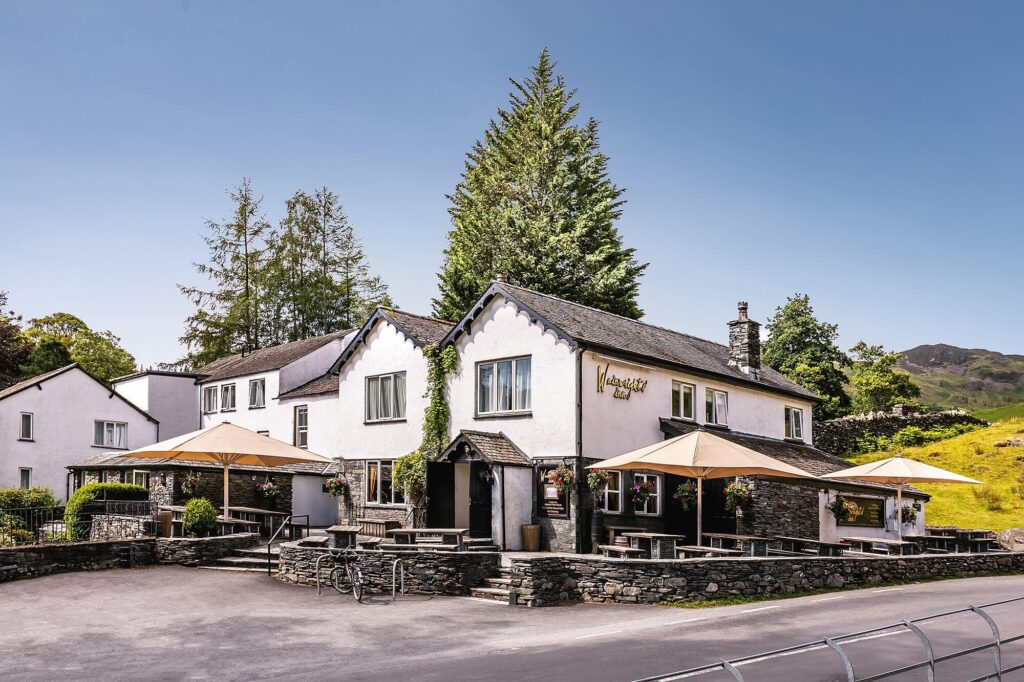
This is pub country.
From Keswick in the north to Windermere and Bowness in the south, from Grasmere and Ambleside in the central Lakes to Coniston, Hawkshead, Borrowdale, Wasdale, Eskdale and Langdale, the pub scene is woven into the identity of the National Park.
Many visitors come for the mountains. Many remember the pubs.
A pub landscape shaped by walkers, weather and villages
The Lake District pub scene is different from a city drinking scene. Here, pubs are often shaped by geography.
In towns such as Keswick, Ambleside, Bowness-on-Windermere and Windermere, pubs serve tourists, walkers, hotel guests and locals all year round. In smaller villages like Grasmere, Hawkshead, Coniston, Chapel Stile, Elterwater, Boot and Rosthwaite, pubs often feel like part of the landscape itself.
The official visitor guide lists major Lake District towns and villages including Ambleside, Bowness-on-Windermere, Windermere, Grasmere, Hawkshead, Coniston, Troutbeck, Near and Far Sawrey, Newby Bridge and Rydal. These are not just pretty names on a map. They are places where the pub still acts as a meeting point, food stop, local noticeboard and shelter.
That matters in the Lakes because the weather can change quickly. A sunny walk around Rydal Water can become a wet trudge. A bright morning in Keswick can turn into a misty afternoon on Skiddaw. For generations, the pub has been the natural finishing point.
The Lake District National Park promotes classic walking routes with details on distance, time, ascent and difficulty. That walking culture directly supports the pub culture. A good Lake District pub is not just judged by its beer. It is judged by whether it welcomes muddy boots, wet dogs, tired children, cold walkers and hungry groups who have just come down from the fells.
Keswick: one of the great pub towns of the Lakes
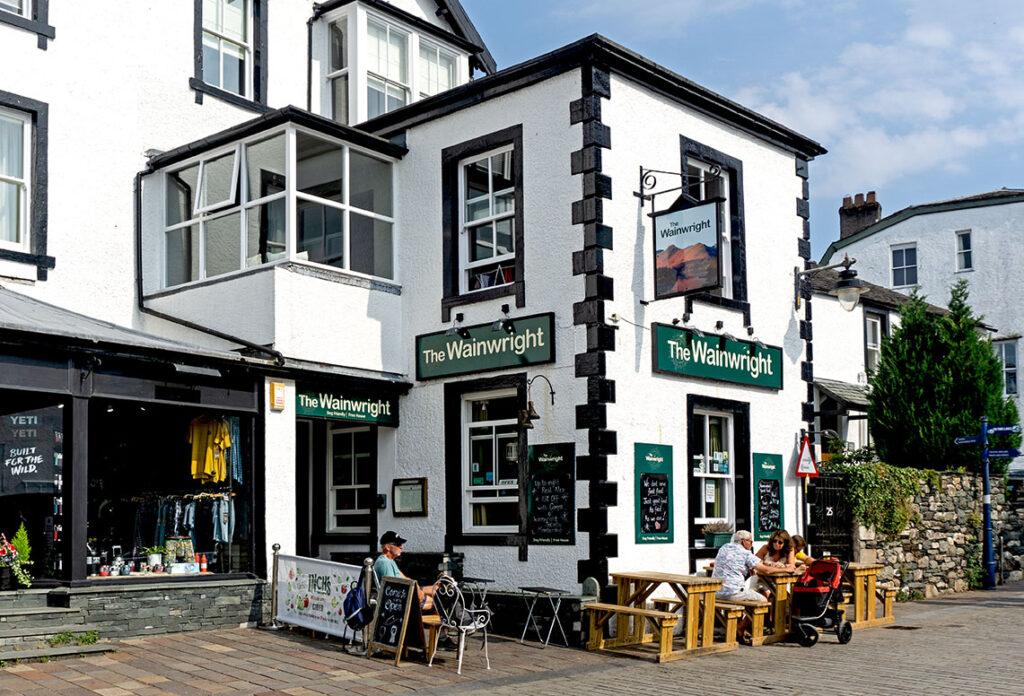
Keswick is one of the strongest pub towns in the Lake District. Sitting close to Derwentwater and surrounded by fells including Skiddaw, Catbells and Latrigg, it has the right mix of visitors, locals, walkers and independent food and drink businesses.
“Keswick’s busy all year round now — the pub trade here never really switches off.
The town has a proper evening pub scene. After a day on the lake, a walk to Friar’s Crag, a climb up Catbells or a wet afternoon around the shops, Keswick’s pubs fill with people looking for food, warmth and beer.
Well-known names in and around Keswick include the Dog and Gun, The Wainwright, The Pack Horse Inn, Crafty Baa, The Fox Tap and the Derwent Walker Bar. The town also has a strong brewing identity through Keswick Brewing Company, founded in 2006 and located in the heart of Keswick. The brewery is believed to sit on the site of an earlier brewery dating back to around 1875.
That gives Keswick something many tourist towns lack: a pub scene that still feels locally rooted. You can have a pint in town, walk down towards Derwentwater, look across to Catbells, and understand why so many visitors return year after year.
Ambleside and Rydal: central Lakes pub country
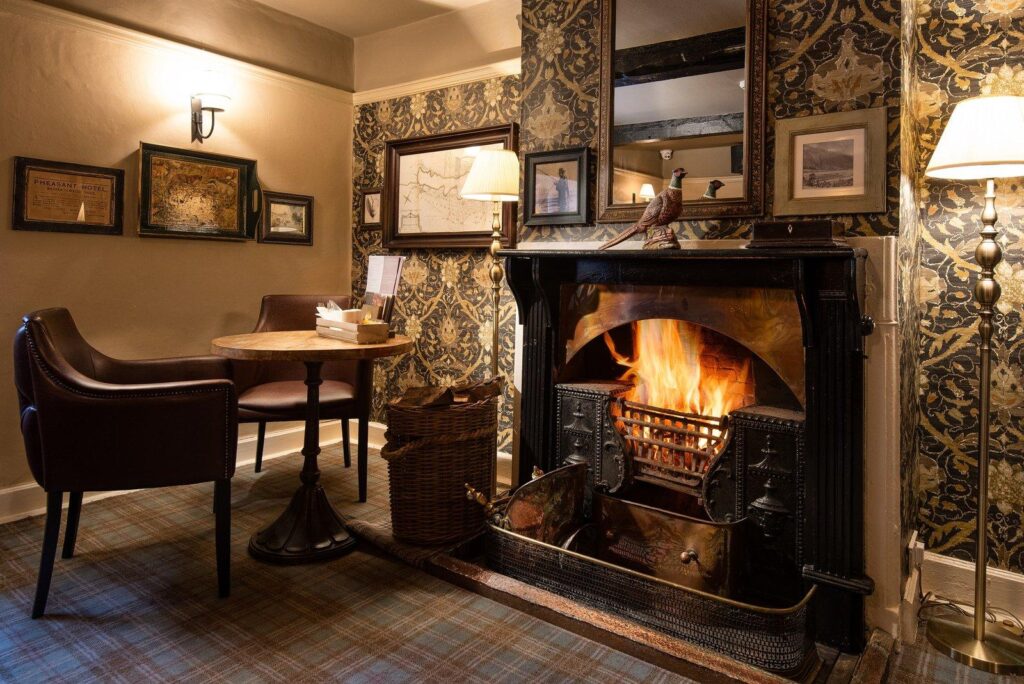
“People don’t just come for a drink here — they come to sit, warm up and stay.”
Ambleside is one of the busiest and most important bases in the Lake District. It sits close to the northern end of Windermere and gives easy access to Rydal, Grasmere, Stock Ghyll Force, Loughrigg Fell and the central Lakes.
This makes it a natural pub hub. Visitors staying in Ambleside can walk straight from the town and return without needing to drive. That is one of the great strengths of the Lake District pub scene: many of the best pub days are built around walking, not taxis.
Around Ambleside and Rydal, pubs and inns often lean into food, rooms and local ale. The Glen Rothay at Rydal describes itself as offering rooms, hearty food and great ales, with Ambleside and Grasmere close by and Rydal Water only a short walk away.
Then there is The Drunken Duck Inn, one of the most famous names in the Lakes, positioned away from the crowds between Ambleside and Hawkshead. The inn is known for food, rooms, atmosphere and its rural setting. Its name is also tied to a well-known Victorian story about ducks becoming intoxicated after beer leaked into their feeding ditch.
Whether every detail of the tale has grown in the telling hardly matters. It is exactly the kind of story that belongs in the Lake District: part folklore, part pub history, part local legend.
Grasmere: poetry, visitors and proper village pub life
“There’s something special about drinking a pint brewed just down the road.”
Grasmere is one of the most visited villages in the Lake District, strongly associated with William Wordsworth and surrounded by classic walking country. It is not a large place, but it has the kind of visitor pull that gives its pubs year-round life.
Grasmere works because it combines scenery, culture and refreshment. Visitors come for Dove Cottage, the lake, the village, gingerbread, walking routes and the wider Wordsworth connection. After that, they look for food, tea, beer or a fire.
The pub scene here is softer and more village-based than Keswick. It is less about a night out and more about the rhythm of the day: lunch after a walk, a pint before dinner, a warm seat after rain, or a base for a weekend stay.
Nearby Rydal and Ambleside add to the wider central Lakes pub circuit, making this one of the most naturally pub-friendly areas in the National Park.
Coniston: beer, history and the Black Bull
Coniston is one of the Lake District’s strongest pub-and-brewery villages. It sits beside Coniston Water, beneath the Old Man of Coniston, and has long attracted walkers, climbers, boaters and heritage visitors.
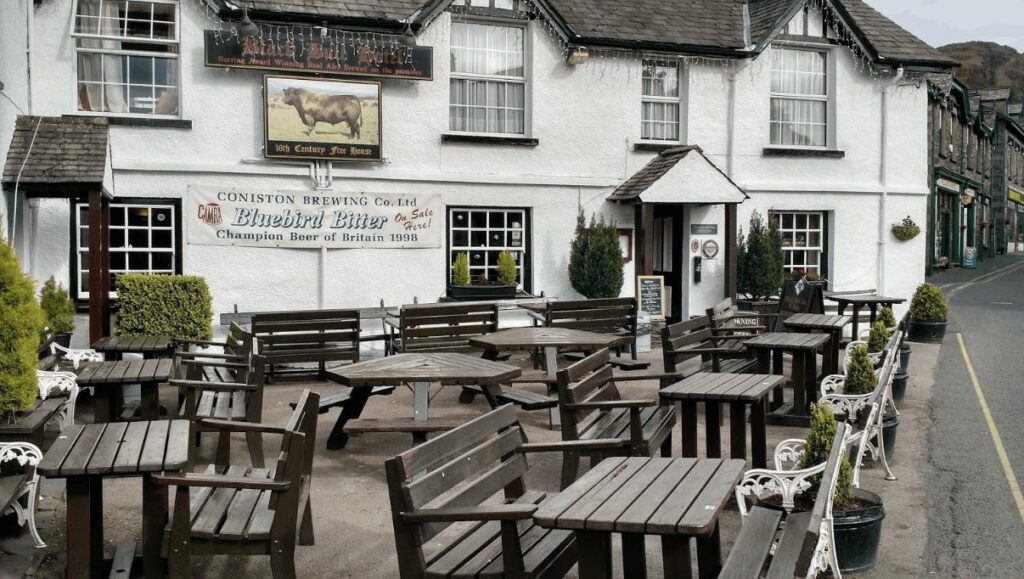
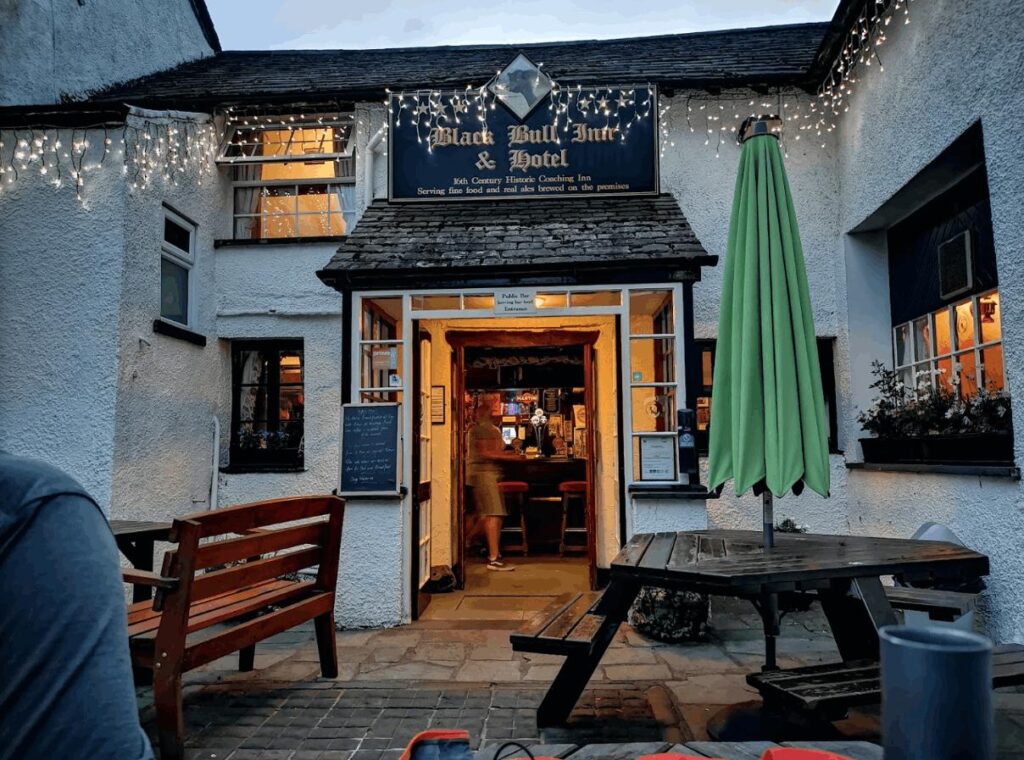
The key name here is The Black Bull Inn, home to Coniston Brewing Company. Visit Cumbria notes that the multi-award-winning Coniston Brewery brews behind its tap inn, The Black Bull, in Coniston village.
This matters because it gives Coniston a direct beer identity. It is not just a village with pubs. It is a village where the pub, brewery and landscape all connect.
“There’s something special about drinking a pint brewed just down the road.”
Coniston Brewing Company is especially associated with Bluebird Bitter, one of the best-known Lake District beers. For visitors, there is something powerful about drinking a local pint in the village where it is brewed, especially after walking the Old Man of Coniston or spending the day around the lake.
Coniston is also linked to Donald Campbell and the Bluebird story, to mining history, and to some of the most dramatic western-southern scenery in the National Park. The pub scene benefits from all of that.
Hawkshead: small village, big pub character
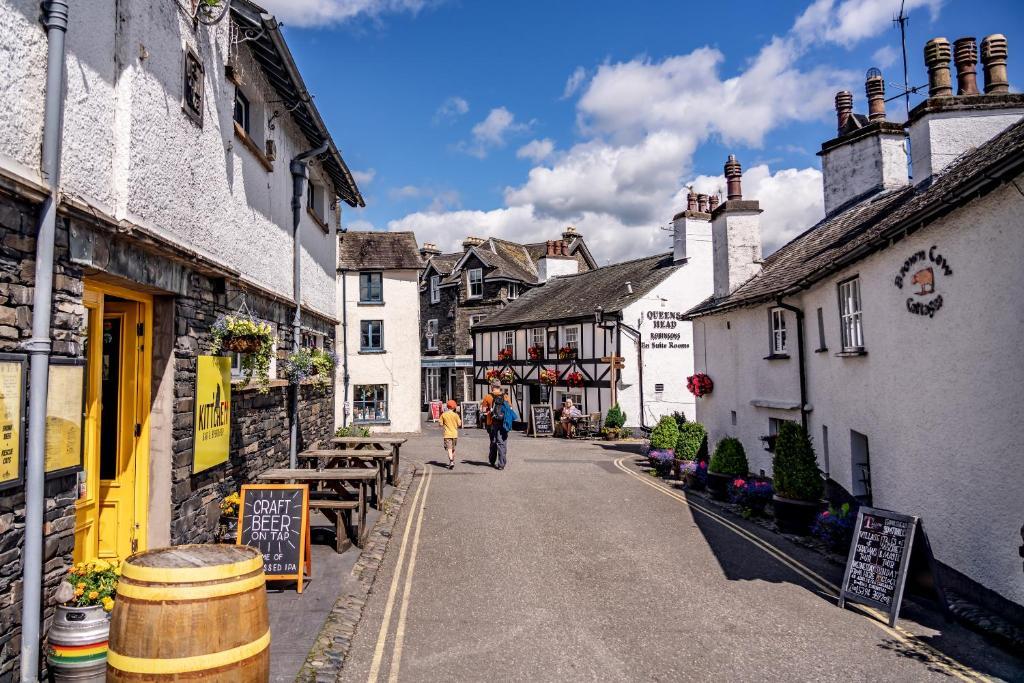
Hawkshead is one of the prettiest villages in the Lakes, with narrow lanes, whitewashed buildings and a strong visitor economy. It is close to Ambleside, Coniston, Esthwaite Water, Near Sawrey and Beatrix Potter country.
For pub lovers, Hawkshead offers a classic village experience. The Kings Arms is one of the central village pubs, located in The Square, and is described by local accommodation guides as a historic pub with local beers, ales, food and a beer garden.
“Every village feels like it has its own pub story.”
Hawkshead works especially well as a slow pub destination. It is not about big-volume nightlife. It is about wandering through the village, stopping for food, trying local beer and using the pub as part of a wider day out.
Nearby Near Sawrey and Far Sawrey add another layer, with visitors often combining Beatrix Potter’s Hill Top, countryside walks and a pub stop.
Langdale: climbers’ pubs and fell culture
If there is one valley where the relationship between mountains and pubs feels especially strong, it is Langdale.
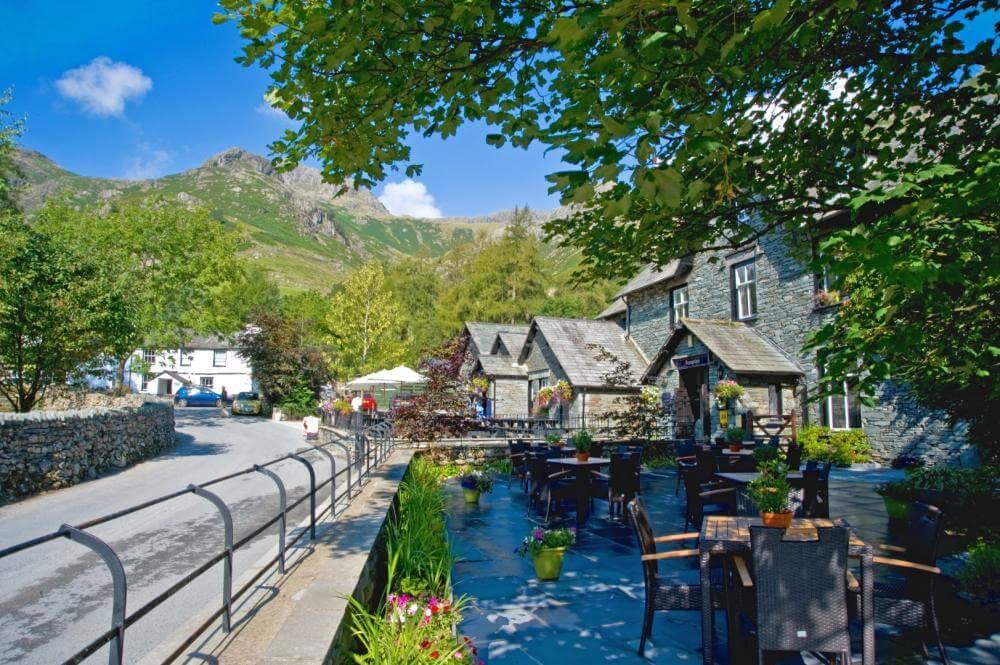
Great Langdale and Little Langdale are famous walking and climbing areas. The surrounding fells include the Langdale Pikes, Bowfell, Crinkle Crags and routes towards Scafell Pike. This is serious walking country, and the pubs reflect that.
The Old Dungeon Ghyll Hotel is one of the most famous walkers’ and climbers’ pubs in the Lake District. Its own history says it was originally a farm and an inn, and that in the 1885 rate book it was named Middlefell Inn, run by John Bennett, a well-known tourist guide.
The Old Dungeon Ghyll is not just a pub. It is part of the mountaineering culture of the Lakes. For many walkers, a day in Langdale is not complete without ending at the ODG.
“After a day on the fells, all you want is a pint, a fire, and somewhere to sit.”
Nearby Chapel Stile has Wainwrights’ Inn, described as a traditional Lakeland pub popular with locals, guests and walkers, with changing local ales and hearty food.
The National Trust also highlights Langdale as a valley of walking, cycling and climbing routes, with Lake District pubs tucked below the fells. This is exactly the heart of the Lake District pub scene: not separate from the outdoors, but part of it.
Wasdale and Eskdale: remote pubs with mountain drama
The western valleys of the Lake District feel very different from Windermere or Ambleside. Wasdale, Eskdale and Boot are more remote, more rugged and more dramatic.
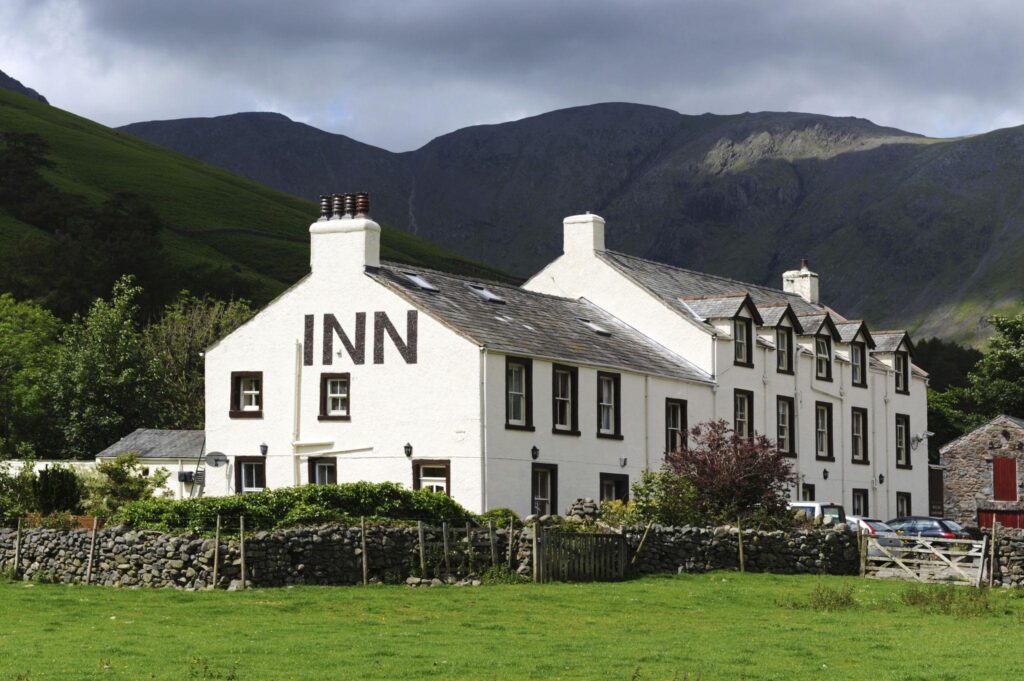
Wasdale is the valley of Scafell Pike, England’s highest mountain, and Wastwater, one of the most dramatic lakes in the country. The pub scene here is not polished town-centre hospitality. It is mountain hospitality.
Pubs and inns around Wasdale and Eskdale serve walkers, climbers, campers and people exploring the western Lakes. Boot is one of the great small pub villages of the area, with names such as Brook House Inn appearing in CAMRA’s West Cumbria Good Beer Guide 2026 entries.
The western valleys of the Lake District feel very different.
That CAMRA list also includes The Sun Inn at Bassenthwaite, The Coledale Inn at Braithwaite, and several Cockermouth pubs including The Bitter End, The Castle Bar and The Cock and Bull.
This shows that the Lake District pub scene is not just about the central tourist corridor. The western and northern edges have a serious real ale culture of their own.
Borrowdale: old inns and valley charm
Borrowdale, south of Keswick, is another classic pub valley. It includes villages and hamlets such as Grange, Rosthwaite and Seatoller, with access to Derwentwater, Castle Crag, Honister Pass and routes into the high fells.
One notable pub is The Yew Tree in Borrowdale, which describes itself as a historic Lake District country pub dating back to 1628, with stone-flagged floors, fires, old mining tools and slate artefacts.
That kind of detail is important. The best Lake District pubs are not only places to drink. They carry the memory of the valley: mining, farming, guiding, tourism, walking, weather and local conversation.
Borrowdale pubs often feel like they sit between old Cumbria and modern tourism. You may see muddy walkers, hotel guests, dogs, families and locals all in the same room.
Windermere and Bowness: the busy southern gateway
Windermere and Bowness-on-Windermere are among the busiest visitor areas in the Lake District. This is where many first-time visitors arrive, especially those coming by train, coach or car for a short break.
The pub scene here is bigger, busier and more commercial than in remote valleys. You will find traditional pubs, hotel bars, restaurants, lakeside venues and tourist-focused food pubs.
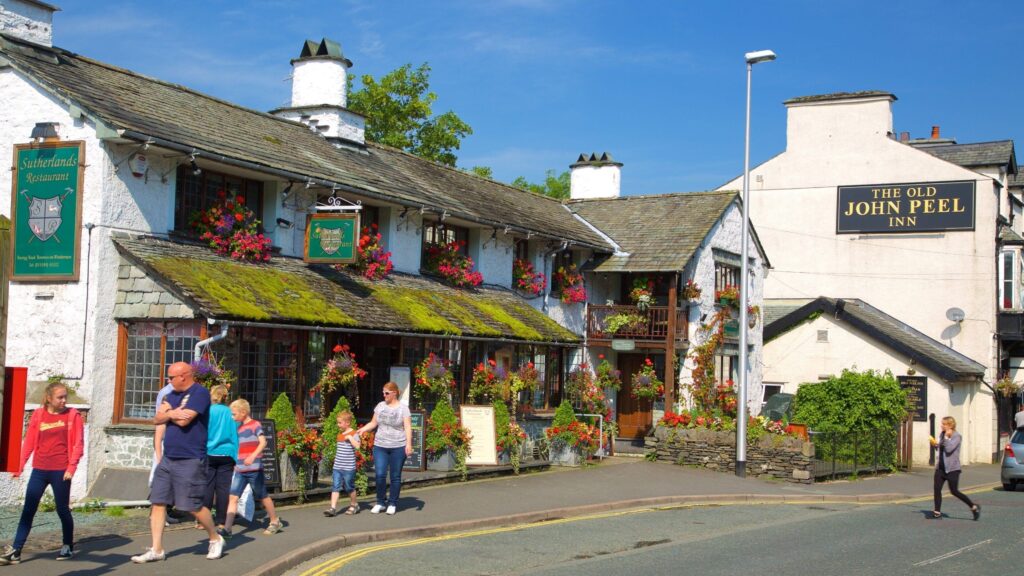
Bowness in particular benefits from lake cruises, shops, hotels and a constant flow of visitors. The pub scene has to serve everyone: couples on weekends away, families, coach parties, walkers, international tourists and locals.
This is not always the most hidden side of the Lake District, but it is one of the most important. Windermere and Bowness are gateway towns, and for many visitors, their first Lake District pint is poured here.
Ullswater, Glenridding and Patterdale
Ullswater has its own pub identity. It is slightly quieter than Windermere but still very popular, especially with walkers heading for Helvellyn, Place Fell, Sheffield Pike and the surrounding fells.
Glenridding and Patterdale are the main pub bases here. These villages serve walkers, campers, outdoor groups and visitors using Ullswater Steamers. The pubs are often practical as much as picturesque: food, rooms, beer, shelter and a place to recover after a demanding day.
This is the kind of area where the phrase “post-walk pint” really means something. The beer is not just an extra. It is part of the reward.
Cockermouth, Jennings and the brewing story
Cockermouth sits just outside the busiest tourist centre of the Lakes but has a major role in Cumbria’s beer story.
Jennings Brewery was founded in Lorton in 1828 before later becoming associated with Cockermouth. The brewery closed in 2022 under previous ownership, but the site was later bought by local owners with plans to revive brewing.
That matters because Jennings is one of the great Cumbrian beer names. For many drinkers, Cumberland Ale and Jennings beers were part of the taste of the Lakes. The possible revival of Jennings is not just business news; it is cultural news for the Lake District pub scene.
Cockermouth also appears strongly in CAMRA’s West Cumbria Good Beer Guide 2026 entries, with pubs including The Bitter End, The Castle Bar, The Cock and Bull and the Jennings Brewery Tap.
Local beer: why the Lake District tastes different
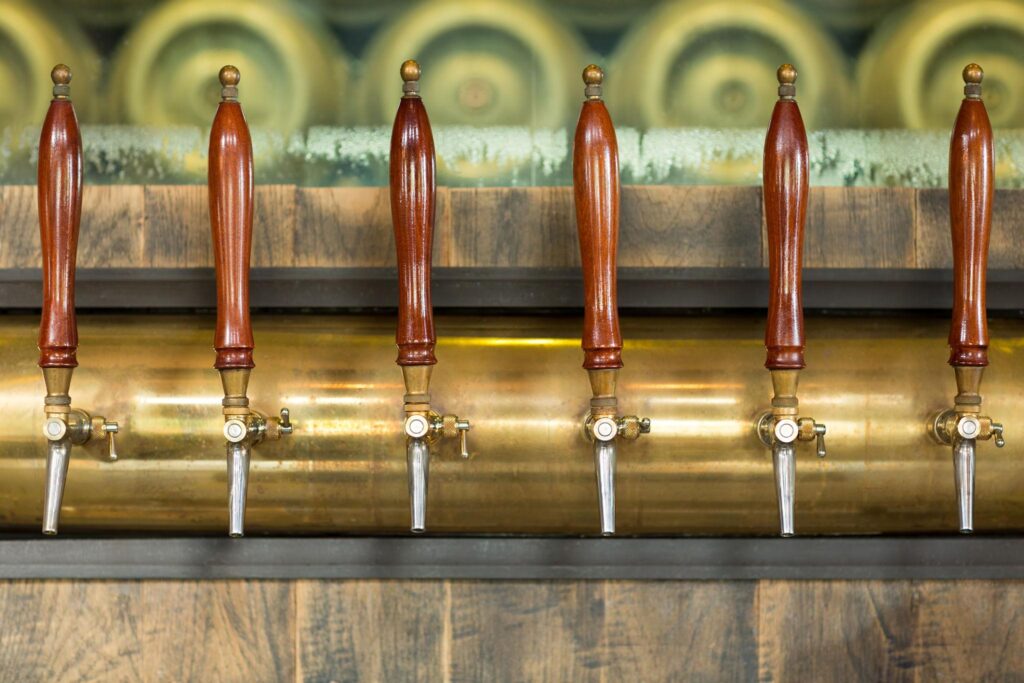
The Lake District pub scene is supported by a strong local brewing culture.
Names associated with the wider Lakes and Cumbria include Coniston Brewing Company, Keswick Brewing Company, Hawkshead Brewery, Hesket Newmarket Brewery and Jennings.
Visit Lake District says Cumbria and the Lake District have an impressive collection of breweries and microbreweries, producing award-winning ales. That local beer culture gives the pub scene a stronger sense of place.
A pint in the Lake District often feels local because it is local. You are not just drinking a national lager that could be served anywhere. You may be drinking something brewed in Coniston, Keswick, Staveley or Cockermouth.
“You’re not just getting a drink — you’re getting something local.”
That is one of the reasons real ale still matters so much here. CAMRA’s Good Beer Guide remains a serious reference point for quality pubs serving real ale, and the 2026 edition includes entries across West Cumbria selected by local CAMRA members.
Campaign for Real Ale (CAMRA)
“The Lake District remains one of the strongest regions in the UK for traditional pubs and real ale, with many venues continuing to serve as vital community hubs as well as destinations for visitors.”
Food: from walkers’ meals to gastropubs
Food has become central to the Lake District pub scene.
Some pubs still focus on classic walkers’ food: pies, chips, soups, sandwiches, roasts, Cumberland sausage, stews and hot puddings. Others have moved further into gastropub territory, with seasonal menus, local meat, Cumbrian lamb, game, fish, cheese and more refined cooking.
Visit Lake District says there is hardly a corner of the region without a pub kitchen serving local specialities in a warm atmosphere.
That is true. Food is now one of the main reasons visitors choose one pub over another. In high-footfall areas like Ambleside, Bowness, Keswick and Grasmere, the pub has to compete not just as a drinking place but as a full dining experience.
Yet the best Lake District pubs do not lose their pub identity. They still offer the basics that matter: fire, beer, shelter, welcome, dogs, walkers and a sense of place.
Dogs, muddy boots and the unwritten rules
One of the defining features of the Lake District pub scene is the dog-friendly, boot-friendly culture.
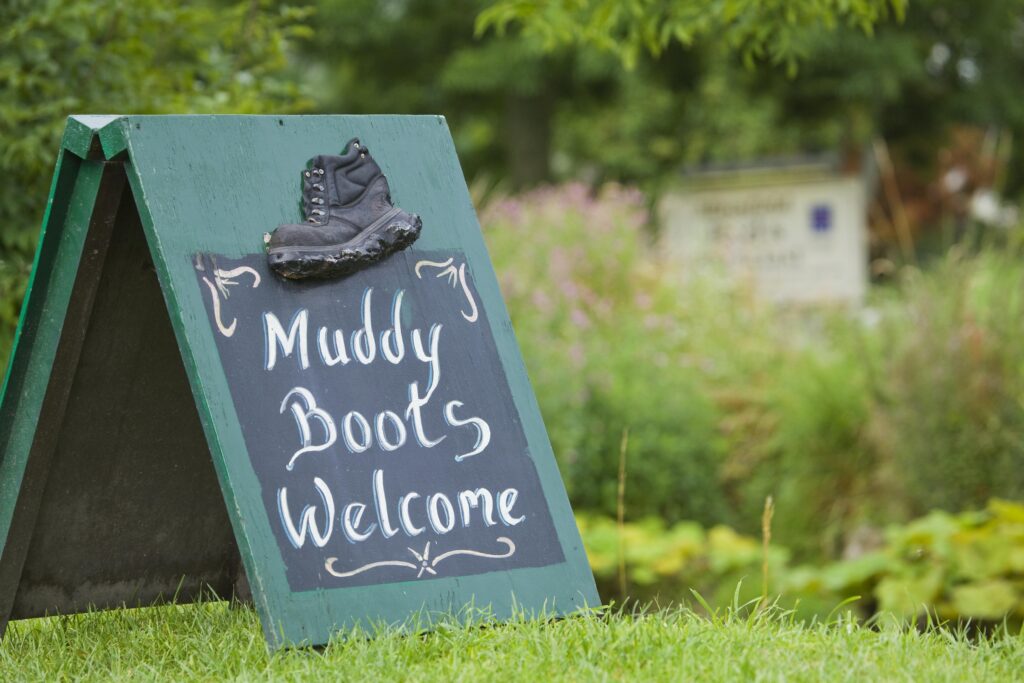
Not every pub has the same policy, and visitors should always check before arriving, but the wider expectation in the Lakes is that walkers and dogs are part of the business. A pub that turns away every muddy boot and damp dog would struggle in many valleys.
That does not mean anything goes. The best visitors understand the unwritten rules: use boot rooms where provided, keep dogs under control, book ahead for food, respect local customers, and remember that these pubs are not theme parks. They are working businesses serving both tourists and communities.
Why Lake District pubs matter to local communities
In many Lake District villages, the pub is one of the few remaining public meeting places.
Shops have closed in some areas. Schools, post offices and services have changed. Tourism has brought money but also pressure, including second homes, staffing challenges, seasonal trade and housing costs.
Against that background, the pub becomes even more important. It provides jobs, supports suppliers, gives locals a meeting place and gives visitors a reason to spend money in villages rather than simply pass through.
This is why losing a pub in the Lake District is not just the loss of a business. It can mean the loss of a social anchor.
The perfect Lake District pub day
A classic Lake District pub day might begin in Keswick with a walk to Friar’s Crag and Catbells before returning to town for a pint.
It might be a Langdale day: walking to Stickle Tarn, coming down tired and hungry, then heading for the Old Dungeon Ghyll or Wainwrights’ Inn.
It might be Coniston: walking the Old Man, visiting the village, then drinking a local beer at The Black Bull.
It might be Grasmere and Rydal: a lower-level walk around the water, then a pub meal before heading back to Ambleside.
It might be Borrowdale: Castle Crag, Rosthwaite, Seatoller, then a firelit inn in the valley.
Or it might be Wasdale: Scafell Pike, aching legs, mountain views and one of the most satisfying pints in England.
That is what makes the Lake District pub scene special. The pub is not separate from the place. It is the final chapter of the walk, the shelter from the rain, the reward after the climb and the room where the day becomes a story.
Final thought
The Lake District is famous for mountains, lakes, poets and views. But its pubs deserve to be seen as part of the heritage too.
They are village landmarks, walkers’ shelters, beer showcases, historic inns, dining rooms, local meeting points and memory-makers.
From Keswick to Coniston, Ambleside to Grasmere, Langdale to Wasdale, Hawkshead to Borrowdale, the Lake District pub scene remains one of the richest in Britain.
And for many visitors, the view from the fell is only half the story.
The other half starts when the pub door opens.


